


By Ruben Mario Brodrick
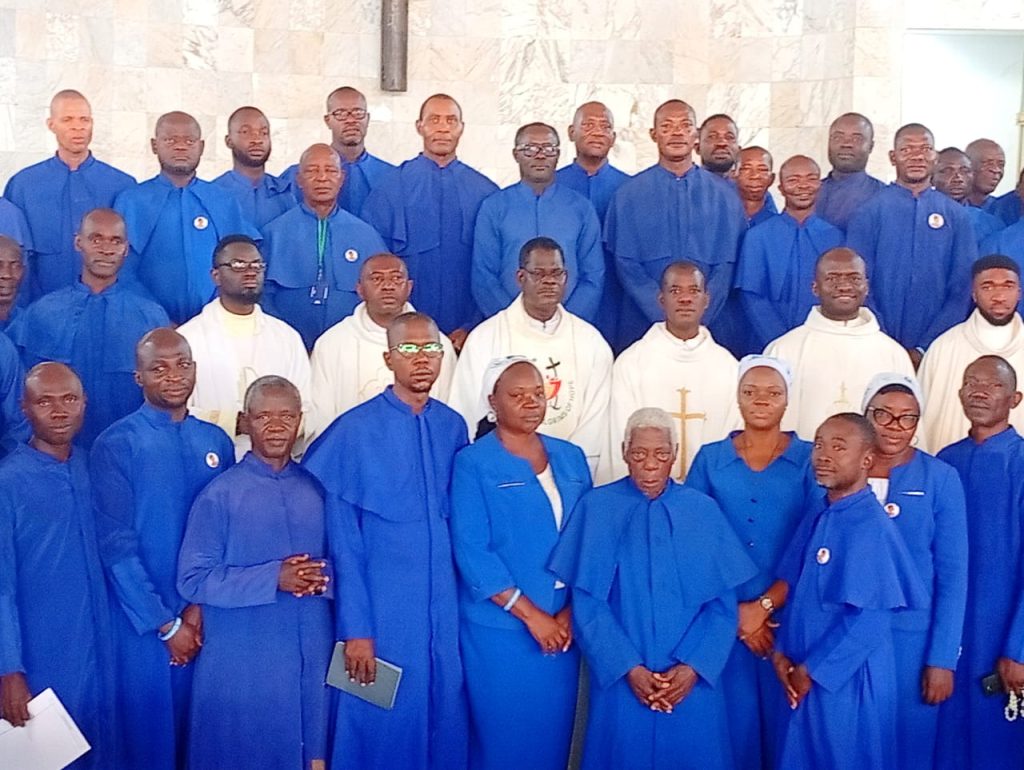
Benin City, Nigeria – In a stirring address that celebrated the enduring mission of catechists, Reverend Father Gabriel Ujah Ejembi, a Jesuit priest and Parish Priest of St. Joseph Catholic Church in Benin City, delivered a powerful message at the Jubilee of Catechists, held on the feast day of St. Padre Pio at Holy Spirit Catholic Church, the celebration honored catechists not merely as teachers, but as vital “architects of hope” in the Church and the wider world.
Fr. Ejembi’s reflection centered on three core concepts: catechists, teachers, and hope. He defined a catechist as a person who hands on a living faith—one that is both personal and communal, far beyond just textbook knowledge.
Emphasizing that this work is a sacred vocation, he urged catechists to see their ministry as a divine call that empowers them to be guides and mentors.
The priest distinguished catechists from priests by noting their unique position within society. He explained that while priests often remain within the confines of parish houses, catechists are called to live and witness their faith in the midst of the world. This gives them a powerful platform to show that faith is not an abstract concept but a living force that brings glory to God and restores hope to a world in need.
Their very lives, he noted, are a testament to the fact that faith engenders hope, providing a steadfast anchor during life’s storms.
A Four-Pillar Ministry of Hope:
Fr. Ejembi outlined a four-pillar approach to their ministry, highlighting that catechists must be living examples of the hope they teach.
Healing: Catechists are encouraged to be sources of encouragement and healing. This includes praying with their students, introducing them to the Sacrament of Reconciliation, and sharing stories of Jesus’s healing ministry and the lives of the saints. The saints, he noted, are “practical gospels,” showing how to live a holy life and offering a tangible source of hope.
Openness: A key to effective ministry is openness—to God, the Church, and others. Fr. Ejembi urged catechists to reflect on their personal encounters with Jesus and share these experiences to help their students open their hearts to God’s work in their own lives.
Prayer: Prayer, he stressed, is the lifeblood of their ministry, providing renewal and focus. He called on catechists to not only teach various forms of prayer, such as the rosary and Lectio Divina, but to actively pray with their students, fostering an intimate relationship with God.
Eucharist: Finally, he underscored the Eucharist as the ultimate encounter with Jesus. He challenged catechists to help the faithful understand its central importance and to cultivate a deep personal devotion to the Blessed Sacrament.
He raised a poignant question, “How do we have many people go through catechism yearly and our attendance at daily Masses do not grow?” This, he implied, shows a need for a deeper catechesis on the transformative power of the Eucharist.
In his concluding remarks, Fr. Ejembi cited Pope John Paul II’s observation that people today are more receptive to witnesses than to mere teachers.
He affirmed that the core of the catechist’s identity is not to approve or disapprove candidates for sacraments, but to be living witnesses of hope. He powerfully reminded everyone, “Hope is not a wish. Hope has a name: Jesus Christ.”