


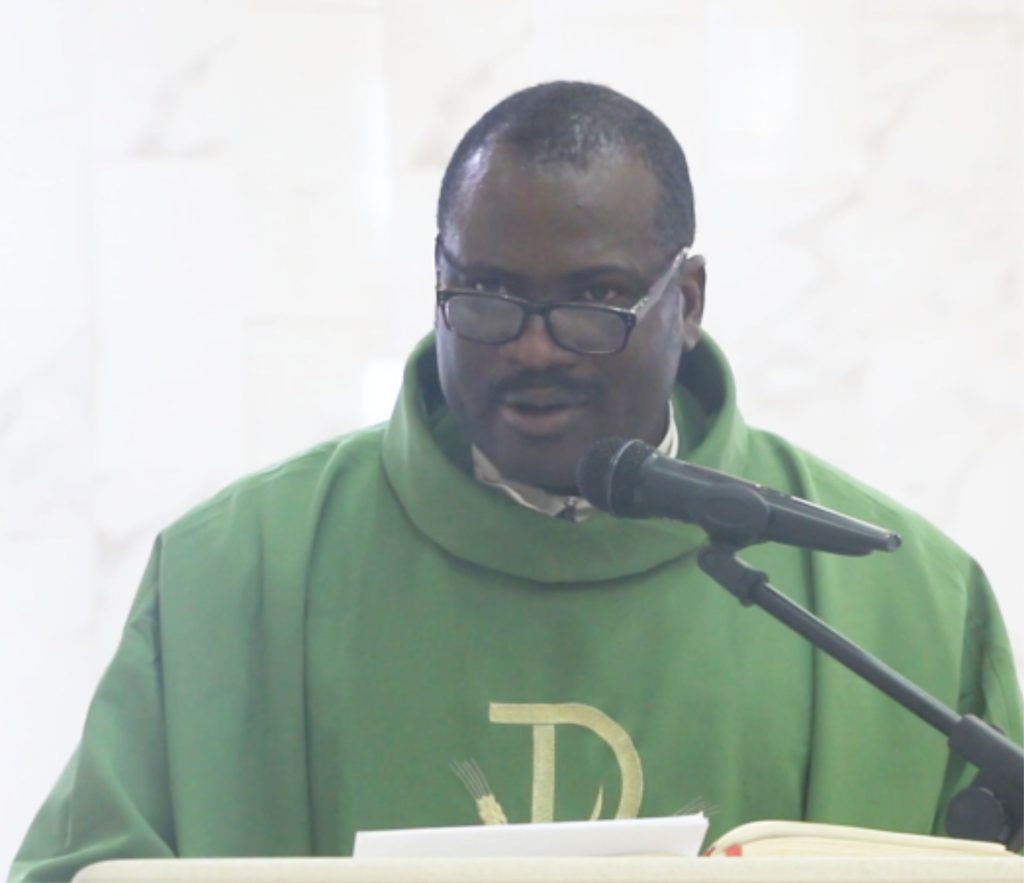
HOMILY FOR THE FIFTH SUNDAY IN ORDINARY TIME, YEAR C (FEBRUARY 06, 2022)
- In the first reading of last Sunday, we read of the call of Jeremiah.
- All our readings of today are about GOD’S CALL.
- In the first reading, we read of the call of Isaiah.
- While Jeremiah’s call seemed to have been from birth, “from your mother’s womb I called you,” that of Isaiah, who was an educated, aristocratic advisor to the kings of Judah, came at the age of 25, during temple worship around 740 B.C.
- Called by God, Isaiah, like Jeremiah, realises his weakness: He described himself as ‘’a man of unclean lips’’ dwelling in the midst of people of uncleans lips. How could he speak in God’s name? In spite of his feeling of inadequacy, he is cleansed and sent forth.
- In the second reading, St. Paul recounted how, as a persecutor of the Church he encountered Christ on his way to Damascus, and his mission was redirected and redefined. Such was how he received the gospel he preached.
- Again, like Jeremiah and Isaiah, Paul too felt unworthy of the call. Yet, by the grace of God who lives in me, as he himself testified, he turned out to be a great evangelizer, and one of the greatest apostles of Jesus. Paul had three extensive missionary journeys and 13 letters in the New Testament.
- In the gospel, Jesus used the boat of Simon as a pulpit to proclaim the good news. Thereafter, Peter and his companions specially recognised and encountered Jesus through a miraculous catch of fish. Thereafter, they were called from catching fish for livelihood to catching people for the kingdom of God.
- Like Isaiah in the first reading and Paul in the second, Peter and his companions too felt unworthy and unqualified for this task, yet Jesus chose them to be His close collaborators.
- From the calls in all our readings today, some lessons are clear:
- Those chosen are of different status and were called at different stages of life. Isaiah was an aristocrat working in the palace, Paul was very educated and possessed dual citizenship but Peter and some of his companions were simple local fishermen with little or no formal education. While people like Jeremiah and Samuel were called very early in life, some like Isaiah received their call at prime age, while Paul and especially Mathew received their call much later.
- These mean that God can call anyone to serve at any stage of their lives, and that everyone is called to be disciples irrespective of social status.
- By the virtue of our baptism, we are all called to be evangelisers, whether as priests, religious or lay faithful.
- Again, in all the calls, we find expression of a Sense of unworthiness as an element of true and honest disciples. This attitude always leads to profound humility and submission to the Master who called. The consequence is that those called are full of gratitude; gratitude to God for the grace of being counted worthy of such great honour to be called Christian, an apostle, a bishop, a priest, a messenger, a servant of God the most high. We must always be grateful to God when given opportunity to serve God especially when it is tough and not what we chose to do and no material benefits as such.
- God does not call the qualified, rather, he qualifies those whom he calls. This is very evident from our experience in the seminary. When a seminarian resumes in the very crude and raw state, and you then witness the gradual transformation through all round formation of the person. It’s more like a log of wood which a food seller could have used to make fire for her cooking and is gone; but same log of wood in the hands of a sculptor is carefully chiseled here and there and then polished to produce a masterpiece artwork beautiful to behold. That is what God does to those he calls. When he calls, if he is the one who calls and not the other way round, he grants the grace. We simply need to submit to the Master’s hand.
- The third lesson that can be derived from the calls we read of today, is that it is God who always calls, no one calls himself. Letter to the Hebrews says that “No one takes this honour upon himself.” Jesus said, “You did not choose me, I chose you.” This means that a true disciple will always dispose himself to the will of God and be ready to serve where God wants him or her to. Catholic priests understand this, so too those in religious life. It applies no less to the laity, even in their secular duties as well as in their work in the Church.
- The experience of St Paul on his way to Damascus shows clearly that the spirit of God is simple and never contradicts itself. Because Saul was sincere in his mission, though targeted against the Church, he was able to hear the voice of God which re-directed his steps and energy to the path of grace and glory.
- Much as misunderstandings are bound to occur in the body Christ from time to time, when is last unduly, it implies that at least one party, if not all, has stopped listening to the voice of God; one party has chosen to call himself or herself. The spirit of God never contradicts itself. There is always harmony and understanding wherever the spirit of God operates.
- Furthermore, beloved in Christ, the entire readings of today serve as strong foundation for the on-going synod for Synodality process. Unlike past synods where only some bishops go to Rome to represent all of us, the present form of synod can be described as “a synod before the synod;” it is grassroot synod before the synod in Vatican. Thus every diocese is expected to create opportunity to gather the thoughts of a wide spectrum of the people in the Church, and if possible those not in the Church as such.
- This process of trying to LISTEN to everyone is important precisely because we all are called, WE ALL ARE THE CHURCH; the Pope advocates through Synod of Synodality that all voices must be fully represented, all voices must be heard.
- It is a renewal process aimed at building a Church that is truly made of “missionary disciples” as he noted in the document, Evangelii Gaudium. A church that is truly alive and witnessing; a church in touch with the world; a church where everyone is active.
- The laity are called to be disciples, not only inside the Church but more so in the world; in the places of work; in the nooks of crannies of the society. They are to bring the light of the gospel to bear on the values of the world. We have the task to convert the world, not the other way round.
- Everywhere we find ourselves therefore, never say I cannot or I am not worthy.
- Who is worthy to be called into the Lord’s service? Nobody. God always purifies us and sends us forth.
- Join a ministry or and a society in the Church today and be active. Volunteer in the society and participate in some social work today for the progress of the community.
In today’s liturgy, we are reminded of the salient truth about vocation. God does not call the qualified, he rather qualifies those He calls. All He needs are disciples with a listening hear, an attentive disposition and a willing heart.
May God grant us the humility to submit to His will and the grace to follow where he leads. Amen.