


By P.J Usanga


The Synod, convened by Pope Francis, brings together bishops, clergy, and lay representatives from around the world to discuss the Church’s future. This assembly’s focus on synodality—or the Church’s ability to “journey together”—marks a significant shift towards a more inclusive and participatory approach.


The Secretary General of the Synod, Cardinal Mario Grech, noted that the Synod’s methodology reflects the Church’s commitment to listening and embracing dialogue and collaboration.


“The Synod’s methodology reflects the Church’s commitment to listening and dialogue. We seek to foster a spirit of collaboration and mutual understanding among bishops, clergy, and laity.”
The 2nd session’s methodology engages a five-module approach, addressing specific themes: Foundations, Relations, Pathways, Places, and the Concluding Module, which focuses on the final document.
Furthermore, the Synod’s structure acknowledges the rich tapestry of Catholic experiences worldwide. It incorporates various linguistic and cultural viewpoints, by seeking to foster greater understanding among diverse communities, addressing pressing global issues, and enhancing the Church’s unity.
This Synod builds upon the momentum of previous assemblies, including the 2014-2015 Synod on the Family and the 2018 Synod on Youth. However, its emphasis on ecumenical discernment and diversity signals a new era of synodality.


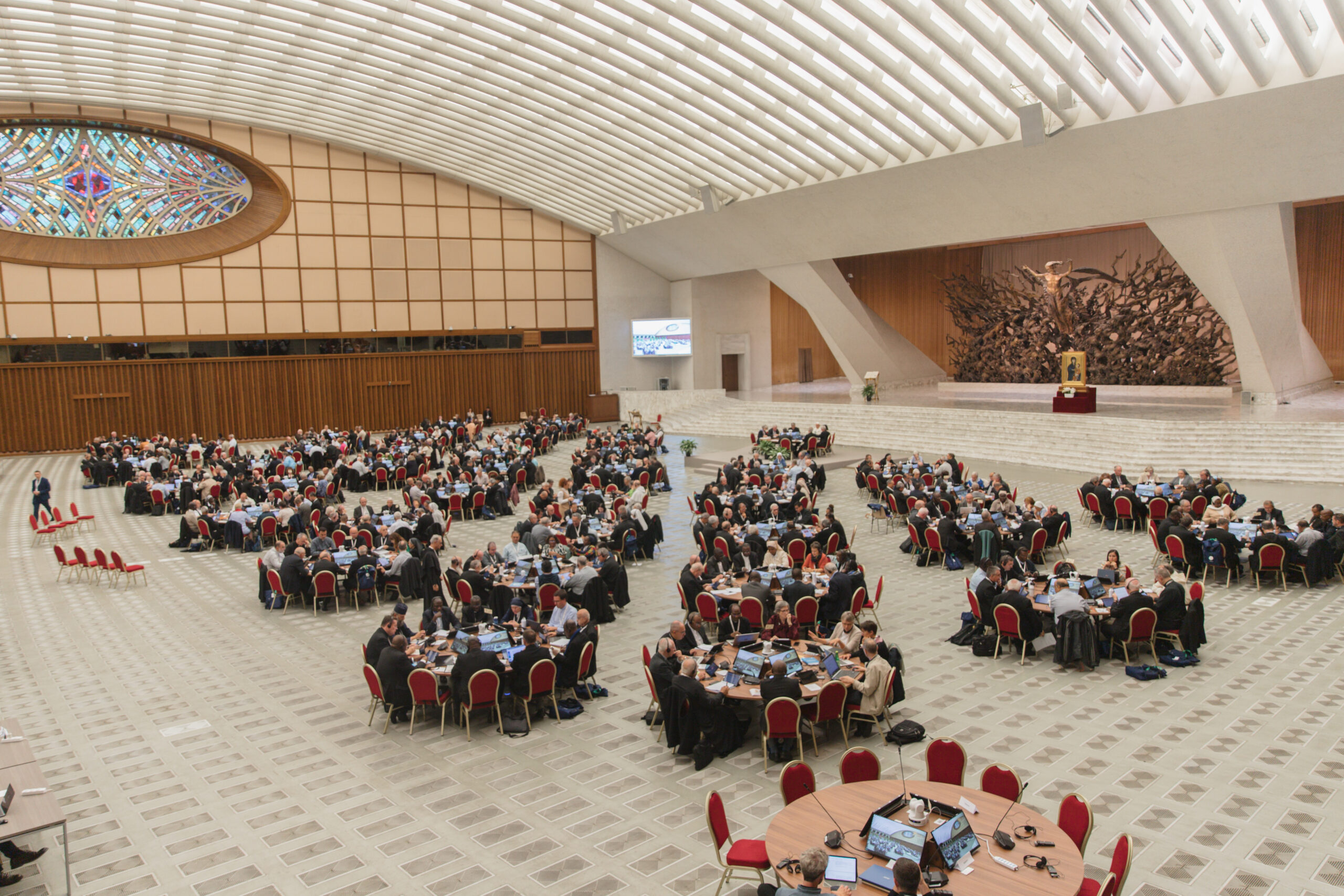

Photos credit ©synod.va/Lagarica