

By Ruben Mario Brodrick
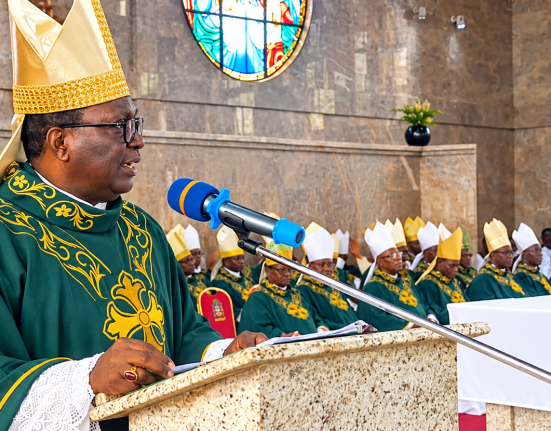
Ikot Ekpene, Akwa Ibom — In an address that has sent ripples far beyond the walls of the Catholic Bishops Conference of Nigeria (CBCN), Archbishop Lucius Iwejuru Ugorji, the conference president, issued a searing critique of the nation’s state and a forceful call for renewal. Speaking at the second plenary in Ikot Ekpene, Archbishop Ugorji’s message was not merely a sermon but a prophetic lamentation and a strategic blueprint for Nigeria’s survival.
The Diagnosis: A Sinking Nation and a Spreading Cancer
Archbishop Ugorji delivered a blunt and unsparing assessment of Nigeria’s condition.
“Nigeria is sinking in many fronts,” he declared, highlighting a widespread insecurity that has transformed towns and villages into “communities of fear, flight, and funerals.” He described the daily reality of kidnappings, violence, and economic desperation plaguing millions.
But the core of his address was a deep moral diagnosis.
He defined corruption not as a mere political failing but as “moral rottenness, which is spreading unchecked like a deadly cancer to all sectors of our national life.” This powerful imagery elevates the issue from a policy problem to a profound ethical crisis, calling for a radical shift in national values.
A Call to the Laity: From Passive Faith to Active Citizenship
The Archbishop’s speech was a direct challenge to the Catholic faithful. He insisted that the laity could no longer be passive observers.
Rooting his appeal in Vatican II theology, he reminded them of their vocation as the “salt of the earth” and “leaven of society.” He argued that the transformation of politics, economics, and culture is the shared responsibility of every Christian, not just the clergy.
His message was particularly sharp on the issue of political participation. Citing rising voter apathy and electoral malpractice, he issued a moral imperative: “Political education in our country must stress the civic duty of all adults of voting age to possess their permanent voter’s cards and to vote…responsibly, not allowing themselves to be influenced by bribes, promise of gratification, intimidation, or ethno-religious considerations.”
A Blistering Rebuke of the Political Elite
Archbishop Ugorji did not spare Nigeria’s political class.
He delivered a blistering critique of their misplaced priorities, stating that “many politicians… seem more preoccupied with the 2027 general elections and are less concerned with fulfilling their campaign promises.” He accused the ruling and opposition parties alike of “pursuing their personal political ambitions” while relegating good governance to the background.
A Legacy of Truth-Telling
The Archbishop’s address aligns with a long-standing tradition of the Church’s social teaching, which demands that faith be applied to civic life. His words resonate with the prophetic voices of other global figures, such as Archbishop Desmond Tutu and Pope Francis, who have used their platforms to speak truth to power in turbulent times.
While this speech alone won’t change Nigeria overnight, its potential lies in its ability to awaken the national conscience. It is a powerful call for the laity to rise, for politicians to prioritize governance, and for the entire nation to understand that its crisis is not one of fate, but of choice. How Nigerians respond to this prophetic cry will determine the nation’s future.