
The Eucharist as the Source and Summit of Christian Life Most Rev. John Akin Oyejola
“The Eucharistic sacrifice is the “source and summit of the Christian life. For the most holy Eucharist contains the Church’s entire spiritual wealth…”
Pope John Paul II
Introduction
I am highly delighted to welcome all of you to the National Eucharistic Congress of the Church in Nigeria for the year 2022. Eucharistic congress is a time of great blessing and moment of grace for the faithful and clergy alike worldwide. This Eucharistic Congress provides us the unique opportunity as Family of God on Mission in Nigeria to proclaim our faith in Christ to the world around us and also encounter His person, whose real presence in the most Blessed Sacrament we belief in. I am glad to share with you this reflection on the Eucharist – an important and indispensable reality of our Catholic faith. The Eucharist is the center and the summit of Christian life. To talk about the Eucharist is to discuss Christ. The Eucharist is “the fount and apex” “the source and summit of the whole Christian life. “The Body and Blood of our Lord Jesus Christ are not simply the sacred objects at the Center of the Church’s concern, they are the Church, its life blood and raison d’être.” It is of outmost importance that we must understand thoroughly what the Eucharist is. We must have reverential fear for this great mystery and have pious devotion to the Eucharist. Our approach in this lecture is to explain the doctrines concerning the Eucharist, their importance and why this sacrament is considered the “apex and summit of Christian life.” We shall also discuss the power in this most Holy Sacrament. Three things this reflection seeks to achieve: 1. Impact relevant knowledge on the Eucharist to the people. 2. Create reverential fear for the Eucharist in them. 3. Engender pious devotion and strong faith in the Eucharist in the minds of the participants.
The Meaning of the Eucharist
The church teaches that the Eucharist is the true body and blood of Christ together with his soul and divinity under the appearance of bread and wine. During the last supper Christ offered his disciples his body and blood and commanded them to celebrate it in memory of him. All the four Gospels agree on the last supper as the time Christ instituted the Eucharist. Literally, the word “Eucharist” means thanksgiving. The way Christ expresses himself during the last supper gives a clear meaning to what he intends it to be: His ‘true body and blood.’ He handed the blessed species of bread and wine to them and tells them they are his body and blood for them to eat and drink respectively (cf. Mk 14 : 22 – 24, Matt 26: 26 – 28 and Lk 22 : 19 – 20 ) etc. Earlier during his discussion on the bread of life in the Gospel of John he said “my flesh is real food and blood real drink. Unless you eat my flesh and drink my blood you have no life in you,” (cf. John 6: 56). Those who understood his language deserted him but he did not beg them to stay or offered any explanation, those who stayed he asked if they would like to go as well but they opted to stay when Peter declared, ‘Lord to whom we shall go you have the words of eternal life.’ St. Paul writing to the Corinthians many years after the Lord instituted the Eucharist claims that, he received the tradition from the Lord, cf. 1 Cor. 11: 23 – 26. The body of Christ is a sign of unity for the family of God, the Church. It nourishes our souls just as natural food nourishes our bodies. Pope Benedict XVI in his Post Synodal Apostolic Exhortation: Sacramentum Caritatis teaches us that: “the Holy Eucharist is the gift that Jesus Christ makes of himself, thus revealing to us God’s infinite love for every man and woman” (no 1). “In the sacrament of the altar, the Lord meets us, men and women created in God’s image and likeness (cf. Gen 1: 27), and becomes our companion along the way. In this sacrament, the Lord truly becomes food for us, to satisfy our hunger for truth and freedom.” We can only receive the grace of this sacrament if we receive it worthily and with the right disposition of mind. If we do not prepare ourselves in terms of purity of heart and faith, we will not receive the grace of the sacrament. St. Augustine remarks that the Body of Christ will not profit anyone who receives it in an unworthy manner.
Eucharist and Last Supper:
The Eucharist was instituted in the context of last supper meal but it was separated from the meal later by the Apostles. In Acts 2 : 44 – 47, the breaking of bread was being done in the context of proper meal. Abuse crept in later in among the early Christians which Saint Paul addressed in 1 Cor. 11: 17 – 22. One gets the impression that the Eucharist – cum meal at Corinth had degenerated into a drunken brawl and occasion for social division. Similar idea was obvious in the letter of Jude who used the word “agape” love denoting the Eucharist as “love feast” the feast was later separated from it. Christ instituted the Eucharist during the Jewish Passover meal but it is not the same with it but a new covenant in which he offered himself as the lamb, the altar of sacrifice and the priest.
The Eucharist as Real Presence:
The New Testament Christians were not in doubt that the Eucharist for them was the true body and blood of Jesus. They were also aware that it was not in the literal sense of physical flesh but real presence. They knew as we do in our time that we consume the “real body and blood of Jesus”, hence in Catholic doctrine we speak of “real presence.” This doctrinal position was articulated in official Catholic teaching in 1215 A.D at the Fourth Lateran Council. The council stated that “the body and blood (of Jesus Christ) are in the sacrament of the altar truly contained under the species of bread and wine, the bread having been substantiated into the body and the wine into the blood by divine power (potestate divina).” The doctrine does not explain how this takes place, but ascribes to it the divine power. The doctrine of transubstantiation came out from this council. Transubstantiation indicates that God, acting in the Eucharist, effects a change in the inner reality of the elements. The term affirms the fact of Christ’s presence in the Eucharist and of the mysterious substantial change that has occurred after the Words of consecration must have been said over the species by a validly ordained minister.
The Eucharist as sacrifice
The Eucharist is a sacrifice, a reenactment of the sacrifice of the cross in an un-bloody manner. “At the center of every Eucharist stands the cross.” According to Pope Benedict XVI : “In instituting the sacrament of the Eucharist, Jesus anticipates and makes present the sacrifice of the Cross and the victory of the resurrection.” On his way to Jerusalem Christ told his disciples his mission was to give his life for the salvation of the world cf. Mk.10: 45. In Mark 14: 24, he said, this is my of the covenant which poured out for many. When we participate in the Eucharistic celebration, we are not expected to be mere spectators but we must immense ourselves in the mystery of Christ. At every celebration of the Eucharist, we do not celebrate a new sacrifice or a supplementary sacrifice, but the same sacrifice of Christ brought into the present. In the teaching of the council of Trent: “The sacrifice of Calvary is not tied to a moment of time, but touches all time.” It is pertinent to point out however that the Mass is not the crucifixion of Jesus Christ. The Mass makes present the sacrifice of the cross; it does not add to that sacrifice nor does it multiply it. Its symbolism centers ultimately on what Christ did on the cross rather than what was done to him. What he did was to offer himself out of love for the Father and for us…That is the reality and the mystery we celebrate in the Eucharist. Pope John Paul II says that: “This sacrifice is so decisive for the salvation of the human race that Jesus Christ offered it and returned to the Father only after he had left us a means of sharing in it as if we had been present there.” The Church constantly draws her life from the redeeming sacrifice; she approaches it not only through faith filled remembrance, but also through a real contact, since this sacrament is made present ever new.
Eucharistic Adoration/Benediction:
Eucharistic adoration is connected with our (church’s) understanding of what the Eucharist is “the real body and blood of Jesus Christ.” Right from the second century Christians usually took the Eucharist – communion to the sick. From the third century we hear of Christians keeping the Blessed Sacrament in their homes to enable them have communion on days when there was no Mass. There is evidence of the reservation of the sacrament in churches from the seventh century, but it is only from ninth century that it became a common practice. The introduction of the doctrine of transubstantiation by the Lateran Council of 1215 A.D served as the motivation for the increase in devotion to the Blessed Sacrament outside the Mass. It is to be noted that, “The principle behind the reservation of the sacrament is the permanence of Christ’s presence in the Eucharistic species until they are consumed. When we embark on adoration of the Blessed Sacrament, we receive grace and gain renewal of spiritual strength. The devotional prayer of the Sacred Heart of Jesus and Immaculate Heart of Mary devotees reveals this fact concretely. Pope Benedict XVI in his admonition on the adoration of the Blessed Sacrament instructs that: “The personal relationship which the individual believer establishes with Jesus present in the Eucharist constantly points beyond itself to the whole communion of the Church and nourishes a fuller sense of membership in the Body of Christ. For this reason, besides encouraging individual believers to make time for personal prayer before the Sacrament of the Altar, I feel obliged to urge parishes and the other church groups to set aside times for collective adoration (Sacramentum Caritatis, no 68). This instruction from the Pope emeritus should be one of the important take home from this Eucharistic Congress.
The Eucharist as the Center of Christian Life
The Second Vatican Council rightly proclaimed that the Eucharistic sacrifice is “the source and summit of the Christian life”. “For the most holy Eucharist contains the Church’s entire spiritual wealth: Christ himself, our Passover and living bread. The Eucharist, as Christ’s saving presence in the community of the faithful and its spiritual food, is the most precious possession which the Church can have in her journey through history. The Church has received the Eucharist from Christ her Lord not as one gift among so many others, but as the gift par excellence, for it is the gift of himself, of his person in his sacred humanity, as well as the gift of his saving work. Nor does it remain confined to the past, since all that Christ is all that he did and suffered for all men participates in the divine eternity, and so transcends all times”. “This sacrifice is so decisive for the salvation of the human race that Jesus Christ offered it and returned to the Father only after he had left us a means of sharing in it as if we had been present there. Each member of the faithful can thus take part in it and inexhaustibly gain its fruits.” According to Pope John Paul II : “The Church draws her life from the Eucharist. This truth does not simply express a daily experience of faith, but recapitulates the heart of the mystery of the Church. In a variety of ways she joyfully experiences the constant fulfillment of the promise: “I am with you always, to the close of the age” (Mt 28:20), but in the Holy Eucharist, through the changing of bread and wine into the body and blood of the Lord, she rejoices in this presence with unique intensity. Through the sacred priesthood and exercise of the priestly ministry of Christ, the Church keeps the Eucharistic faith uncorrupted. Jesus called the twelve apostles out of the numerous people following him. He trained them publicly and privately for a period of three years. He ordained them on Holy Thursday and entrusted to them his body and blood and asked them, “Take and eat, take and drink…do this in remembrance of me.” (cf Lk 22:19). “The Church teaches that priestly ordination is the indispensable condition for the valid celebration of the Eucharist” (Scramentum Caritatis, no 23). Pope St. John Paul II summarizes the reflection of today in these words “The Church draws her life from the Eucharist. This truth does not simply express a daily experience of faith, but recapitulates the heart of the mystery of the Church.” (Ecclesia De Eucharistia, no 1). The Eucharistic sacrifice is “the source and summit of the Christian life. For the Most Holy Eucharist contains the Church’s entire spiritual wealth.”
The following points reveal why the Eucharist is the center of the Christian life.(i) Through our communion in his body and blood, Christ grants us his Sprit. He who eats it with faith, eats Fire and Spirit… (Ecclesia de Eucharistia no 17).(ii) The Eucharist is prepares us for the glory of heaven, it is a fore taste of the joy promised by Christ cf. John 15: 11.(iii) In the Eucharist we also receive a pledge of our bodily resurrection in the future John 6: 54. (iv) The Eucharist expresses and reinforces our communion with the Church in heaven.(v) The Church’s faith is essentially Eucharistic faith, and it is especially nourished at the table of the Eucharist ( Scramentum Caritatis, no 6). 6. Remedy for sin. In the Roman Missal, a preface states that: “As we eat his body which he gave for us, we grow in strength. As we drink his blood which he poured out for us, we are washed clean.”
Conclusion:
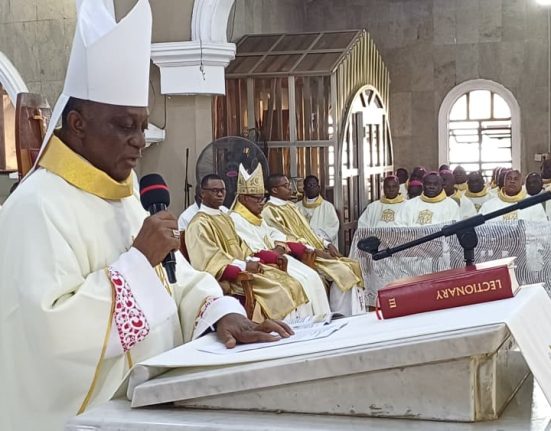
For all Christians, especially for us Catholics, the most important thing to note about Jesus Christ is that, he is simply not one of the prophets or a good religious leader who represents God. Rather, he consistently speaks and acts in the person of God. Jesus does and says things that only God legitimately does and says. That is why the Apostolic Creed states clearly that: “Christ is true God from true God, true light from true light. Begotten not made, consubstantial with the Father.” For Christ to have instituted the Holy Eucharist, with the explicit command to his apostles to do it in memory of him in his stated capacity leaves no one in doubt about the importance and significance of the Eucharist for the salvation of the world (Luke 22:19). During the last supper Jesus Christ, in culminating way, embodied God’s desire to sit in easy intimacy with his people, sharing his life with them. He said, “I have eagerly desired to eat this Passover with you before I suffer” (Luke 22: 15). Jesus linked this sacred meal with the eschatological reality of the kingdom of God. He said: “For I tell you, I will not eat it until it is fulfilled in the Kingdom of God” (Luke 22: 16). In the Eucharist we receive the spiritual nourishment for our souls as we continue our journey of faith here on earth to the kingdom of God. There is nothing sweeter than the body of Christ. A popular communion song says: “Look beyond the bread you eat and see your Lord and God. Look beyond the wine you drink, and see his blood poured for your love!” The church invites us to become the Eucharist we receive; we are expected to become another Eucharist to the world. May the Lord Jesus continually nourish us and bring us to eternal life as we receive his true Body and Blood here on earth! Thank you and God bless you all!Being the text of lecture delivered at the National Eucharistic Congress 2022 in Benin City by:
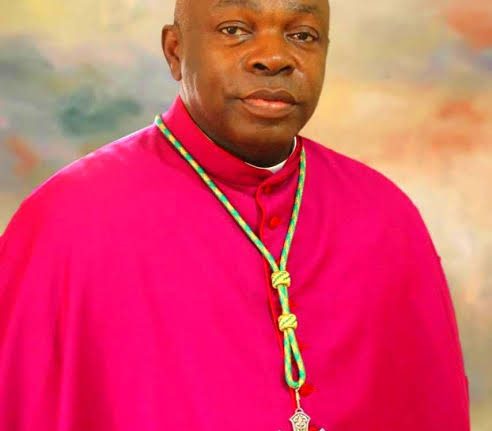
+Most Rev. John Akin Oyejola,Bishop , Catholic Diocese of Osogbo.
- References
Pope John Paul II, Encyclical: Ecclesia De Eucharistia: On the Eucharist and its Relationship to the Church. Vatican City: Liberia Editirice Vaticana, 2003.Pope Benedict XVI, Sacramentum Caritatis, Liberia Editirice Vaticana, 2007. John Macquarrie, A Guide to the Sacraments, London, SCM Press, 1997.Raymond Moloney, The Eucharist. Minnesota: The Lirgical Press, 1995.Robert Baron, Eucharist. Park Ridge: Word on Fire Catholic Ministries, 2021.