
A New Song for a Broken Pot: Reimagining Hope in the Nigerian Crucible
Fr Raymond Olusesan Aina, MSP
The National Missionary Seminary of St Paul,
Gwagwalada-Abuja, Nigeria
Introduction: The Jubilee of Hope in a Nation of Paradoxes
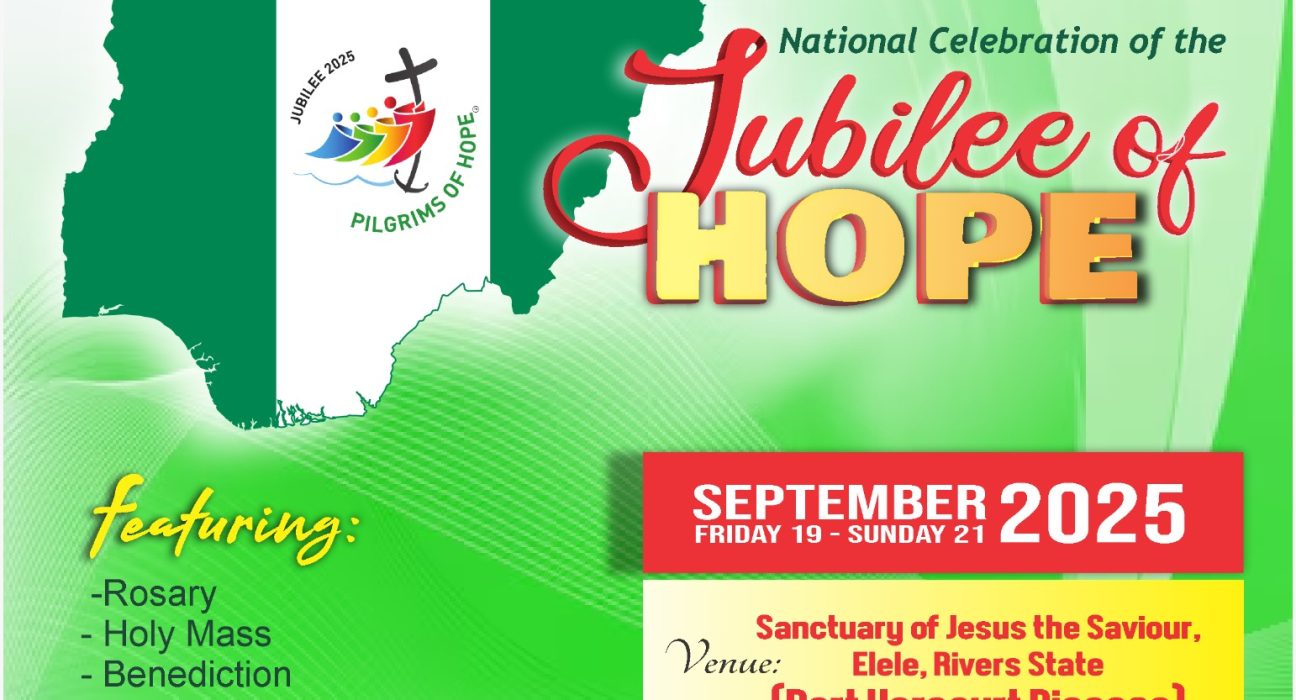
A nation’s heartbeat can be heard not just in its anthems or its markets, but in the collective hope—or the collective despair—of its people. For Nigeria, that heartbeat is a powerful, yet profoundly complex rhythm. It is against this backdrop that the Catholic Church, in its ancient and ever-new wisdom, stands on the cusp of the Ordinary Jubilee of 2025. Proclaimed by His Holiness Pope Francis with the theme “Pilgrims of Hope,” this spiritual pilgrimage is a universal call to contemplation and action. The guiding theological vision is articulated in his Apostolic Bull, Spes Non Confundit (Hope Does Not Disappoint). This document invites us to live as pilgrims, journeying not merely through physical space but through the contradictions and complexities of the human condition. For us in Nigeria, this call is not just timely; it is a spiritual lifeline.
Nigeria is a land of paradoxes, a nation blessed with fertile soil, vast mineral wealth, and an energetic, deeply spiritual populace. Yet, like a magnificent masquerade dancer whose steps are tangled by its intricate costume, the nation struggles with endemic poverty, pervasive insecurity, political corruption, and deep-seated social divisions. It is a nation where vibrant faith flourishes, but where the air is often thick with a sense of hopelessness. The paradox is stark and undeniable: a people who, in the words of a popular Nigerian expression, “carry God on their heads” often feel as if they are “carrying their cross on their backs” every day. The Jubilee of Hope must therefore not be seen as a foreign concept, but as a divine invitation to engage with the very heart of our national experience.
This reflection serves as a pastoral-theological exploration of the Jubilee’s profound relevance for Nigeria today. It is a journey that will move us beyond superficial optimism to a deeper, more audacious form of Christian hope. We will consider the economics of hope in the face of economic hardship that has pushed millions to the brink; we will confront the difficulty of being hopeful in a society grappling with disillusionment and fear; and we will rediscover the liberating potential of Catholic Social Thought (CST) as a blueprint for systemic change. Rooted in the rich soil of scripture and illuminated by Pope Francis’s Spes Non Confundit, this reflection is a clarion call to the Nigerian Church and its people—a call to an audacious and renewed commitment to the hope that, as St. Paul so powerfully assures us, “does not disappoint” (Romans 5:5).
“Hope Does Not Disappoint”: A Theological Foundation for the Nigerian Soul
The journey of hope must begin not with a political manifesto, but with a theological foundation. Pope Francis, in his Bull Spes Non Confundit (2024), makes a crucial distinction that is vital for our Nigerian context. He teaches that Christian hope is not mere optimism. Optimism is a fragile, human-centred emotion, like a sandcastle on the shoreline, easily washed away by the tides of misfortune. Christian hope, on the other hand, is a rock-solid theological virtue, an anchor for the soul (Hebrews 6:19). It is grounded in the definitive reality of the Resurrection of Christ, sustained by faith, and brought to life through charity. Its enduring strength comes from the promise that God’s love, “poured into our hearts through the Holy Spirit that has been given to us,” is the ultimate guarantee that “hope does not disappoint” (Romans 5:5).
The Holy Father’s insistence that this hope is not a naïve retreat from suffering speaks volumes to the Nigerian condition. Our national story is a long, winding road often paved with hardship. We have witnessed countless trials—from the tragedy of the civil war to the ongoing trauma of insecurity and economic volatility. Yet, our collective spirit, forged in this crucible of suffering, has produced a resilience that many find remarkable. In the words of St. Paul, we can see this perseverance at work in our daily lives, as suffering produces “perseverance; perseverance, character; and character, hope” (Romans 5:3-4). This biblical truth is not a foreign concept; it is the very fabric of the Nigerian soul. It is the grit that allows a market woman to smile despite the scarcity or a young graduate to continue knocking on doors despite repeated rejection. This is a hope that, when we feel downcast and disturbed, allows us to stand firm and declare with the Psalmist: “Put your hope in God, for I will yet praise him, my Saviour and my God” (Psalm 42:11).
Pope Francis, in Spes Non Confundit (2024), is not an ivory tower theologian. He confronts the global crises that threaten hope head-on: environmental degradation, mass migration, social polarisation, and the pervasive culture of individualism. These global currents have local, and often more devastating, Nigerian expressions. The environmental degradation in the Niger Delta is not an abstract concept; it is a moral outrage that has poisoned the land and livelihood of our people. The migration of youth is not a mere statistic; it is a haemorrhaging of our nation’s future, a “brain drain” that leaves us poorer and more desperate. The rising ethnic and religious tensions are not just political talking points; they are the fault lines of a nation constantly on the brink. Yet, in this chaos, Christian hope insists on God’s presence and promises. As the Lord himself proclaims through Isaiah: “See, I am doing a new thing! Now it springs up; do you not perceive it? I am making a way in the wilderness and streams in the wasteland” (Isaiah 43:19).
This journey of hope is embodied in the central image of the Jubilee: the pilgrim. A pilgrim is not a tourist; a tourist sees the sights, but a pilgrim seeks God. A tourist seeks comfort, but a pilgrim embraces the journey with all its hardships. To be a pilgrim in Nigeria today is to walk through the valleys of hardship, injustice, and insecurity with our eyes fixed on the promise of God. It is to know that even when the wind blows and we do not know where it comes from or where it goes, the Holy Spirit is at work in everyone born of Him (John 3:8). In this spirit, we are called to be strong and not give up, for our work will be rewarded (2 Chronicles 15:7), and it is God’s Holy Spirit who fills us with all joy and peace, so that we may abound in hope (Romans 15:13).
The Economics of Hope in a Struggling Nation
The Jubilee of Hope is not an escape from our economic realities; it is a confrontation with them. The biblical Jubilee tradition, articulated in Leviticus 25, offers a radical and revolutionary vision of economic justice. It was a divine reset, a grand promise of debt forgiveness, liberation of slaves, and the restoration of land. This ancient principle insists that no one should be permanently trapped in poverty, that economic systems should serve human dignity, and that God’s creation is a gift to be shared by all. This biblical vision stands in stark contrast to Nigeria’s current economic reality. We are a nation rich in oil, gas, and a hardworking population, but our wealth, much like water in a broken pot, seems to leak away through the cracks of corruption and mismanagement. According to the World Bank (2023), over 40% of Nigerians—approximately 88 million people—live in poverty. This is a national tragedy, a testament to the structural injustices that have created a few “big men” while much of our people are left with little. The pervasive corruption, the mismanagement of public funds, and the lack of transparency have undermined the very foundation of economic stability. For the average Nigerian, the promise of a better future has vanished into the chasm of public graft, making hope feel not just a foolish fantasy, but a cruel joke. The economy of hope, therefore, must be reimagined to go beyond GDP growth. It must be about restoring the dignity of work, ensuring access to basic needs, and building economic systems that prioritise people over profit.
This is where the rich tradition of Catholic Social Teaching (CST) provides a robust framework for action. Principles like the dignity of the human person, the common good, solidarity, and subsidiarity must animate our economic policies and our collective conscience. As St. Paul reminds us, the economics of hope is forged in perseverance and character (Romans 5:3-4). The Church in Nigeria, a powerful moral voice, must not shy away from this fight. It must continue to advocate for policies that break the cycles of deprivation and create pathways for human flourishing. Through its institutions, it can become an agent of hopeful economics, promoting skill acquisition programs, offering micro-financing to small-scale entrepreneurs, and advocating for living wages that allow a person to feed their family with dignity.
The Jubilee year provides a powerful opportunity to call for a modern form of debt forgiveness and transparent economic governance. Just as the biblical Jubilee cancelled debts, the Church can advocate for policies that alleviate the crushing burden of debt on the poor. As the scripture encourages us, “be strong and do not give up, for your work will be rewarded” (2 Chronicles 15:7). This is a call to move beyond mere charity to systemic justice, transforming our moments of prayer into moments of powerful social action.
Challenges of Being Hopeful in and About Being a Nigerian Today
To choose hope in Nigeria is to perform a daily act of defiance. It is to push back against a political system that has often failed us, leaving a bitter taste of disillusionment in our mouths. When elections are marred by irregularities and leaders fail to deliver on their promises, the trust in public institutions erodes, and with it, the very capacity to hope for a better future. As a Nigerian proverb puts it, “a head of fish is not to be used for cooking soup,” meaning, there is no hope of a good meal from an ill-prepared ingredient. This sense of political futility is a major roadblock on our pilgrimage of hope.
This challenge is compounded by the relentless and visceral burden of insecurity. Insurgency in the Northeast, banditry in the Northwest, clashes between farmers and herders in the Middle Belt, and a surge in kidnappings and urban crime have displaced millions of our people and plunged countless others into a state of constant fear. The Nigerian psyche is dominated by a pervasive fear and trauma, making it almost impossible to plan. The scale of this violence and the loss of livelihoods are staggering. Yet, even in this darkness, the Psalmist offers a powerful reminder of God’s unwavering presence: “If I rise on the wings of the dawn, if I settle on the far side of the sea, even there your hand will guide me, your right hand will hold me fast” (Psalm 139:7-10).
In the face of these challenges, a survival mentality has taken root, and many people have retreated into ethnic and religious enclaves, deepening the fragmentation of our nation. A sense of “it is everyone for themselves” has replaced the spirit of communal solidarity. The Church, as the visible body of Christ, cannot and must not surrender to this despair. She is called to be a living sign of hope, a sanctuary in the storm.
The Jubilee of Hope calls the Church to be more than a place of worship. It must be:
A Prophetic Voice: The Church must continue to speak truth to power, denouncing injustice, corruption, and violence unequivocally. As a shepherd of its flock, it must not be a “yes man” but a courageous voice advocating for the vulnerable and marginalised.
A Peacebuilder: The Church must actively facilitate inter-ethnic and inter-religious dialogue, building bridges where others have built walls. It must be a force for reconciliation in conflict zones, healing the wounds of a broken nation.
A Shepherd of Souls: The Church must offer profound pastoral care for the disillusioned and traumatised. Through healing liturgies, community support programs, and spiritual guidance, it can be a place of refuge and restoration.
In this work, we are not alone. The Spirit of God is a divine companion. As St. Paul blesses us, “May the God of hope fill you with all joy and peace in believing, so that you may abound in hope by the power of the Holy Spirit” (Romans 15:13).
Catholic Social Thought: A Liberating Moment for Nigeria
The Jubilee of Hope, with its call for a pilgrimage of conversion, presents a unique and powerful opportunity for the Nigerian Church to champion a renewed understanding and application of Catholic Social Thought (CST). CST is not an abstract academic exercise; it is a gift to the world, a robust ethical framework for societal transformation that is particularly urgent for Nigeria. It is a movement from charity to justice, from simply treating the symptoms of our national malaise to engaging the root causes. The core principles of CST are profoundly liberating for our context:
Human Dignity: Every Nigerian life matters, regardless of tribe, tongue, or social status. Every act of extrajudicial killing, trafficking, and abuse is an affront to this dignity, and the Church must condemn it without compromise.
The Common Good: The Jubilee reminds us that our policies and actions must serve not just the elite, but the good of all Nigerians. Public goods like education, healthcare, and security must be accessible to everyone.
Solidarity: The Nigerian proverb, “a single broomstick is easily broken, but many broomsticks together are strong,” perfectly captures this principle. A united Nigeria requires shared responsibility across all ethnic and religious lines. We are called to continually offer a “sacrifice of praise—the fruit of lips that openly profess his name. And do not forget to do good and to share with others, for with such sacrifices God is pleased” (Hebrews 13:15-16).
Preferential Option for the Poor: The poor must be at the centre of our development plans. The Jubilee is an opportunity to amplify their voices and to advocate for policies that alleviate poverty and empower the voiceless.
Care for Creation: As articulated in Pope Francis’s Laudato Si’ (2015), environmental degradation is a moral issue. The exploitation of natural resources and the resulting pollution, particularly in the Niger Delta, are grave injustices that threaten the dignity and future of our people.
The Jubilee year is a perfect moment for a renewed catechesis on these principles. It is a time to empower every Catholic, from the pew to the pulpit, to be an agent of change in their community. It is an opportunity for the Church to lead by example, with transparent finances and credible social initiatives. Furthermore, this is a moment to expand our work beyond our faith tradition. The Jubilee is an invitation to inter-religious dialogue, to work collaboratively with our Muslim and other Christian brothers and sisters towards the shared goals of peace, justice, and development. This is the wind of the Spirit blowing wherever it pleases, and we must be open to new ways of embodying justice and love (John 3:8).
Conclusion: A Call to Audacious Hope and Action
The Jubilee of Hope is not a pious wish, but a bold and audacious summons to action. Nigeria desperately needs a hope that is not embarrassed by hardship, a hope that is audacious in its persistence, a hope that, in the face of despair, declares, “E go better.” This reflection has shown how such hope can be economically empowering, spiritually sustaining, and socially transformative. The Church in Nigeria is uniquely placed to lead this charge—not as a passive observer, but as an active participant in God’s mission of renewal. The words of Pope Leo XIV (2025) perfectly capture the spirit of this moment: “Hope is the virtue that sustains us to grow closer to God, even when confronted by the hardships of life.” Let us, then, walk this Jubilee path with the audacity of a faith that knows God is a covenant-keeping God. Let every priest, religious, layperson, and bishop in Nigeria echo the promise of Jeremiah 29:11: “For surely I know the plans I have for you, says the Lord, plans for your welfare and not for harm, to give you a future with hope.”
May this Jubilee be not just a year of celebration, but a season of conversion, advocacy, and action—a time when we collectively begin to till the soil of our nation with the seeds of audacious hope, working tirelessly until Nigeria becomes not just a nation of paradoxes, but a beacon of hope for all of Africa and the world.
References
Francis. (2015). Laudato Si’: On care for our common home. Libreria Editrice Vaticana. https://www.vatican.va/content/francesco/en/encyclicals/documents/papa-francesco_20150524_enciclica-laudato-si.html
Francis. (2024). Spes non confundit: Bull of Indiction of the Ordinary Jubilee of the Year 2025. Libreria Editrice Vaticana. https://www.vatican.va
Leo XIV, Pope. (2025). Message to the Third Pan-African Catholic Congress on Theology, Society and Pastoral Life. PACTPAN.
National Bureau of Statistics. (2023). 2023 Multidimensional Poverty Index Report. https://nigerianstat.gov.ng
Pontifical Council for Justice and Peace. (2004). Compendium of the social doctrine of the Church. Libreria Editrice Vaticana.
The Holy Bible, New Revised Standard Version. (1989). Division of Christian Education of the National Council of the Churches of Christ in the United States of America.
World Bank. (2023). Poverty and inequality in Nigeria. World Bank Publications.