
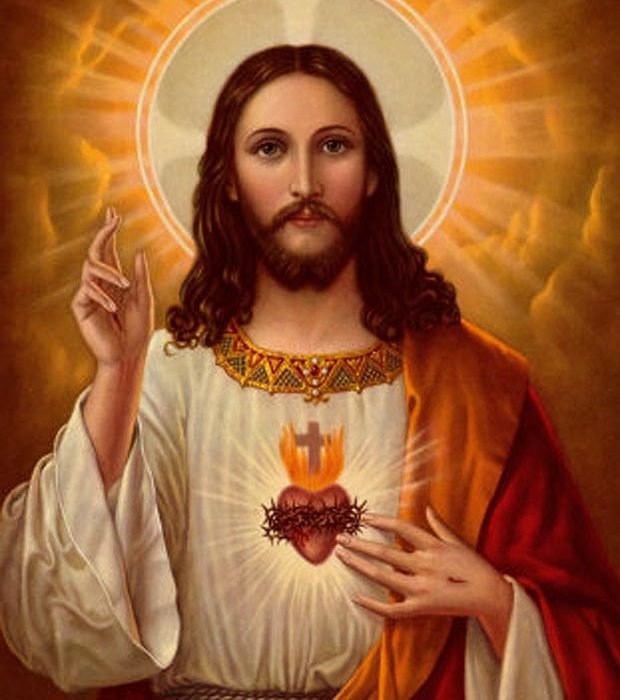
I, Fr. Raymond Tah-Onah Martin Luther, on behalf of St. Joseph Major Seminary, Ikot Ekpene, reflects on the theme: CHRIST OUR HOPE IN DIFFICULT TIMES
Introduction
As we congregate on this hallowed ground, The International Sanctuary of Jesus the Saviour & Mother Mary, Elele, for this sacred journey as Pilgrims of Hope following the way our eyes are fixed on Christ, we hope to keep the flame burning, our hearts yearning, and our desires renewed as we celebrate this National Jubilee of Hope 2025, a symphony of prayer where our voices are raised in harmony, embodying our shared humanity and quest for a more fulfilling tomorrow. St Joseph Major Seminary, Ikot Ekpene, welcomes all here present and expresses gratitude to the Catholic Bishops’ Conference of Nigeria for the invitation to make this presentation at this celebration. To all of you here present, I extend a warm greeting of hope and peace!
On the morning of September 16, 1810, Father Miguel Hidalgo did the unthinkable when he rang the church bells, took to the pulpit in the town of Dolores in Mexico, and made a shocking announcement decrying Spanish oppression with a passionate speech. He was declaring war against the Spanish government, and his parishioners were all invited to join him. This famous speech became known as “El Grito de Dolores” or the “Cry of Dolores.” The war lasted nearly eleven years, with Mexico gaining independence in 1821. To this day, the tradition continues with the Mexican president ringing the same 200+year bell at midnight and reciting the cry of pain.
The bell continues to ring out across our world; we hear the cries of the earth. The wars in various parts of the globe persist; incidents of violence, terror and bad governance are taking the lives of our people here in Nigeria; and the struggle against injustice continues, supposedly with no sign of triumph in sight, making persevering in hope tougher. With all these events, we are left asking the question in the context of the National Jubilee Year of Hope 2025: how do we live with hope amidst difficulties? Fortunately, we believe in a God who is faithful — one who gives us great hope, even amid significant trials, for Scripture reminds us in the Gospel of John “I have told you these things, so that in me you may have peace. In this world, you will have trouble. But take heart! I have overcome the world” (16:33). Facing trials in our lives is an unavoidable reality of living in a fallen world. As Pilgrims of Hope, as the Jubilee Prayer 2025 describes us, let us explore how the Christian journey allows us to experience the hope offered to us by the Father, even during difficult times.
What is Hope?
What comes to mind when you think of hope? The Cambridge Dictionary sees hope as wanting something to happen or to be true, and usually with a good reason to believe that it might. In indigenous thought, specifically Nigerian, “hope” for the Ibibios is akikere/ekikere, that is, “the belief or expectation that something wished for can or will happen.” For the Efiks, idoroenyin, which translates to “hope”/God’s will” or “God’s purpose,” reflects a deep spiritual significance and connection to faith. It is a quality and “a sense of purpose, embodying the characteristics of resilience and determination.” In Igbo, two words translate “hope,” namely, olile anya and nchekwube. Olile anya generally translates as “hope” but it literally means “I look up to”. It’s not just “hope”, it conveys someone’s ‘strong faith’, ‘great expectation’, their ‘deepest belief’ in someone/something, while nchekwube translates as trust, hope, or faith, often referring to a strong belief or reliance on the divine. In Yoruba, the concept Ìrètí translates as hope, signifying “a feeling or expectation that something good will happen.” In Hausa, hope is sa rai, which means expectation. However, hope is not just wishful thinking, but a confident expectation based on faith. Hope isn’t just a passive wish for favourable outcomes. It’s an active expectation rooted in our belief and trust in God. While faith accepts, hope anticipates. When we use the word “hope,” it is often infused with a sense of expectation and certainty centred around a particular person, object, or desire. It is indubitable that in our daily conversations, the word hope is marked with wishing. But in the Christian context, hope is the confident expectation of and longing for the promised blessings of righteousness. The Scriptures often speak of hope as anticipation of eternal life through faith in Jesus Christ (John 3:16; Titus 1:2; 1 Peter 1:3-5; 1 John 5:11-15), underscoring that hope is the assurance that God will fulfill his promises. It is a certainty, not based on us, but on God. Reiterating this perception, the Catechism of the Catholic Church (CCC no. 1817), sees Christian hope as the theological virtue by which we desire the kingdom of heaven and eternal life as our happiness, placing our trust in Christ’s promises and relying not on our own strength, but on the help of the grace of the Holy Spirit (Also cf. Hebrews 10:23; Titus 3:6-7). Our trust in the Lord creates a stable foundation for walking with expectations even when things are uncertain. And so, the Christian concept of hope is based on the Person and our relationship with Him, which is much more secure than a feeling or expectation. Furthermore, Christian hope has a certainty. It is not some wishing or even praying that something comes true. It IS true. It is hope in a Person, and He is real. It is hope based on the certainty that it is God Who fulfills His promises. He sent us His Son to save us, and this will not be a wasted act of love (John 3:16; 1 John 4:7-11). Moreover, the Lord will fulfill His promise to save us and give eternal life to those who put their trust in Him. The Scripture exhorts us in the first letter of Peter in these words, “Praise be the God and Father of our Lord Jesus Christ! In His great mercy, He has given us new birth into a living hope through the resurrection of Jesus Christ from the dead” (1Peter 1:3). It affirms that hope is tied with trust. It is belief that the Lord will be true to His promises dependent on His faithfulness, not ours (cf. 2 Timothy 2:11-13). Nevertheless, Hope builds anticipation and involves waiting. Even in the definition, the core of biblical hope is assurance, trust, and certainty. But life is anything but certain, hence, a necessity for hope in our daily lives. Hope gives us the strength to wait. St. Paul, in his letter to the Romans, says, “For in this hope we were saved. For example, farmers are up early before dawn to work all day long in the fields, for a harvest that is not seen or guaranteed. All of a farmer’s activity every day is focused and aimed towards that harvest that cannot be seen. No picture embodies a heart of hope more than the life of a farmer. Establishing hope in our lives means purposefully planting seeds that embody an expectation of harvest. It could be a seed of change, an action taken, an attitude adjusted, a good work focused on the need of another, all in the hope of the harvest we desire. We are to do good deeds, to add value in all we do and say, all the while expecting to profit (in a harvest) from that which we are doing. We are not to get weary in doing good because the harvest comes at the proper time (Gal 6:9). But hope that is seen is no hope at all. Who hopes for what they already have? But if we hope for what we do not yet have, we wait for it patiently (Romans 8:24-25). This mindset is so beautifully accentuated by Tertullian in The Apology, saying, “Hope is patience with the lamp lit”
Embracing the Moment of Truth as Pilgrims of Hope
The National Celebration of the Jubilee Year of Hope 2025 can be seen as a “moment of truth” for the Church in Nigeria to rediscover and reinvigorate her prophetic voice (munus docendi) by reading the signs of the times (cf. Matthew 16:2-3; Mark 8:11-12; Luke 12:56; Gaudium et Spes no. 4), not by just simply determining what kind of time it is; but by bringing Christ into view. When Christians, as Pilgrims of Hope, put Christ into view, they are then able to discern the time in which society is living. It is a unique moment in our ecclesial history, a graced moment, a moment of truth signalling an urgent need for decisive action in the struggle against bad governance, violence and injustices of various shades. Hence, our prophetic voices as Pilgrims of Hope remain valuable in society, not only for our role of announcing the moment of truth, but also for inspiring hope even in ordinary moments, where Christ is equally at work. In some ways, we can rediscover our prophetic voices within ourselves if we are open to the Holy Spirit, who blows wherever she wills (cf. John 3:8). With such an openness, we can feel the same way Christ did about the events happening in our society. As such, as Pilgrims of Hope, God in Christ is once again offering the kind of opportunity that many of our predecessors had but never took, and woe betide us if we do not rise to the challenge. We must see this moment as very significant to manifest our abilities to recognize the criticality in the events of our life journey, spelling them out as moments of truth, as challenges, opportunities, as times for decision and action. It follows then that, when we as a people or leaders are the perpetrators and oppressors in the land, we can appeal to ourselves in the name of Christ as Pilgrims of Hope to change our ways before we are destroyed. Here, the persistent call to repentance and conversion comes in, the element of metanoia, by Jesus (cf. Matthew 3:5, 4:17; Mark 1:15), constituting our present moment as a unique divine time, a moment of truth. It is a moment of truth and grace, a singular opportunity precisely because the day of reckoning is upon us already, requiring oppressors and wrongdoers to be converted. Likewise, it is a time for rejoicing and for hope (cf. Philippians 4:4-9), because our liberation is near since we cannot overlook the element of hopefulness and expectancy in this time of our lives as a people, prompting us as Pilgrims of Hope to bring a message of encouragement, consolation, and exhortation- a message of hope (cf. Isaiah 40-55). Consequently, it is time to properly realign ourselves as Christians with the three (3) munera (Munus docendi (Prophet): The duty to teach, based on Christ’s prophetic ministry, Munus sanctificandi (Priest): The duty to sanctify, based on Christ’s priestly role, Munus regendi (King): The duty to shepherd or rule, based on Christ’s kingship), which our baptism grants, initiating us into the life of Christ and the Church, granting us the grace and responsibility to live out these three missions in our daily lives and witness to the world, so that in our specific statuses in the practice of teaching, sanctifying, and shepherding, we foster hope in others. By living out Christ’s mission, we become “missionaries of hope,” leaving a lasting impression of hope and enduring faith for others to find, even in difficult times.
Christ as Our Hope
As human beings and individuals, as well as People of God on a journey together, we all face situations in our lives that eventually seem hopeless. Occasionally, we must critically reflect on the past to have hope for the future, as we reflect on how the Lord has worked in our lives and the lives of others. The Psalmist expresses his dedication to declare the deeds of the Lord with future generations for the purpose of helping people put their trust in the Lord, not forget His deeds, and keep His commandments (cf. Psalm 78:7).
In the New Testament, we see a portrayal of the idea of “remembering” to serve as a basis for our hope. Passover was established in Exodus 12 to serve as a reminder of God’s salvation of His people. Jesus re-established this ritual, infusing it with new meaning to serve as a reminder of his sacrifice for us. In the passage of Luke 22:19, He says, “Do this in remembrance of me.” The gospel of John was written for Christians who were being persecuted and pushed out of the Jewish community after the destruction of the temple in Jerusalem. In the Johannine corpus, John gives the reason for the gospel text, saying, “These have been written so that you may believe that Jesus is the Christ, the Son of God” (20:31), encouraging Christians not to give up hope or faith.
It is this strong basis for hope that prepares Christians to live as they are called to (cf. Hebrews 11:1-40). The Word of God in this beautiful chapter reminds us of people who lived lives that were faithful to God without the promise of ever seeing their work fulfilled. It refocuses the attention of someone facing suffering and challenges to realign with a Christian perspective. The Lord wants us to remember how He has worked in our lives, and to live our lives differently—with hope for the future. The writer of the Letter to the Hebrews says, “Now faith is the assurance of things hoped for, the conviction of things not seen” (Hebrews 11:1). When we live this way as Christians, it can be both inspiring to others and also confusing to the world around us. Although we cannot always see what’s ahead, ours is not a “blind” or unfounded faith. Rather, it is a faith that is firmly established by our knowledge that the Lord, who has been faithful in the past, will surely be faithful in the future. When we face the unknown, we demonstrate a different type of faith to the world, and we may have the opportunity to share how the Lord has been faithful in our lives and the lives of others, for we live by faith and not by sight.
Cultivating Hope in Daily Life
In our daily life as Pilgrims of Hope, we hope and believe that another world, a better world, is possible when we seek and uphold the will of God (cf. John 5:30; 6:37-39), that is, what is for everyone. For what Christ desires is whatever is best for all of us together, not what is best for some at the expense of others (cf. John 10:10). As a result, Pope Benedict XVI in Spe Salvi no. 2 demonstrates that hope in Christ is a certainty: “Only when the future is certain as a positive reality does it become possible to live the present as well.” In this light, the trials of life serve to strengthen us as St. Paul reminds us in his letter to the Romans: “suffering produces endurance, and endurance produces character, and character produces hope, and hope does not disappoint us, because God’s love has been poured out into our hearts through the Holy Spirit that has been given to us” (5:3-5). Further, St. Basil of Caesarea tells us: “Expect tribulation after tribulation, hope upon hope; yet a little while; yet a little while. Thus, the Holy Ghost knows how to comfort His nurslings by a promise of the future. After tribulations comes hope, and what we are hoping for is not far off, for let a [person] name the whole of human life, it is but a tiny interval compared with the endless age which is laid up in our hopes.” St. Paul again exhorts us that we hope for what goes beyond space and time: “As we look not to what is seen but to what is unseen; for what is seen is transitory, but what is unseen is eternal” (2 Cor 4:18). It is in this sense that Christ becomes our model of true hope, offering us vividly the values/principles that ought to direct our lives. We can experience our true humanity and the freedom of the Spirit by learning to cultivate the Gospel principles/values and to live by them as Pilgrims of Hope. Although we speak of values, Albert Nolan reminds us that “there is only one value in the gospel: the value of love or compassion-justice of the heart,” as exemplified by the life of Mother Theresa of Calcutta in our era, who put love in action by educating children, teaching them to care for themselves, and spent many years carrying and lifting those who were disabled, sick or dying, as she washed, fed, and cared for them. Beyond this, she confidently speaks the truth in love as she proclaimed the atrocities of abortion to leaders around the world. She states, “Any country that accepts abortion is not teaching its people to love but to use any violence to get what they want. That is why the greatest destroyer of love and peace is abortion.” But she also encourages us with these words of hope, and a reminder that we are called to use our freedom for higher purposes than murder: “If we remember that God loves us, and that we can love others as He loves us, then our country, [Nigeria], can become a sign of peace for the world. Hence, we could “say that the one and only value in the gospel is people. People are more important than things, more important than laws, more important than money or knowledge or power or anything else in the world.” People remain the supreme value for God without undermining the rest of creation (cf. Romans 8:22-25). Hence, we speak about the values of love, compassion and justice, underscoring the integrity of human beings. Hope is cultivated when we embrace the values of sharing, respect for the humanity of others, solidarity, and service in imitation of Christ (1 Corinthians 11:1).
In sharing, a requisite quality to becoming a follower of Christ (cf. Luke 14:28-33; Acts 2:44-46; 4:34; 5:11), we as Pilgrims of Hope do not simply prove our detachment from material possessions, but also to ensure that the poor are fed, that everyone may have what they need, or that nobody may suffer because they are in need. When we remain indifferent as followers of Jesus to the needs of the poor and needy, by refusing to share with them what we have, then we cannot claim to have started loving our neighbour, or practicing justice, or being compassionate (cf. Matthew 25:36-45). When we are enslaved to our possessions, our material comforts, and our so-called standard of living, then cultivating hope becomes a challenge.
Secondly, in respecting the humanity of others, Pilgrims of Hope treat others as they would want to be treated, emphasizing empathy, kindness, and respect as the foundation for all interpersonal conduct (cf. Matthew 7:12; Luke 6:31). It is a value that urges the followers of Christ to act with integrity, grace, and love, even when others do not reciprocate, to glorify God (cf. Matthew 5:44; Luke 6:28). It calls for active, rather than passive, love and provides a standard for daily interactions that transform individuals and society.
Thirdly, in solidarity, Christians demonstrate their interconnectedness and act for the common good of all people, relying on divine grace to persevere through hardships. Here, Pilgrims of Hope see everyone as a neighbour and work for their well-being, which is often inspired by hope for a just and dignified life for all. It is this hope that sustains people during difficult times and encourages them to actively support others, turning despair into renewed purpose through actions of care and engagement. When we foster shared responsibility, create a supportive atmosphere through collective action and mutual assistance and promote resilience by framing challenges as opportunities for growth and renewal, then our solidarity cultivates hope. By uniting in a common purpose, our solidarity replaces feelings of isolation with a sense of collective agency and shared humanity, reminding us that we are not alone in our struggles (cf. 1 Peter 5:9). Here, shared experience builds trust and optimism, transforming individual struggles into collective movements for positive change and a more just future. In solidarity through compassion and action, Jesus reached out beyond his own social, cultural, and religious group to embrace the whole of humanity as his brothers and sisters, as his kinsmen and kinswomen, as his neighbours (Matthew 9:36; Matthew 25:31-46; John 13:34). When we move beyond group identity and personal boundaries like Jesus to connect with humanity, we can foster increased conviviality, well-being, resilience, and a deeper sense of purpose that combats hopelessness and builds connections (cf. Galatians 3:28-29).
Fourthly, service as a means of cultivating hope embodies love in action, witnessing to hope and following the example of Jesus, who epitomizes acts of servant-leadership. When we show kindness and love for others through practical acts like praying for them, sacrificing for their needs, and generously sharing resources, hope grows. Further, through loving service as missionaries of hope, we become beacons of hope in the world, making hope easier to experience and share. Also, learning from Christ himself, who came to serve, not to be served, and following His example in service, Christians find joy and purpose (cf. Matthew 10:32; 20:28; Mark 10:45; John 13:1-17). Hope moves us as Pilgrims of Hope to serve, for growing hope in Christ motivates us to serve others, demonstrating divine kindness. Additionally, by serving others, we become more filled with love for God and others, which in turn fosters deeper hope. Lastly, as Christians, Christ meets us in our diligent and loving service, which is an act of worship and further strengthens our connection to Him, the ultimate source of hope. The call to serve provides a framework for cultivating hope by modelling self-sacrificial humility and love, which helps us find our purpose and strength in God rather than in others. By following Jesus’ example of service, which he also demonstrated by washing his disciples’ feet, we can find joy in our service, thereby reducing feelings of hurt from unmet expectations, and experience a more fulfilling life rooted in divine purpose and shared love.
Conclusion
We can infer from our presentation that the National Celebration of the Jubilee of Hope 2025, a moment of truth, reminds us as Pilgrims of Hope, to fix our gaze on Christ, the Crucified One, our source of hope in all situations. We live in challenging times. Values and standards honoured for thousands of years in our communities and cultures are now being denied or cast aside. Selfishness is replacing service. Evil is being called good, and good is being called evil. Though our hearts are failing us as humans, we should take heart. There have always been challenging times. Generations after generations have survived daunting challenges, and so will we, for in every age You Lord have been our refuge. The answer to all these challenges is the same as it has always been. We have a Saviour, and He has taught us what we should do (cf. Matthew 11:28-30). And at the conclusion of His earthly ministry, Jesus declared, “These things I have spoken unto you, that in me you might have peace. In the world you shall have tribulation: but be of good cheer; I have overcome the world” (John 16:33). It is the power of God in Christ bestowed on us through Baptism and the gospel principles that overcomes the world. In the worrying circumstances that surround us, we must trust God in Christ and His promises and hold fast to the vital gospel teaching of hope. As St. Paul in his second letter to the Corinthians reminds us: “We are afflicted in every way, but not crushed; perplexed, but not driven to despair; persecuted, but not forsaken; struck down, but not destroyed” (2 Corinthians 4:8-9). When we trust in the Lord that all will work out (cf. Romans 8:28), hope as a characteristic Christian virtue keeps us moving. For we know it will counter all current despairs. When we feel down, we must put faith and hope to work in our lives, especially now in our history. While others may abandon progress, we as Pilgrims of Hope and people of faith should hope on and press on with our pursuits in life. Through his life, Jesus revealed to us, Pilgrims of Hope, the true face of God, his infinite compassion for humanity; he took upon himself the hatred and violence of the world, to share the lot of all those who are humiliated and oppressed: “He has borne our infirmities and carried our diseases” (Is 53:4). As many of us sisters and brothers, even today, face the vicissitudes of life as our Lord on account of our witness to the faith in difficult situations and hostile contexts: like him, we are persecuted, condemned and killed (cf. Matthew 5:10-11). But as missionaries of hope, we must, through our lives, continue to express fidelity to the Gospel, commitment to justice, battle for the right to practice one’s faith where it is still being violated, and solidarity with the most disadvantaged of society. Sisters and brothers, during this Jubilee Year of Hope, may we celebrate the hope of our courageous witnessing to the faith in our diverse roles as mothers, fathers, children, clergy and our various vocations and professions. It is a hope that is unwavering because our modelling Christ continues to inspire us to spread the Gospel of the reign of God in a world marked by hatred, violence and war; it is an unwavering hope because, even though we face difficulties from every side, we must refuse anyone to silence our voices or erase the love we must continue to show; it is an unwavering hope because our witness through our lives rest on the conviction that good will always overcome evil (cf. Psalm 125:3; Romans 12:21). Consequently, the Holy Father, Pope Leo XIV in his homily on the Commemoration of the Martyrs and Witnesses of the Faith of the 21st Century invites us to embody an “unarmed hope,” that is, bearing “witness to our faith without ever using the weapons of force and violence, but rather by embracing the hidden and meek power of the Gospel, in keeping with the words of the Apostle Paul: “I will boast all the more gladly of my weaknesses, so that the power of Christ may dwell in me. […] For whenever I am weak, then I am strong” (2 Cor 12:9-10).