

By: Roseline Idoko
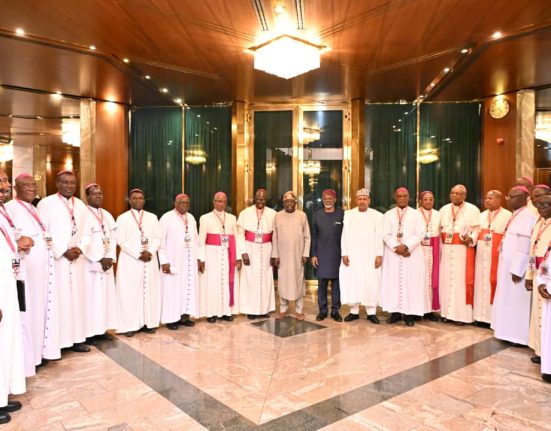
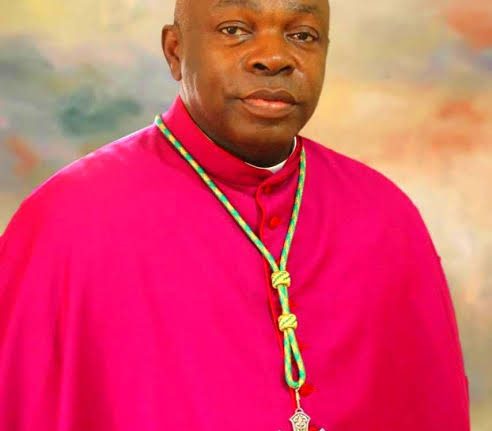
The third session of Day Two Retreat of the CSN and CBCN agencies, was a deeply reflective and challenging presentation by the Retreat Director, Most Rev. Bishop Gerald Mamman Musa, who focused on the theme of conversion of the heart, service to the marginalized, spiritual professionalism, and authentic charity.
The Poor and the Marginalized at the Heart of the Church
The Bishop began by reaffirming the Church’s position on Preferential Option for the poor, the marginalized, and the oppressed. He noted that most Church services are rightly directed toward the poor, but emphasized that true service must go beyond programs and structures to touch the human heart.
He reminded participants that the most important office in the Church is not a physical room, parish, or department, but the human heart. Without interior conversion, even the most well-organized offices and policies lose their meaning.
While acknowledging that money and material resources are important, the Bishop stressed that they must never take precedence over people. The poor, he said, must always come first, and Church workers must be ready to lay down their lives—sometimes literally, but often through sacrifice, patience, and commitment—for those they serve.
Spiritual Professionalism and Interior Integrity
Drawing from the Apostolic Exhortation Dilexi te, Bishop Musa explained that the document emphasizes not only concern for the poor but also spiritual professionalism. He warned against a dangerous imbalance where individuals may be highly competent, knowledgeable in Church procedures, and outwardly efficient, yet inwardly burdened with bitterness, resentment, rivalry, and hostility.
“What is the point of being professional,” he asked, “if our hearts are filled with hatred and pretence?” This reflection led him back to a recurring message of the retreat: clean the inside first.
Using a vivid analogy, he compared such a life to a shiny car with a failing engine—beautiful on the outside but broken within. Authentic Christian service, he said, begins with cleansing the heart and seeking healing from resentment and hidden wounds.
Listening with the Heart
Another major emphasis of the session was the importance of listening. Bishop Musa observed that many environments, including Church offices suffer because people are no longer ready to listen.
He distinguished between merely hearing words and listening with the heart. He cautioned against “ambush listening”—listening only to find faults, raise objections, or prepare counter-arguments rather than listening to understand.
In an atmosphere where no one truly listens, he warned, misunderstandings multiply, unity is wounded, and service becomes mechanical. Body language, tone, and attentiveness, he said, often communicate more than words.
Expectations, Resentment, and Inner Freedom
Reflecting on human expectations, especially within work environments, Bishop Musa acknowledged the pain that arises when expectations are unmet, when promotions do not come or responsibilities change unexpectedly. Such moments, can easily breed resentment and affect the quality of service rendered.
He offered a striking reminder:
“Blessed are those who do not expect, for they shall not be disappointed.”
While affirming that the desire for progress is natural, he encouraged participants to cultivate inner freedom and trust in God’s timing.
Biblical Foundation for Christian Conduct
Drawing from Colossians 3:12–14, Bishop Musa presented a biblical model for daily work and relationships:
“Put on compassion, kindness, humility, meekness, and patience… and above all, put on love, which binds everything together in perfect harmony.”
This, he said, is what a “clean heart” looks like in practice—especially in offices, departments, and institutions of the Church.
Leadership, Impermanence, and Self-Examination
The Bishop reminded participants that life is like a stage, echoing Shakespeare’s insight that everyone has an entrance and an exit. No office, title, or position is permanent. True leadership, therefore, is measured not by control but by sustainability, mentoring, and the ability to prepare others to carry on the mission.
He cautioned against turning offices into personal kingdoms and stressed the importance of building institutions that can outlive their leaders.
This reflection naturally led into the call for daily self-examination, not only at the end of the year but at the end of each day. Participants were encouraged to ask themselves:
• Where did I fail to choose love today?
• How did pride or ego influence my actions?
• Where did I wound unity in my workplace?
Charity Beyond Religion
One of the most powerful parts of the session was Bishop Musa’s emphasis that charity must go beyond religion, ethnicity, and social labels. Poverty and suffering, he said, cut across all boundaries.
He shared touching experiences from prison ministry, where acts of Christian charity touched people of other faiths who had long been neglected. These encounters, he explained, were not about religious conversion but about affirming human dignity.
Referencing the parable of the Good Samaritan, he stressed that the Gospel calls Christians to go beyond religious comfort zones. Feeding the hungry, accompanying the suffering, empowering the poor, and restoring dignity, must be central to Church policy and action.
“How can we preach justice and peace to people who are hungry?” he asked. “How can you spray perfume on others without spraying it on yourself?”
He concluded that whatever we give out—joy, anger, sadness, or compassion—inevitably returns to us.
Policy with a Human Face
Finally, Bishop Musa challenged leaders and policymakers within the Catholic Secretariat of Nigeria to ensure that policies have a human face. Every policy should raise critical questions such as:
• Who benefits?
• Who is excluded?
• How does this reflect the Church’s mission to the poor?
The Apostolic Exhortation, he emphasized, is not a decorative document but a call to action—meant to be read, internalized, and applied in every department of CSN and CBCN agencies.
Conclusion
The third session of Day Two called participants to deeper conversion of heart, renewed commitment to the poor, attentive listening, and selfless service. Through powerful reflections, lived experiences, and scriptural insight. Stating that building the Kingdom of God begins within the human heart and is expressed through love in action, especially toward the most vulnerable.