
A NEW YEAR MESSAGE
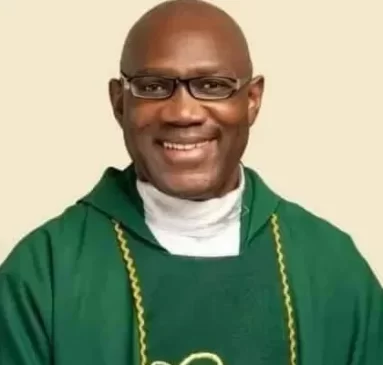
BY REV. FR. MICHAEL BANJO
SECRETARY GENERAL, CATHOLIC SECRETARIAT OF NIGERIA
01 JANUARY 2026
Each New Year invites us to reflect anew on the meaning of time. In Christian faith, time is not merely a sequence of passing days, but the sacred space in which God acts for our salvation. God entered human history through the Virgin Mary; for this reason, she is rightly called the Mother of God. In her womb, the eternal Son truly entered human history and lived within human time, so that our own time might be shaped and redeemed by God’s saving presence. Time thus becomes the arena of salvation, the place where God meets us, calls us to conversion and fidelity, and patiently leads us towards eternity. Whatever resolutions we may make at the beginning of this year, the most fundamental must be the resolve never to live our time without God at its centre, for time only finds its meaning when it is lived with God within it.
One of the most significant truths we celebrate at Christmas is that when the Son entered time, our identity was transformed. Through his life, death, and resurrection, Christ reconciled us to the Father and altered our standing before God. No longer defined by slavery, fear, or distance from God, we were brought into divine filiation. We became sons and daughters of God. From slavery to sonship, Christmas changes who we are. This new identity calls us to concrete responsibility in the way we live. It is meant to shape, in visible ways, how we act in the world, because faith that does not shape life has not yet been fully received.
To live as sons and daughters of God is therefore a demanding vocation. It means living without fear, even when life becomes difficult, because our lives are not sustained by our strength alone but by God’s abiding presence. The child of God lives without panic, because God is never absent. To live as sons and daughters of God means recognising one another as brothers and sisters, treating every person with dignity and respect, and refusing to allow tribe, religion, or social status to become instruments of division. If God is our Father, then no human being is unimportant. It means living marriage as a covenant of love and fidelity, marked by patience, forgiveness, mutual support, and respect. Above all, it means giving God a place in every day of our lives, through prayer, works of charity, faithful work, and responsible care for our families, because divine filiation is not an idea to admire, but a life to be lived.
This same identity as sons and daughters of God also places a moral claim upon us as citizens. Nigeria can be better, and authentic love for our country demands more than pointing out its failures; it calls for personal fidelity to what is right. Nations are renewed when consciences are renewed. Renewal does not begin only in the corridors of power; it takes root in the daily choices of ordinary citizens. Each of us is called to live with honesty, fairness, and respect. Divine filiation extends to how we treat what belongs to all of us. Roads, schools, hospitals, utilities, and public spaces must be used and cared for with a sense of stewardship, not abused or vandalised as though they belong to no one. What we destroy in public space reveals what we neglect in conscience. Our identity as children of God also shapes our conduct at critical moments of civic responsibility, especially as we prepare for the 2027 elections, when citizens are called to make choices guided by conscience, truth, and the common good, rather than by ethnic loyalty, religious bias, money, or divisive rhetoric. Public servants and professionals must reject bribery and abuse of office. Traders, artisans, and business owners must act with integrity. Workers must offer honest service, mindful that their labour is offered not only to employers but ultimately to God. This is what it means to live as sons and daughters of God in public life.
This responsibility of divine filiation finds a privileged expression in the family, the basic building block of society. The quality of a nation’s life is shaped in the quality of its homes. Strong nations are built on formed consciences long before they are built on policies. Parents and teachers therefore carry a sacred trust, sharing in God’s own fatherly care for his people. Scripture reminds us, “Train up a child in the way he should go, and when he is old he will not depart from it” (Prov. 22:6). When parents instil in their children faith, honesty, discipline, contentment, hard work, and respect, and when teachers reinforce these values through sound instruction and good example, they help young people develop into their true identity as children of God. In shaping consciences at this foundational level, families and schools quietly but decisively shape the future of society.
This call to live as sons and daughters of God finds one of its most urgent expressions in our young people. Youth is not merely preparation for the future; it is already a decisive moment of responsibility. The choices made today are shaping the Nigeria of today. To live as children of God means taking formation seriously, choosing discipline over recklessness, honesty over shortcuts, and purpose over distraction. It means having the courage to say no to drugs, crime, and every destructive path that promises quick escape but ends in broken health, wasted potential, and wounded lives. What destroys the future often presents itself as freedom. Such paths do not lead to freedom; they lead to loss. The New Year, therefore, stands before our young people as a summons to hope and responsibility: to invest in themselves through learning skills, acquiring trades, pursuing education, and building strong character. A disciplined youth is a nation’s quiet revolution. These are the foundations of responsible adulthood and a lasting contribution to society.
As we enter this New Year and give thanks to God for sustaining us, we do so with hope, even in the face of the many difficulties Nigeria experienced in the past year. Economic hardship, insecurity, social tension, and uncertainty tested our resilience and stretched our patience. Yet the very fact that we stand at the beginning of a New Year is itself a sign that God has not abandoned us. This hope, however, is not passive optimism. It draws its strength from how we choose to live. When our identity as sons and daughters of God is truly embraced and lived, it becomes transformative, not only for individuals but for society as a whole. Much of what afflicts our nation today flows from a separation between faith and ordinary life, where belief remains private while daily decisions are shaped by other values. Living authentically as sons and daughters of God heals this division and allows faith to shape the very spaces where our common life is formed. In this way, hope becomes credible when it is translated into responsibility. If we walk this year as sons and daughters of God, choosing what builds, persevering in what is right, and acting with courage where we stand, then this year can become not merely another chapter in our history, but a turning point in the renewal of our nation.
May the Lord strengthen us to live as faithful sons and daughters, and may he heal, renew, and guide Nigeria in justice, peace, and hope throughout this New Year. Amen.