
INTRODUCTION
Peace and tranquility has eluded Southern Taraba for quite some time now because, unfortunately, the inhabitants of this zone have refused to give peace a chance. Or rather they have failed to understand the true concept, the value and foundation for peace. There is no gainsaying that the slogan of the seating Governor: “Give me peace and I will give you development” is a true prayer for peace. However, the irony is that the same Governor who is demanding for peace from Tarabians has failed to restore same in his senatorial zone. As a matter of fact, there seem not to be any significant government presence or decisive intervention in order to nip in the bud a crisis that has festered for so long in terms of its management and resolution. One can only imagine the extent of destruction of lives and property attributable to the ongoing communal clashes across Southern Taraba.
Consequently, as a matter of urgency, the State Government must, without delay, rise up to the occasion and, in justice, explore all means possible in order to broker a truce between the warring parties. It also has the indispensible responsibility of doing everything possible to bring the people together for a sustained dialogue towards short and long term solution to the unfortunate imbroglio. The unity of the good people of Southern Taraba, despite their tribal, religious or political differences, is non-negotiable if they are to make significant progress as a people.
On their part, the people of Southern Taraba, who are predominantly Christians, need to come back to their senses and rediscover the dignity of their Christian identity which only can restore their mental balance so that they can reason together and get themselves out of the woods at this critical moment of their history. If they have tried other human ways of resolving the persistent cankerworm that is eating deep into their bone marrow and consuming them as a people, let them remember that their Christian religion that has been tested for over 2000 years has answers to their plight. They need to reflect deeply in order to understand that only true allegiance to Christ, the founder of Christianity – who is the Way, the Truth and the Life and the fear of God can generate lasting peace within and around them; for He is the ‘Prince of Peace.’ For by his blood shed on the Cross and in his own person he has already destroyed the hostility that kept people apart and made them enemies of one another. Through his Paschal Mystery, he has already reconciled humanity with God and made his Church, the sacrament of the unity of the human race and of its union with God. Hence, the Church and its leadership at various levels has a pivotal role to play in collaboration with willing parties in order to broker peace in Southern Taraba.
THE DISTURBING PHENOMENON OF PERSISTENT CRISIS IN SOUTHERN TARABA
The persistent crisis and tribal wars in Southern Taraba is a great cause for concern and an embarrassment for all well-meaning Tarabians. It is really scandalous to see this happening in an environment which is considered predominantly Christian with its central teachings on love, forgiveness, humility and reconciliation. It is even more scandalous to realize that the current leadership structure of the State at both political and traditional levels is in the hands of Southern Tarabians. Both the Governor and the Chairman of the traditional council hail from Wukari. The question now is: what kind of explanation can the people of Southern Taraba provide for the people of the other zones in the State for not giving it peace and the required development for which they all yearn for? The onus is therefore on the Governor and his cabinent members most of whom are from Southern Taraba and the Aku Uka to take a great measure of responsibility for what is happening in their zone. They have no excuse for non-performance because divine providence has brought them on board at this particular time in history to provide the needed leadership that is both productive and effective. We are really tired of being the epicentre of communal clashes in the State and in the country – a situation that has refused to give us a breathing space for peace and development to thrive in the zone in particular and the State in general.
The unfortunate communal clashes we have recorded so far are either between Kuteb/Jukun, Jukun/Tiv or Tiv/Kuteb and now Ichen/Tiv.
HOW CAN WE ADDRESS AND RESOLVE THIS CHALLENGE ONCE AND FOR ALL FOR THE COMMON GOOD OF THE STATE AND THE COUNTRY AT LARGE?
It is only a foolish person who would be happy or contented living perpetually in the darkness of the cave or in the world of ignorance when he knows that out there, there is great light and the possibility of acquiring knowledge and making progress in life. You would agree with me that all these years, the people of Southern Taraba have lived in the darkness of ignorance, error, unbelief and doom because they have consciously or unconsciously allowed self-centredness, pride, hatred and acrimony to determine their relationship with one another. This is largely responsible for the retrogression and underdevelopment in the zone in all ramifications.
But as Christians, we should not despair because our faith is built on the Paschal mystery, that is, on the victory of Christ over sin, evil and death. Therefore, let us resolve to stand together, reason together on our present circumstances so that together we can move forward and be able to chart a new course for the zone. Below are some of the suggestions that can help us pick up the pieces of our broken lives once again so that we can forge ahead as people of faith and of hope.
COGNIZANCE OR AWARENESS OF THE GREAT POTENTIALS OF SOUTHERN TARABA
Southern Taraba has great potentials in terms of its human and natural resources. It also has the Christian faith as a precious treasure and indestructible patrimony. In John 14: 1-2, Jesus admonishes, “Do not let your hearts be troubled; trust in God and trust also in me. In my Father’s house there are many rooms ….” Christianity as a religion is founded on Christ, the Son of God and the Prince of Peace. He has a place for everyone in his heart and has gone to prepare a place for all those who because of their faith in him try to live as God’s children. The Christian religion he founded is expected to be an inclusive universal family where every people, culture and tribe would have ample space to co-exist together.
Consequently, Southern Taraba has all it takes to develop the capacity of its people and maximize it enormous potentials in its human, spiritual, moral, intellectual and socio-economic aspects.
ACTIVATING ALL THE PEACE BUILDING STRUCTURES WITHIN THE STATE
As Africans, we have the traditional, modern (democratic) and even Christian structures for resolving conflicts within the society. This is the time to activate these structures and put them at the service of peace and development within the Southern Taraba zone. Regarding the Christian peace building structure, a bible commentator once remarked: “Christianity was never meant to withdraw people from life, but to equip them better for it. It does not offer us release from problems, but a way to solve them. It does not offer us an easy peace, but a triumphant warfare. It does not offer us a life in which troubles are escaped and evaded, but a life in which troubles are faced and conquered.”
UNDERSTANDING THE CONCEPT OF PEACE: Peace as a concept is a gift from God. We can ask for it in faith. But we also need to take responsibility for it, by doing all those things and exhibiting all the attitudes that can make it possible or achievable. Though a gift, it takes some measure of responsibility to possess it; and there can be no price that can be placed on it. Therefore, everything should be done to achieve it. Hence, all hands must be on deck in this regard.
KNOWING THE CORRECT CONCEPT OF NEIGHBOURHOOD: The best concept of neighborhood is demonstrated by the story of the Good Samaritan in the bible. The Good Samaritan proved himself to be a neighbour through his exceptional act of mercy, compassion and charity towards the man (a Jew) that was robbed, beaten and left half death by arm robbers. He was on a journey but he had to disrupt his journey in order to meet a need. Thus, we are all called to develop the culture of fraternal encounter and solidarity with all those who are in need in our neighbourhood despite their tribal, cultural, political or religious differences.
CONSCIOUSLY EMPLOYING DIALOGUE AS A MEANS OF RESOLVING LINGERING CONFLICTS: It is noteworthy that conflict is part of life and of human existence but it becomes a serious challenge only when we decide to make it a way of life. For us Africans and even as Christians, we have a standard method of resolving conflicts which has been well tested and proven effective in the course of our African and Christian history. That method is known as dialogue. Dialogue is a sustained conversation or deliberation over vexed or perplexed issues that concern the welfare and the common good of the community. In the typical African traditional society, the concept of palaver was evolved in order to explain how elders used to consult widely on issues and at the same time took time during the day or even at night time under the moonlit to deliberate on community concerns; they would never renege on their effort until they are able to arrive at an agreeable solution to the ongoing challenge or conflict within the community.
In Christianity too, dialogue is seen as one of the most effective means of dealing with conflicts and misunderstanding within the community. A practical case is that of the conflict between the Jewish Christians and the Greek-speaking Christians in Acts 6. In this passage the Greek-speaking Christians or Hellenists complained against their Jewish counterparts for neglecting their widows in the daily distribution of food. In order to resolve this issue, the Twelve Apostles summoned a meeting and it was decided that some men of integrity and wisdom should be appointed to this ministry of service of charity. That was how the matter was taken care of without leading to breakdown of law and order within the community.
PROVIDING FARSIGHTED AND PURPOSEFUL LEADERSHIP: The true concept of leadership is always directed towards the common good and interest of each and every member or sector of the community. A farsighted and visionary leadership is usually anchored on the development of each and all the members of the community irrespective of tribe, political affiliation or religion. Ultimately, this style of leadership naturally leads to peace and development because it is built on justice, equality and the common good of all. A good leader therefore is the one that is always interested in building the capacity of its people for development and for meaningful contribution to peace and harmony at all levels.
LIVING BEYOND THE PRESENT CIRCUMSTANCES: Our people need peace education to realize that the present circumstances cannot determine their future. Let them therefore look beyond the present crisis to explore all the possibilities that are there for them to improve on their relationship with one another so as to bequeath a more peaceful atmosphere for generations yet unborn. Crisis, though a negative phenomenon, when properly managed and resolved appropriately, can become a potential for greater unity and progress among the people. Examples abound of this assertion. For instance, the present UN was founded on the ashes of the second world war when the global community realized that there are more gains in teeming together than in operating as fragmented entities. And when we look at the bible, in the Acts of the Apostles, we would also realize that the Christian faith made more progress beyond the confines of Palestine when it was subjected to the pressure of persecution than when it had enjoyed relative peace in Jerusalem. In the final analysis, we need to trust in divine providence for with God all things are always possible for those who have absolute trust and confidence in him.
CONCLUSION: I would like us to conclude this humble reflection with the prayer of St. Francis, the Apostle of Peace for all times:
“Lord make me an instrument of peace;
Where there is hatred, let me sow love;
Where there is injury, pardon;
Where there is doubt, faith;
Where there is despair, hope;
Where there is darkness, light;
And where there is sadness, joy.
O Divine Master,
Grant that I may not so much seek
To be consoled as to console;
To be understood, as to understand;
To be loved, as to love;
For it is in giving that we receive,
It is in pardoning that we are pardoned,
And it is in dying that we are born to Eternal Life.
Amen.
17TH SUNDAY YEAR A: MASS FOR PEACE AND RECONCILIATION AT HOMILY CATHOLIC CHURCH, TAKUM, TARABA STATE, NIGERIA – 30TH JULY 2023
Scripture Readings: 1 Kings 3:5, 7-12; Romans 8:28-30; Matthew 13:44-52
A month ago, precisely on 25 June 2023 ,we were here to celebrate the Eucharist for the intention of peace and the reconciliation of the good people of Takum, Ussa Local Government and Yangtu Special Development Areas who have lived together as brothers and sisters for so many years but are now experiencing some friction and fracas in their relationship with one another – hence the prevailing and endemic insecurity situation in this blessed land. Today, we are back once again for same mission – a mission that is dear to our hearts as we begin our journey of faith as a new Diocese. We believe strongly that no meaningful development can take place without an atmosphere of peace and tranquility in our environment – especially in Southern Taraba that has played host to a succession of crises since independence. After this Mass we shall meet once again to review the resolutions which we made during the last peace meeting.
Thankfully, the readings of today’s liturgy provide the background information regarding what we need to do and how we need to live to achieve lasting peace in our hearts, in our homes, in the Church and in the larger society.
In the gospel reading, Jesus presents many parables in order to demonstrate the reality and the mystery of God’s kingdom in our midst. In the first parable, he compares the kingdom of heaven to an invaluable treasure hidden in the field. When the farmer discovered it, he had the courage to go and dispose everything which he had in order to buy it. This suggests that the kingdom of heaven contains everything that the human heart desires in order to find fulfillment. Once we possess it, we need no longer to seek or crave for anything else.
He also compares the kingdom of heaven to a fine pearl which is also priceless. When the trader discovered it, he had no option than to go and sell every other thing which he had in order to possess it. Again, this means that the kingdom of God remains the best possession that any of us can have no matter our calling in life. It is a treasure that satisfies the yearning and aspiration of everyone no matter his or her tribal, social, language, religious or political background.
Jesus also compares the kingdom of God to a big fishing net which attracts every kind of fish available. The discernment process comes into play only after the gathering of all kinds of fish. But the bad ones are eventually thrown away only at the end and not the beginning or in the process of the gathering. This parable suggests the wisdom of postponing judgement on others till the end. At the end of time, it is God who has the authority and power to subject our actions or in-actions to judgement and that judgement will determine our destination whether in heaven, in purgatory or in hell. We are therefore enjoined to seize every opportunity provided for us to seek the kingdom of God and all its righteousness here on earth so that we can enjoy its blessings in the hereafter. The invitation to fully embrace the kingdom of heaven is open to all who are ready to benefit from it so that there will be no excuse on the part of anyone of us at the end of the day. Through the different parables of today’s gospel, Jesus continues to assure us that the kingdom of God remains a gift of an inestimable value. It therefore requires a life-time decision that would warrant our giving up of some of the present values that we hold unto so tightly so that we can embrace the higher values of the kingdom. However, it is one thing for us to understand the inestimable values of the kingdom and yet another for us to truly desire to possess them for our mutual benefit.
In the parable of the net, Jesus seeks to highlight the stark reality of the presence of evil and evil people that can be found even within the Church – as a community of believers in Christ. It is obvious that through the preaching of the gospel, the Church has succeeded over the years to attract all sorts of people to its fold. Unfortunately, however, not all who call themselves Christians are worthy of that name because their warped mentality and negative character traits place them in contradistinction to the mentality and character of Christ. That is why Mahatma Ghandi, the non-violent Indian advocate of justice and freedom for all once remarked: ‘I like your Christ but I hate you Christians because most of you are very much unlike Him.’
My dear friends in Christ, it actually takes the wisdom of Solomon for us to realize that those things which we passionately seek, crave for, fight and destroy one another in order to possess such as power, wealth, land, influence and fame are nothing in comparison with the peace of mind and heart which we can enjoy when we try to pursue the values of the kingdom which are love, understanding, patience, acceptance and justice.
St Paul is deeply convinced beyond any iota of doubt that those who seek true riches are pleasing in the sight of God and so can enjoy his divine love, care and protection. He believes that God is always on the side of those who love him and are prepared to do his will in accordance with his divine plan for the salvation of humanity. After all, “We are all predestined to be transformed into the likeness of his Son Jesus (v 29) and to be glorified in him.” Hence nothing can upset the eternal plan that God has for the transformation and glorification of all who trust and hope in him. This gives us the confidence to continue to rely on him even where human beings or human institutions have dashed our hope. Let us be confident that at the end of the day, it is God who will have his way and no one else since he is always on the throne.
My dear brothers and sisters in Christ, the teaching of St. Paul in the second reading should motivate us to continue to embrace the mission of peace and peacemaking for great reward awaits all the lovers of peace for they are the true heirs of God’s kingdom. May God bless our efforts so that they may bear the required fruits that will enable all our displaced brothers and sisters to return to their homes, their farms and businesses so as to avert the looming hunger and economic down turn that are a great threat to our survival and wellbeing as a people.
On her part, the government at all levels must ensure that they own up to their statutory obligation of providing good governance that guarantee the security of the lives and livelihood of all her citizens. It is also their duty to secure all the ungoverned and ungovernable spaces which have become breeding grounds for thriving banditry and terrorism in our blessed land. We are convinced that the government has all it takes to broker peace between warring parties as well as nip in the bud every attempt to turn the State into a den of bandits, terrorists and opportunists who are feeding fat on the blood of fellow brothers and sisters.
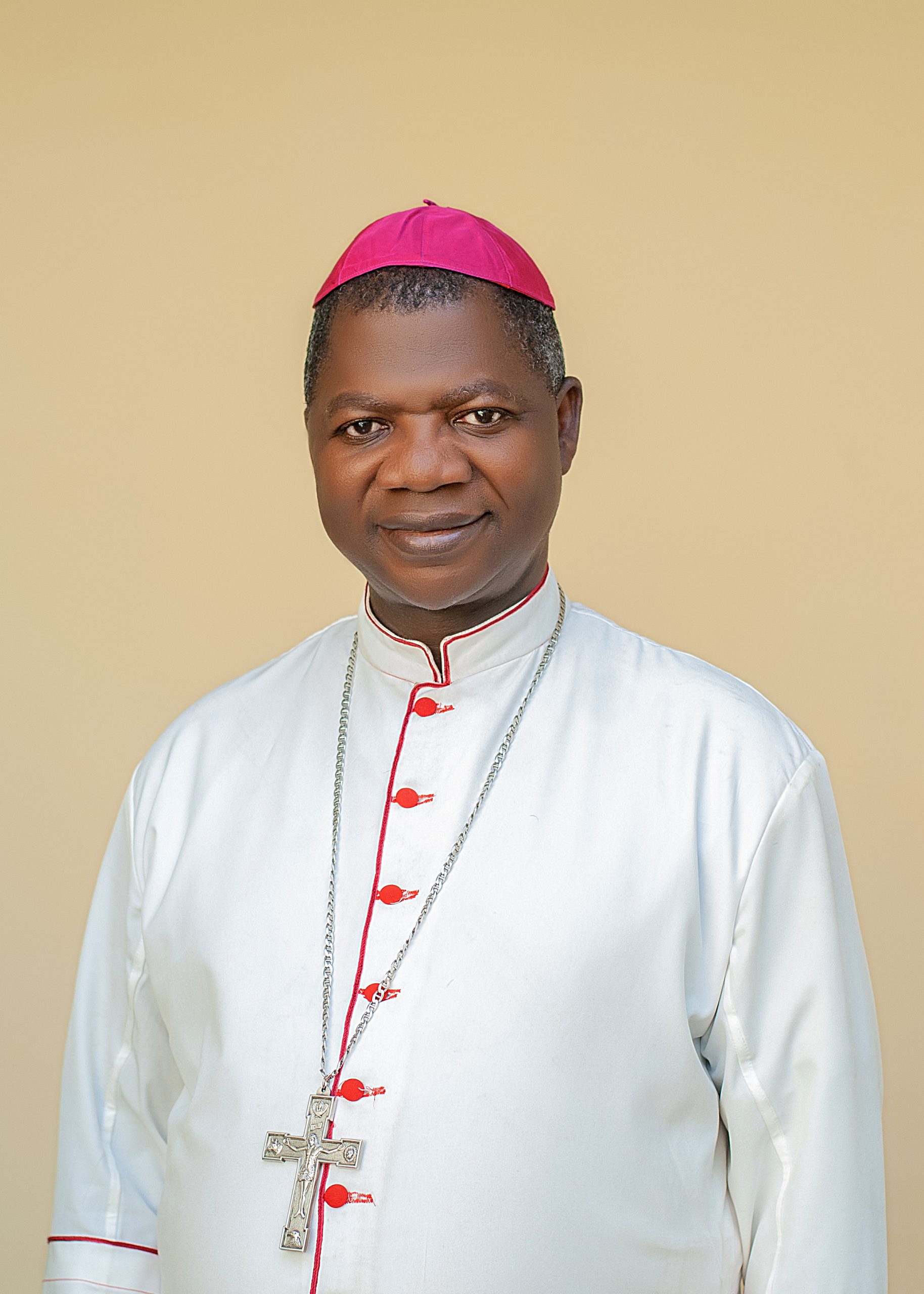
A HOMILY DELIVERED BY MOST REV. DR. MARK MAIGIDA NZUKWEIN, THE CATHOLIC BISHOP OF WUKARI, ON THE OCCASIONOF THE 10th ANNIVERSARY OF KATSINA-ALA DIOCESE AND THE 1ST ANNIVERSARY
OF MOST REV. DR. ISAAC BUNDEPUUM DUGU – 1ST JULY 2023.
Scripture Readings: Isaiah 63:7-9; Colossians 3:12–17; Luke 17:11–19.
Today, we celebrate with great joy the dual events of the 10th anniversary of the Catholic Diocese of Katsina-Ala and the 1st anniversary of the episcopal ordination of Most Rev. Dr. Isaac Bundepuum Dugu. We thank God for the gift of the Diocese and we fondly remember the Pioneer Bishop of blessed memory, Most Rev. Dr. Peter Iornzuul Adoboh, for laying a solid foundation for its development. We also thank the Administrator of the Diocese and the Bishop of Gboko, Most Rev. Dr. William Amove Avenya, who stood in the gap with the demise of Bishop Adobah.
The scriptural readings of today’s liturgy actually encourage us to always appreciate God for who he is and for what he does in our lives. There is a lot we can learn from the Samaritan leper for he was a man of faith and a grateful person indeed. Out of the ten people who were healed by Christ, St. Luke tells us that he was the only person who returned to praise God and thank Jesus for his goodness to him. Though a non-Israelite, a non-entity, the Samaritan became a hero as well as a privileged beneficiary of Jesus’ benevolence which points to the fact that God’s goodness has no frontiers or boundary. On a deeper level, the return of the Samaritan is an indication of his conversion to Christ through whom he has experienced God’s saving grace. His attitude of showing appreciation for favours received sharply contrasts the ingratitude of the other nine. Ingratitude, to say the least, is the mother of discontentment and discontentment is the root of every evil and crisis within the family, the Church and even in the larger society.
Generally, like the other nine lepers, our inability to show gratitude is largely influenced by our sense of entitlement and lack of humility to be able to recognize God for who he is in our lives. None of us deserve anything or any position from God; all that we have and are come from him. Therefore, it is right and just for us to celebrate and give thanks to God for Katsina-Ala Diocese, our Bishop and the journey so far.
As we celebrate today, it is apt to recall the tremendous sacrifices made by generations of missionaries who have contributed remarkably in planting the seed of the gospel among the Tiv people. Ever fresh in our memory is the outstanding contributions of the Holy Ghost Fathers of French and German origin who pioneered the missionary enterprise in Tiv land, among others. Their rare commitment, enthusiasm and passion for winning souls for Christ in this region is what has led to the emergence of three robust dioceses in Tiv land that have great potentials for further development. Today we are also celebrating the collaborative effort of other male and female religious institutes and congregations who, along the line of history, have graciously joined the missionary trained and have equally kept the fire of gospel burning till date.
Inasmuch as we celebrate the missionaries, both past and present, for their good work in planting the faith, we should also thank the Almighty God for blessing their efforts with great fruits. This is evident in the increasing number of diocesan priests, seminarians, catechists and lay faithful who have proved themselves to be gallant soldiers of Christ and are profoundly committed to the cause of the gospel in both good and bad times. I am particularly touched by the level of unwavering dedication, relentless sacrifice and even the risk which some of the priests, consecrated persons, catechists and men and women of goodwill take on a daily basis in standing by the people and providing pastoral care even at the expense of their lives.
It is to the glory of God that he has equally blessed this Diocese with good leadership right from its foundation. Late Bishop Adoboh laid a solid foundation for the development of the Diocese. Thankfully, the Apostolic Administrator, Most Rev. Dr. William Avenya, followed suit, and now his successor, his Excellency, Most Rev. Dr. Isaac Dugu, is gradually and surely consolidating this foundation by his utmost commitment in steering the ship of the Diocese in the right direction.
My dear brothers and sisters in Christ, we can be sure that the potency of the gospel message is limitless as its impact is often felt even beyond the confines of the Church. The Catholic Church is well known for its qualitative educational, medical and social services which have greatly impacted on the integral development of the society at large. For instance, in Benue State, the Church has nurtured countless citizens of high-profile who are contributing remarkably to the development of the society at all levels. We therefore call on the government of Benue State to kindly complement the efforts of the Church in this regard.
As we celebrate Katsina Ala Diocese and the Bishop today, we need to pay keen attention to the grim reality of the dichotomy that is glaring in the practice of our Christian faith which apparently poses a serious threat to our missionary efforts. It is actually a tragedy and a betrayal that the Christian faith which the missionaries fought tooth-and-nail to establish is gradually relapsing into paganism. Though we experience rapid population growth of Christians in our environment, it is sad to note that the quality of our witness to the faith seems to be diminishing by the day. This is evident in our attitude towards the politicization of religion and in our wrong perception of one another. Therefore, future missionary endeavors should focus on changing the mindset of stereotyping, of clan, ethnic or religious bigotry and lack of respect for life.
Another reality that present a serious challenge to our missionary work in Katsina-Ala Diocese is the worsening security situation that has affected everyone. The phenomenon of banditry, kidnapping, silent killing, terrorism and so on which is not receiving adequate attention is worrisome. Since security is everybody’s business, I therefore call on the government at all levels, the traditional institution, the security agencies and each and everyone of us to do the needful in order to achieve positive results in this area. The government particularly has greater responsibility in securing the lives and livelihood of citizens because that is its statutory role imposed upon it by the constitution of the country. Since development is about the people, the government at all levels must ensure that the backlog of salaries, gratuity and pension are cleared before thinking of any physical development. It must also ensure that the ungoverned and ungovernable spaces are recaptured because no responsible government should allow any part of its territory as a sovereign nation to be in the control of hooligans.
At the level of the Church, there is need for close collaboration between Katsina-Ala and Wukari Dioceses in driving the process of peace building and reconciliation among our people. The fact that many of the internally displaced persons in Wukari Diocese are being accommodated by various Catholic communities here in Katsina-Ala Diocese is an obvious indication that a strong bond has already been established between the two dioceses. Together, I believe, we can foster mutual understanding, unity, fraternity and lasting peace among our people.
At this point, I would like to heartily felicitate with the bishop, priests, consecrated men and women, catechists and the lay faithful of Katsina-Ala Diocese on this joyful occasion of the 10th anniversary of your Diocese as well as the 1st anniversary of the Bishop. I know that this Diocese has great potentials and prospects for growth and development in all ramifications. As you celebrate this milestone event, you will need to close ranks, forgive the past, rise above every form of discontentment, work and pray together so as to chart a new course for a strong, prosperous and vibrant Diocese – all to the glory of God.
PASTORAL VISIT TO THOMAS THE APOSTLE PARISH, AFIA, KATSINA ALA DIOCESE, MASS FOR PEACE AND RECONCILIATION – MEMORIAL OF ST IRENAEUS – 12TH WEEK YEAR A – ON 28 JUNE 2023
Scripture Readings: Genesis 15: 1-12, 17-18; Matthew 7:15-20
The first reading of today’s liturgy talks about the covenant which God made with Abram. Within the context of this covenant God promised to do four things for Abram. 1) He will protect him from all dangers 2) He will bless him with the gift of a child who will be his legitimate heir; 3) He will multiply his progeny as many as the stars of heaven and 4) He will help him and his descendants to have eternal possession over the land that he will conquer for them.
Usually in a covenant relationship, both parties are expected to be faithful to their part of the deal but in this case, it is only God who shoulders the obligations of his promises. In other words, he is the one who has chosen to bear the responsibility of the covenant relationship and Abram and his descendants who will only be the privileged beneficiaries. This shows the extent of God’s love for his children whom he has created in his image and likeness and so would never abandon them at any point of their journey in life. Of course, in the case of Abraham, God showered his blessings upon him and his descendants because he actually surrendered himself to God’s plans. Earlier on, God had asked him to leave his ancestral land to a foreign land in accordance with his plan and Abram consented without hesitation. Since Abram was so committed in this way, God had no choice than to commit himself to fulfilling the promises he had made to him and his descendants.
On his part, Abram believed the Lord. He trusted that God would keep his word. In this way, he has now become a source of inspiration and blessing to all who believe and trust God for who he is. St Paul teaches that our faith in God connects us to Abraham’s faith and for this reason, we have automatically become the beneficiaries of the promises made to him who is now considered as our Father in faith.
My dear friends in Christ, let us keep hope alive conscious of the fact that with God on our side, our situation of pain and suffering due to the long period of displacement from our homes will not last forever. Let us remain convinced and resolute that with faith in God and our trust in his promises, things will certainly brighten up for us. And while we are still in exile, let try and live like the children of Abraham – in sober reflection on our lives and our relationship with God and others so that when we eventually return home, our lives will never be same again. We believe and hope that our suffering will shape our mindset in such a manner that after all this suffering, we will begin to think, react and behave differently towards others whether they are of our clan, tribe, religion, political party or not. For then we shall no longer put new wineskin into old wineskin, otherwise the whole content will burst and the whole wine will spill over and we shall not benefit from it at all. This is where we need the special grace of God which we humbly implore in this Mass of peace, reconciliation and reparation.
In the gospel reading, Jesus warns against false prophets, that is, those who present themselves as sheep but inside them they are wild wolves. This basically refers to those who profess the Christian faith but behave like pagans in their relationship with one another. And by their fruits they will be known. And so as Christians, we define our character by our behaviour.
Now, it is important to note that there are two basic understanding of the concept of prophecy. There are those who view the prophetic mission as the forecasting of future events or prophesying for personal gain. Whereas biblically speaking, prophesy has to do with understanding God’s will and projecting his plans as it unfolds in human history for the salvation of the world. In this case, a false prophet always draws people to himself rather than to God and would usually go for something less than the will of God and what will truly help people to know the truth and grow in it. Furthermore, he would usually do things to impress people, to give false hope, to divert attention and sometimes even deceive people in order to maximize profit. He is therefore not a true guide and model for the sheep. And most of the prosperity preachers fall within this category of prophets. We be sure that believers who deliberately promote division, violence and crisis also fall within this category of false prophets because their negative attitude and body language do not usually lead to peace but blood-letting, destruction of livelihood and damaging of relationship with others.
However, as Christians, we are called to be true to our identity and dignity as God’s children who have been entrusted with the mission of witnessing to the true character of Christ to the world in our thoughts, words and actions. For we shall be judged and known by the fruits that we bear – whether good or bad. If our hearts are always positively disposed and our character is good, then certainly we shall produce the fruit of the Spirit which is “love, joy, peace, patience, forebearance, kindness, goodness, faithfulness, gentleness and self-control,” in our relationship with one another (Gal. 5:22-23). For true faith usually bears the fruit of charity towards our neighbours and this remains one of the greatest commandments that perfectly fulfills the law of the kingdom (Gal. 5:6; James 2:8). Hence, the test of our Christian character remains basically the fruit of love of God and love of neighbour that should define both our vertical and horizontal relationships at all times. Therefore, as Christians, we cannot live without love because it is love that led to the supreme sacrifice of Christ on the cross for our redemption.
If love of God and neighbour is what authenticates our Christian discipleship, it means that lack of love is the bane of our moving forward as Christians. Therefore, the gospel cannot make progress where we lack Christians who understand and try to live out the concept of Christian love which is all-embracing and all-inclusive. To say the least, lack of love is actually the reason for the recurrent conflict and untold hardship that we often experienced in life. Love unites and binds us together as its ingredients encompasses empathy, tolerance, forgiveness, reconciliation and collective effort towards peace. St Paul further graphically describes love as “patient, kind, without envy. It is not boastful or arrogant. It is not ill-mannered, nor does it seek its own interest. Love is not provoked to anger; keeps no score of offenses. It does not take delight in wrong, but rejoices in truth. Love excuses all things, believes all things, hopes all things, endures all things” (1 Cor 13: 4-7).
As St John the evangelist could say in his short homily when he was not strong enough to preach long sermon: Let us just love, forgive and make peace with everyone and this is enough.
MASS FOR PEACE AND RECONCILIATION MASS HELD AT THE HOLY CATHOLIC CHURCH, TAKUM, TRARABA STATE, NIGERIA – 12TH SUNDAY YEAR A – ON 25 JUNE 2023
Scripture Readings: Isaiah 20: 10-13; Romans 5:12-15; Matthew 10:26-33
What strikes me so much in today’s gospel is the fact that Jesus told his disciples never to be afraid of anyone but God alone. As he puts it himself: “Do not be afraid of those who kill the body, but cannot kill the soul. Rather be afraid of the one who can destroy both body and soul in hell.” These words are quite reassuring for his disciples who had been sent on mission to evangelize a hostile world and it was quite natural and human for them to be afraid of the rejection, humiliation, persecution and even martyrdom that awaited them. But Jesus assured them of God’s special care in all their trials and tribulations. He told them that if God can take care of the sparrows as the most insignificant of his creatures, it means he can do much more for them. Granted the mission he had entrusted to them for the evangelization of the whole world would not be an easy one at any point in time as they will certainly face all sorts of hardships and discomforting moments that might even threaten the continuance of their mission, but despite all these, God will be there for them to sustain their hope and courage.
In concrete terms the suffering of St Paul, as the greatest missionary of the Christian faith actually represents the plight of all who have been called to the mission of Christ. He was once kidnapped, once beaten, his life was once threatened, he was arrested many times, accused in lawsuits, interrogated, ridiculed, ignored and shipwrecked. As he once described the several threats to his life like: danger at sea, danger on land, danger on the road and danger everywhere. If the great St did not find it easy at the early stage of Christianity to carry out his mission among the gentiles, do we think, it will be easier for us in our time?
Similarly, Jeremiah as we heard in the first reading of today’s liturgy lived out his vocation as a prophet in time of great distress and national calamity in the history of Israel as a people. Israel lost everything as a result of the violence visited on them by their enemies including the destruction of the magnificent temple of Jerusalem. His kind of prophecy at that period was not that of forecasting future events or prophesying for personal gain but he stood for the truth like St John the Baptist and openly challenged the injustice that led to such calamity that befell the people and for that reason he became a target of persecution by the powers that be. Yet, against all odds, he remained faithful and resolute in living out his prophetic mission. Though always experiencing threats to his life, he always trusted God and looked up to him alone as a mighty hero.
My dear brothers and sisters in Christ, it is often said that there is a very thin line between fear and courage. A fearful person can easily pick courage to continue the journey to his destination; while a courageous person can easily slip into fear and abandon the task or the just cause he has set out to accomplish for his good and the good of others. It therefore depends on where one chooses to stand or the impact that one wants to make in the sand of history for him to be remembered even by generations yet unborn.
It is certain that all those who have accomplished great things in the course of human history must have gone through the experience of fear in one way or another. However, this did not stop them from moving ahead in spite of their fears in order to achieve the goal they had set for themselves. A run down through our recent African and global history would reveal that such personalities are not in short supply. We can easily think of Nelson Mandela who had the courage to fight for the freedom of the South Africans from the oppressive Apartheid regime of the minority white race or Martin Luther King who fought for the equality of the black Africans in the United States of America and paid the price of their freedom with his life and the Archbishop Oscar Romero who fought for the economic and political freedom of the people of San Salvador in central America, and so on. These were courageous men who rose above their fears in order to work for the common good of their people and nation.
In our case, the important task we are expected to accomplish as Christians especially in Central and Southern Taraba where the new Diocese of Wukari is domiciled is for us to close ranks and together, work and pray for the reconciliation and peace of our people in spite of our clan, tribal, religious, political and ideological differences. May I use the opportunity of this holy Mass of peace and reconciliation to call on the warring parties here in Takum, Ussa and Yangtu Development Area to shield their swords and embrace peace which is the only sure way to meaningful development in our region. I urge you to try and respect the peace accord which you have signed over the years and even of recent as a sign of your integrity so that you cannot be seen to be speaking from both side of our mouths. You should also learn to renegotiate your broken relationships after the huge damage which you have inflicted on one another in terms of wanton destruction of lives and livelihood worth millions of naira. You should equally learn to respect each other’s occupation by creating the enabling environment for all to carry out their legitimate professional activities necessary for their sustenance. And since security is everybody’s business, I wish to call on each and every one of us to work together across tribal and religious lines and in collaboration with the traditional institution in order to secure our environment and assure freedom of movement of all citizens without let or hindrance. On her part, the civil authorities at both State and Local Government levels should constantly be reminded of their statutory obligation to provide good governance as well as responsible leadership capable of harnessing the diversity of our people across the state as well as safeguarding the lives and property of all citizens without prejudice.
While we may face unpalatable situations like untimigated recurrent violence, kidnapping, banditry and tribal and religious intolerance that are quite scary and life threatening, we should not resign to fate or be crippled by fear. For the Lord we are serving is a living God and he will certainly intervene in our situation to bring us relief at his own time and in his own way if only we trust in him and allow his will and plan to prevail in our lives at all times. Let us therefore keep hope alive since he can never allow the plans of the evil one to overwhelm us.
Like the disciples of Jesus, we sometimes lack the courage to witness to our faith when confronted with daunting challenges. Let us at this Mass surrender our fears to Jesus so that he will help us to overcome them. Let us also ask the Lord for strength when we are weak, for courage when afraid and for a new heart when we have fallen short of his glory. May the Lord bless his word in our hearts and grant us peace in our days.
DIALOGUE FOR RECONCILIATION AND PEACE IN TAKUM
HELD AT HOLY FAMILY CATHOLIC CHURCH, TAKUM ON 25 JUNE 2023
Taraba State has often been described as a “trouble State” by non-Tarabans. While many Tarabans would like to debunk this assertion, the reality on ground seems to suggest the contrary. This is a State that is highly blessed with both natural and human resources in terms of its astonishing physical features, promising mineral resources and vast agricultural potentials as nature’s gift to the nation as well as its rich diversity of cultures, peoples and religions. However, the lack of foresight or ineptitude of successive governments or civil authorities as well as our inability to collectively harness and channel these resources for the common good of all is responsible for poverty in our State.
As a matter of fact, since its creation three decades ago, no decade has ever elapsed without the State experiencing one form of intra or inter-tribal or religious crisis or another – as in Jalingo, Takum, USSA, Karim Lamido, Lau, Gashaka, Sardauna, Bali, Gassol, Ibi, Donga, Wukari, etc. Unfortunately, the rippling effects of each of these crises has left in its wake debilitating sentiments of hatred, rancour, acrimony and the desire for vengeance at the slightest provocation.
Sadly enough, in each of these senseless violent conflicts that seem to have defied the sense of reason, the victims have always recorded huge losses in terms of wanton destruction of lives and property worth millions of naira; thus creating heavy wounds in the bleeding hearts and troubled minds of the people involved. Apart from disturbing the peace of the State and the stability of the various communities, the series of crises have also inevitably slowed down the pace of development of the State in all its ramifications.
It is in response to the quagmire of the murky waters that we have found ourselves in for the past years that we have all gathered today to rob minds on how we can put a permanent end to this ugly phenomenon that has been the bane of the development of Takum, Ussa and Yangtu Development Area. Rather than just joining the train of lamentators about the sorry state of affairs around us, we should all rise up to the occasion by making more concerted efforts towards the peace of our environment. After all, as children of God, we all have the mandate to pray and work for peace among men.
Nevertheless, the Catholic Church may not succeed in her peace initiatives and advocacy devoid of the sincere intention, good will and collaborative efforts of all stakeholders and willing advocates of peace. For united we stand but divided we are bound to tragically fall.
PASTORAL VISIT TO HOLY FAMILY PARISH, TAKUM,
FOR PEACE AND RECONCILIATION MASS – 12TH SUNDAY YEAR A – ON 25 JUNE 2023
Scripture Readings: Isaiah 20: 10-13; Romans 5:12-15; Matthew 10:26-33
What strikes me so much in today’s gospel is the fact that Jesus told his disciples never to be afraid of anyone but God alone. As he puts it himself: “Do not be afraid of those who kill the body, but cannot kill the soul. Rather be afraid of the one who can destroy both body and soul in hell.” These words are quite reassuring for his disciples who had been sent on mission to evangelize a hostile world and it was quite natural and human for them to be afraid of the rejection, humiliation, persecution and even martyrdom that awaited them. But Jesus assured them of God’s special care in all their trials and tribulations. He told them that if God can take care of the sparrows as the most insignificant of his creatures, it means he can do much more for them. Granted the mission he had entrusted to them for the evangelization of the whole world would not be an easy one at any point in time as they will certainly face all sorts of hardships and discomforting moments that might even threaten the continuance of their mission, but despite all these, God will be there for them to sustain their hope and courage.
In concrete terms the suffering of St Paul, as the greatest missionary of the Christian faith actually represents the plight of all who have been called to the mission of Christ. He was once kidnapped, once beaten, his life was once threatened, he was arrested many times, accused in lawsuits, interrogated, ridiculed, ignored and shipwrecked. As he once described the several threats to his life like: danger at sea, danger on land, danger on the road and danger everywhere. If the great St did not find it easy at the early stage of Christianity to carry out his mission among the gentiles, do we think, it will be easier for us in our time?
Similarly, Jeremiah as we heard in the first reading of today’s liturgy lived out his vocation as a prophet in time of great distress and national calamity in the history of Israel as a people. Israel lost everything as a result of the violence visited on them by their enemies including the destruction of the magnificent temple of Jerusalem. His kind of prophecy at that period was not that of forecasting future events or prophesying for personal gain but he stood for the truth like St John the Baptist and openly challenged the injustice that led to such calamity that befell the people and for that reason he became a target of persecution by the powers that be. Yet, against all odds, he remained faithful and resolute in living out his prophetic mission. Though always experiencing threats to his life, he always trusted God and looked up to him alone as a mighty hero.
My dear brothers and sisters in Christ, it is often said that there is a very thin line between fear and courage. A fearful person can easily pick courage to continue the journey to his destination; while a courageous person can easily slip into fear and abandon the task or the just cause he has set out to accomplish for his good and the good of others. It therefore depends on where one chooses to stand or the impact that one wants to make in the sand of history for him to be remembered even by generations yet unborn.
It is certain that all those who have accomplished great things in the course of human history must have gone through the experience of fear in one way or another. However, this did not stop them from moving ahead in spite of their fears in order to achieve the goal they had set for themselves. A run down through our recent African and global history would reveal that such personalities are not in short supply. We can easily think of Nelson Mandela who had the courage to fight for the freedom of the South Africans from the oppressive Apartheid regime of the minority white race or Martin Luther King who fought for the equality of the black Africans in the United States of America and paid the price of their freedom with his life and the Archbishop Oscar Romero who fought for the economic and political freedom of the people of San Salvador in central America, and so on. These were courageous men who rose above their fears in order to work for the common good of their people and nation.
In our case, the important task we are expected to accomplish as Christians especially in Central and Southern Taraba where the new Diocese of Wukari is domiciled is for us to close ranks and together, work and pray for the reconciliation and peace of our people in spite of our clan, tribal, religious, political and ideological differences. May I use the opportunity of this holy Mass of peace and reconciliation to call on the warring parties here in Takum, Ussa and Yangtu Development Area to shield their swords and embrace peace which is the only sure way to meaningful development in our region. I urge you to try and respect the peace accord which you have signed over the years and even of recent as a sign of your integrity so that you cannot be seen to be speaking from both side of our mouths. You should also learn to renegotiate your broken relationships after the huge damage which you have inflicted on one another in terms of wanton destruction of lives and livelihood worth millions of naira. You should equally learn to respect each other’s occupation by creating the enabling environment for all to carry out their legitimate professional activities necessary for their sustenance. And since security is everybody’s business, I wish to call on each and every one of us to work together across tribal and religious lines and in collaboration with the traditional institution in order to secure our environment and assure freedom of movement of all citizens without let or hindrance. On her part, the civil authorities at both State and Local Government levels should constantly be reminded of their statutory obligation to provide good governance as well as responsible leadership capable of harnessing the diversity of our people across the state as well as safeguarding the lives and property of all citizens without prejudice.
While we may face unpalatable situations like untimigated recurrent violence, kidnapping, banditry and tribal and religious intolerance that are quite scary and life threatening, we should not resign to fate or be crippled by fear. For the Lord we are serving is a living God and he will certainly intervene in our situation to bring us relief at his own time and in his own way if only we trust in him and allow his will and plan to prevail in our lives at all times. Let us therefore keep hope alive since he can never allow the plans of the evil one to overwhelm us.
Like the disciples of Jesus, we sometimes lack the courage to witness to our faith when confronted with daunting challenges. Let us at this Mass surrender our fears to Jesus so that he will help us to overcome them. Let us also ask the Lord for strength when we are weak, for courage when afraid and for a new heart when we have fallen short of his glory. May the Lord bless his word in our hearts and grant us peace in our days.