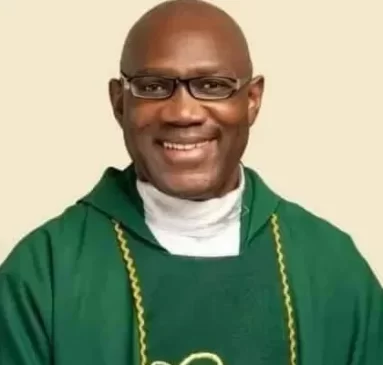

By Rev. Fr. Moses P. Sade
“Out of the abundance of the heart, the mouth speaks.” — Matthew 12:34
“There is power in the tongue — life and death are in its power.” — Proverbs 18:21
Introduction
In an age where social media dominates our conversations, this reflection calls us back to the sacredness of words — urging everyone to rediscover the moral weight of speech and the cultural virtue of respect.
The Erosion of Verbal Discipline
It is increasingly disturbing to observe how insults, mockery, and curses have become common on social media today. Many now speak without restraint, forgetting that behind every post or opinion lies a real person — a fellow human being created in the image and likeness of God.
In our time, social media has become a new public square, reflecting both the moral decay and the shifting values of our society. From a sociological perspective, the loss of verbal discipline signifies a deeper erosion of communal values.
Annang Wisdom on the Power of Words
In traditional Annang society, words were never used carelessly. They were powerful instruments of life, peace, or destruction. The elders taught that “a word once spoken cannot be withdrawn.” This wisdom governed social conduct, reinforced moral boundaries, and maintained harmony within the community.
Every statement carried social responsibility; hence, people feared to utter curses, especially against elders, titled men, or leaders of the land. The spoken word was both moral and spiritual — it could bless, heal, or destroy, and the community respected that power.
Traditional Institutions as Moral Guardians
The traditional institutions — including cultural dance, the women associations, the family lineages, and the council of elders — all served as moral regulators, ensuring that language and behaviour conformed to communal ethics.
A person who insulted elders or spoke abusively in public would face sanctions, ridicule, or moral correction. Respect for leadership, both traditional and political, was not mere etiquette; it was a social law that protected the dignity and order of the community.
Faith Elevates Culture
Christianity came not to destroy this moral order but to elevate it. Christ Himself teaches, “Out of the abundance of the heart, the mouth speaks” (Matthew 12:34). The Apostle Paul adds, “Let no corrupt communication proceed out of your mouth, but only what is useful for building up others” (Ephesians 4:29).
In both our faith and our culture, words are sacred — they carry spirit, meaning, and consequence. Faith deepens what tradition already teaches: that our speech reflects our inner life and shapes the moral atmosphere of our world.
The Modern Crisis of Speech
Unfortunately, the modern media environment has weakened these age-old controls. People now speak from anger, envy, jealousy, and pride, forgetting the sacredness of human dignity.
Even women who once served as moral voices in the Nka and family circles, and men who once represented wisdom in the village councils, now join the chorus of online insults against leaders, elders, and fellow citizens.
This is not freedom of expression; it is moral regression — a new kind of abnormality that must be checked. Scripture warns us clearly: “There is power in the tongue — life and death are in its power” (Proverbs 18:21).
When Society and Church Intersect
What affects society also affects the Church. The spirit of disrespect that dominates social media gradually seeps into our families, our communities, and even our worship spaces.
Sometimes, people pray and speak in the Church as though they are contending with Sodom and Gomorrah — forgetting that the house of God is a place of peace, humility, and grace. When we lose the culture of respect, we lose the moral fabric that holds us together — both as Christians and as Annang people.
Gratitude to the Custodians of Culture
At this point, it is only right and proper to appreciate our traditional institutions that have begun to rise to the occasion — to correct these new abnormalities and to restore moral order in public life.
Their renewed efforts in promoting discipline, respect, and cultural decency are most commendable. When the custodians of culture and the guardians of faith stand together, society stands a better chance of recovering its lost values.
A Call to Moral Restoration
Let us, therefore, return to decency. Let us restore the moral voice of our traditional institutions and the spiritual authority of the Church. If a post or opinion troubles you, correct in love if you must, or move on in silence and prayer.
Remember: words can heal or wound, bless or curse, build or destroy.
As respecters and people in need of dignity — and as custodians of a noble cultural heritage — may we use our words, both online and offline, to bless, to build, and to bring honour to God, to our community, and to our land.
Rev. Fr. Moses P. Sade
Catholic Diocese of Ikot Ekpene
A Pastoral and Sociological Reflection