Fr. Dr. Okhueleigbe Osemhantie Ãmos|April 23, 2026
EXECUTIVE SUMMARY
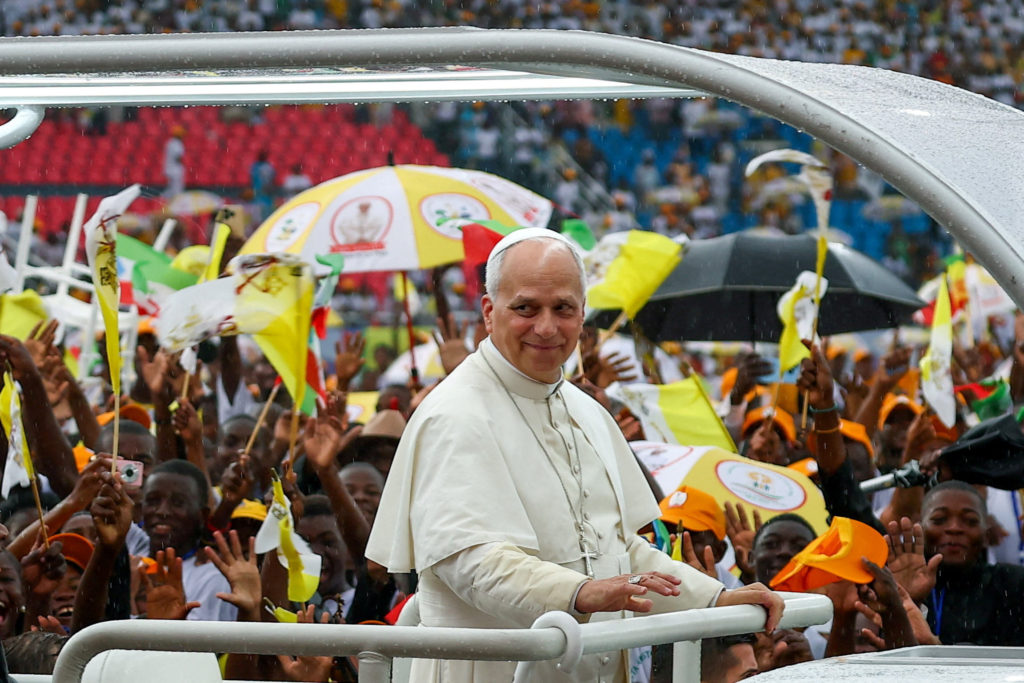
Between 13 and 23 April 2026, the pontificate of Pope Leo XIV undertook a historic apostolic journey across Algeria, Cameroon, Angola, and Equatorial Guinea, marking his third international trip and his first continental engagement in Africa since his election in May 2025.
The itinerary covered 11 days, spanning 11 cities and towns**, and included approximately 18 flights, 12 major public addresses, and 8 papal Masses, alongside structured meetings with heads of state, interreligious leaders, episcopal conferences, youth delegations, displaced communities, and civil society representatives.
Special symbolic moments included the first-ever papal engagement in modern times with Algeria under this pontificate, a massive youth assembly in Yaoundé exceeding 120,000 participants, a penitential and ecological liturgy on the Atlantic coast of Equatorial Guinea, and a forceful socio-economic intervention in Angola’s post-conflict reconstruction environment.
Across the four nations, the visit engaged over 2.3 million people, involved more than 400 bishops and clergy, and was covered by over 400 international and regional media outlets, making it one of the most widely followed ecclesial journeys of the decade.
The pastoral emphasis consistently revolved around four axes: youth and migration ethics, governance and corruption, interreligious dialogue, and ecological justice, each articulated with varying intensity across the different national contexts.
The visit was widely interpreted as a convergence of missionary theology, political moral critique, and African ecclesial affirmation, situating Africa not merely as a recipient of papal attention, but as a central interlocutor in contemporary Catholic moral geography.
I. ALGERIA (13–14 APRIL 2026): MEMORY, AUGUSTINIAN HERITAGE, AND INTERRELIGIOUS RECONCILIATION
The journey opened in Algeria, a land of profound theological symbolism as the homeland of St. Augustine of Hippo, one of Christianity’s greatest Doctors of the Church. The visit was historically significant as one of the rare modern papal engagements in the country and the first under this pontificate.
Algeria’s Christian population remains a small minority within a predominantly Muslim society, making the encounter deeply symbolic in interreligious terms.
At Algiers, the Pope met Muslim scholars, Christian representatives, and civil authorities before proceeding to the Basilica of Our Lady of Africa. His intervention focused on historical memory and religious coexistence.
He declared:
> “Faith must never be weaponized; it must remain a bridge where history once built walls.”
The tone of the visit underscored reconciliation between Christianity and Islam, framed within a shared moral responsibility for peace and historical healing.
II. CAMEROON (15–17 APRIL 2026): YOUTH, CONFLICT, AND THE QUESTION OF NATIONAL FUTURE
The second stage unfolded in Cameroon, a nation marked by linguistic duality, internal conflict in its Anglophone regions, and a rapidly expanding youth population.
The Pope—only the fourth Roman Pontiff to visit Cameroon—was received in Yaoundé and Bamenda with large public gatherings, including a youth assembly estimated at over 120,000 participants.
His message centred on the moral responsibility of youth in nation-building and the dangers of migration-driven dislocation.
He stated:
> “Your future is not an escape route; it is an architecture waiting for your hands.”
He further emphasized:
> “There is value in staying, in growing your talents, and in building your homeland; opportunity is not a foreign monopoly.”
In Bamenda, he presided over a Mass for peace amid ongoing tensions, declaring:
> “Violence cannot be the grammar of your future; dialogue must become your language of survival.”
To political authorities, he issued a moral warning:
> “Corruption is not merely an administrative flaw; it is a silent theft of tomorrow.”
III. ANGOLA (18–20 APRIL 2026): ECONOMIC JUSTICE, POST-CONFLICT MEMORY, AND RESOURCE ETHICS
In Angola, the papal journey assumed a socio-economic intensity shaped by the country’s post-civil war reconstruction and resource-driven inequalities.
In Luanda, the Pope met government officials, bishops, and displaced communities, situating economic justice within a moral framework of accountability and stewardship.
He declared:
> “A nation is not poor because it lacks wealth; it is poor because it forgets its people.”
He further stated:
> “Africa deserves better than the misuse of its own resources; stewardship must replace extraction without conscience.”
A visit to a rehabilitation centre for war-displaced persons highlighted the human consequences of conflict, described by observers as a “living archive of resilience and loss.”
IV. EQUATORIAL GUINEA (21–22 APRIL 2026): ECOLOGY, POWER, AND CREATION ETHICS
The final national engagement took place in Equatorial Guinea, concluding the journey with a strong ecological and liturgical emphasis.
In Malabo, a coastal Mass drew large crowds despite adverse conditions, forming the climactic liturgical moment of the visit.
The Pope linked ecological degradation to moral responsibility in governance:
> “Creation groans where greed speaks louder than gratitude.”
He further affirmed:
> “The earth is not a possession to be consumed, but a trust to be safeguarded for generations yet unborn.”
The inclusion of traditional authorities in ecological dialogue underscored the integration of cultural and ecclesial environmental ethics.
V. FINAL DAY (23 APRIL 2026): CLOSURE WITHOUT TERMINATION
The journey concluded with departure from Malabo to Rome. Before leaving, the Pope met youth delegates from all four countries and offered a final apostolic blessing to African episcopal representatives.
Vatican observers described the journey as “an unfinished moral conversation between continents.”
VI. THEMATIC SYNTHESIS
Across all four countries, four dominant axes defined the journey: youth and migration ethics, governance and corruption, interreligious dialogue, and ecological justice.
VII. CONCLUDING REFLECTION
The apostolic journey of Pope Leo XIV stands as one of the most significant moral and pastoral engagements of the contemporary Catholic world. It functioned simultaneously as proclamation, critique, and invitation—positioning Africa not as a periphery of Catholic attention, but as a central theatre of ecclesial reflection and global moral interrogation.
As the papal aircraft departed African skies, the unresolved question remained:
> Whether this voice of moral urgency will be translated into structural transformation, or remain a profound archive of spoken conscience awaiting embodiment in history.
Fr. Dr. Okhueleigbe Osemhantie Ãmos is a priest of the Catholic Diocese of Uromi, Nigeria and a Lecturer at the Catholic Institute of West Africa, Port Harcourt