By Fr. Michael Nsikak Umoh
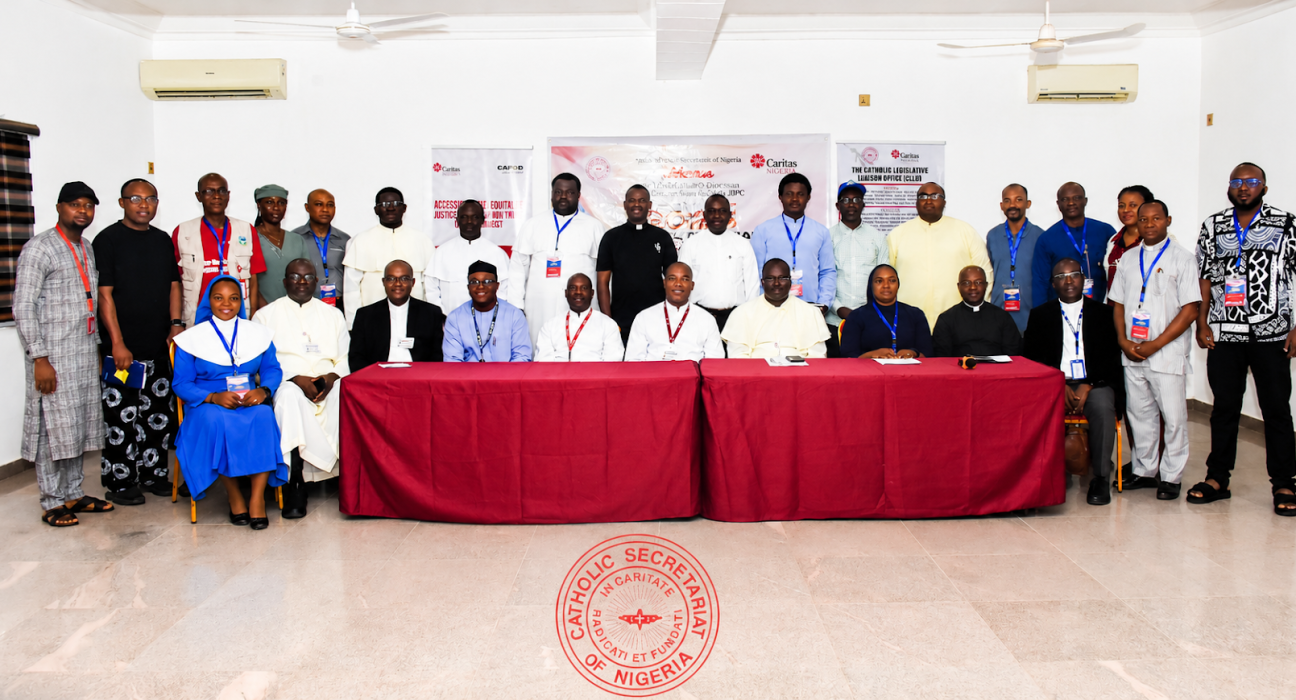
Expressing deep concern over rising voter apathy and the erosion of public trust in democratic institutions, the Justice, Development and Peace Commission of the Catholic Secretariat of Nigeria has called for urgent civic action and institutional reforms as the nation prepares for the 2027 General Elections. The commission’s position was made public during a press conference in Abuja following the conclusion of its 2026 Annual General Meeting held from July 20 to July 24 under the theme “Towards the 2027 General Elections: The Imperatives of JDPC Participation and Civic Engagement.” the gathering brought together diocesan directors and provincial coordinators from all nine ecclesiastical provinces across Nigeria to deliberate on the country’s democratic trajectory.
Addressing journalists, the Church leaders emphasised that the central threat facing Nigerian democracy extends beyond election-day irregularities to a broader systemic crisis of public confidence. The commission highlighted that the greatest danger to the nation’s democratic future is the growing erosion of faith in electoral integrity, noting that widespread disillusionment has led many citizens into believing that their votes no longer matter and that public institutions serve narrow interests rather than the common good. Rejecting voter detachment, the leadership of the Catholic Secretariat of Nigeria (CSN) warned that civic apathy only deepens governance failures and allows poor leadership to flourish. Drawing from Catholic Social Teaching and Pope Francis’s encyclical Fratelli Tutti, the commission stressed that no citizen can remain on the sidelines when the common good is at stake.
With only two days remaining before the conclusion of the Continuous Voter Registration (CVR) exercise, the Catholic Church issued an immediate call to action for all eligible citizens to register or update their details. Across the nation, Catholic parishes, educational institutions, and lay organisations have been mobilised to promote civic participation. In several dioceses, the Church has partnered directly with the Independent National Electoral Commission (INEC) to facilitate voter registration and transfers, while clergy and lay leaders continue to encourage responsible citizenship through parish announcements and community outreach.
To address structural weaknesses and restore faith in the democratic process, the commission proposed a comprehensive Five-Pillar Framework. The first pillar focuses on restoring confidence in democratic participation by encouraging every eligible Nigerian to register, secure a Permanent Voter Card (PVC), and vote responsibly. The second pillar advocates for judicial and legislative reforms to ensure the prompt, fair, and transparent resolution of electoral disputes while safeguarding judicial independence. The third pillar emphasises promoting electoral integrity, calling for strict compliance with the Electoral Act and guidelines, transparent result management, and accountability for electoral offenses so every lawful vote counts. The fourth pillar advocates for conscience formation and grassroots civic education to combat vote-buying, hate speech, and misinformation, urging voters to evaluate candidates based on character, competence, and integrity. Finally, the fifth pillar commits the Church to sustained pastoral and spiritual accompaniment, using prayer and moral guidance to foster peace, justice, and national reconciliation.
Concluding the conference, the commission issued direct appeals to key societal stakeholders. Electoral authorities were urged to maintain complete transparency and professionalism, while the judiciary was called upon to deliver courageous and impartial electoral justice. Security agencies were asked to remain neutral and protect human rights, while political candidates were reminded to conduct civil, truth-based campaigns that refrain from violence or manipulation. Addressing the public directly, the Church urged Nigerians to reject political cynicism, defend the integrity of their votes, and actively hold elected officers accountable before, during, and after elections. The joint statement was officially issued by Rev. Fr. Michael Ayanleke Banjo, Secretary General of the Catholic Secretariat of Nigeria, and Fr. Peter Babangida Audu, Director of Church and Society and Executive Secretary of Caritas Nigeria.