
By Fr. Michael Nsikak Umoh, CSN
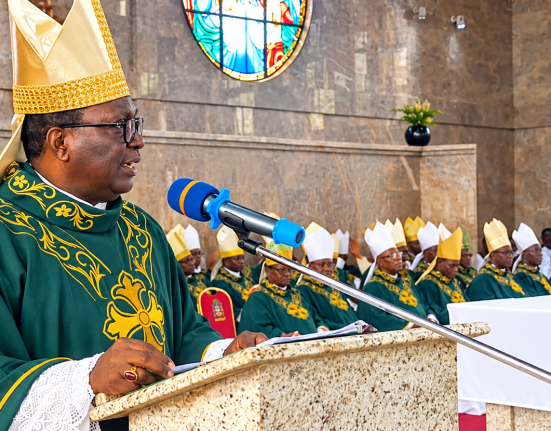
The President of the Catholic Bishops’ Conference of Nigeria (CBCN), Most Rev. Lucius Iwejuru Ugorji, has called on Nigerians, especially Catholics, to rise as “beacons of hope” in the face of mounting national and global crises, urging concrete acts of charity, moral integrity, and environmental stewardship.

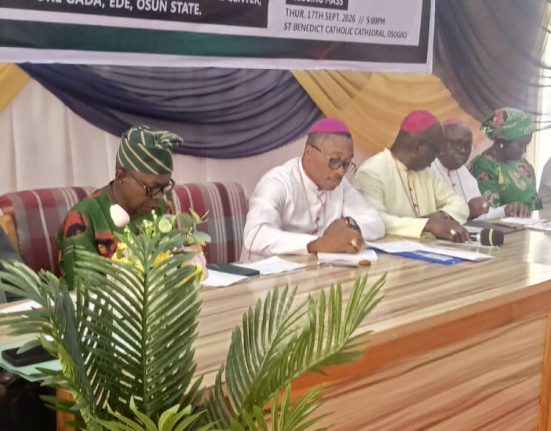
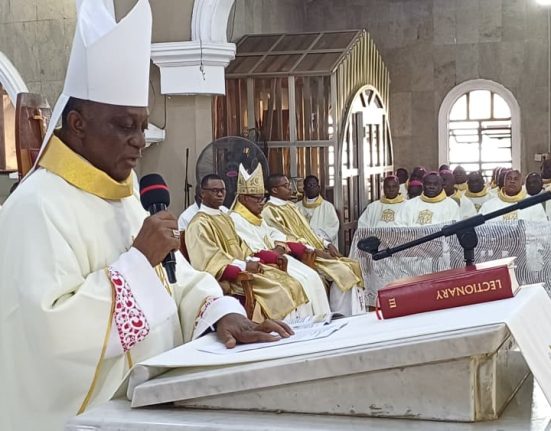
Speaking at the opening session of the 2025 Second Plenary of the CBCN in Ikot Ekpene Diocese, Archbishop Ugorji anchored his message on the ongoing Year of Hope, describing it as “a special year of grace, prayer, renewal and rebirth” and “a call to action for Catholics in our nation to be beacons of hope in their communities at this difficult period in our national history.”
Quoting the late Pope Francis, he reminded the faithful: “We must fan the flame of hope that has been given us, and help everyone to gain new strength and certainty by looking to the future with an open spirit, a trusting heart and far-sighted vision.”
He urged dioceses to “promote the welfare of prisoners and assist in the release of remorseful detainees and those guilty of minor offences,” commending those that had already acted in this regard. The national celebration of the Year of Hope, he announced, will hold from September 19–21 at the National Pilgrimage Centre, Elele, in Port Harcourt Diocese.
Turning to bioethical issues, Archbishop Ugorji expressed deep concern over the “proliferation of fertility clinics” and the rising demand for in vitro fertilisation (IVF) in Nigeria. While acknowledging that some clinics are competently run, he warned that “many others are manned by unqualified and unlicensed practitioners,” exposing clients to “financial exploitation, medical complications, permanent infertility and even death.”
He lamented the trend of young women, “especially university students,” selling their eggs for “peanuts” without being informed of the long-term health risks. He reminded Catholics that the Church “considers IVF gravely immoral” because it separates “the unitive and procreative aspects of the marital act” and often leads to the destruction or commodification of embryos. “Each human embryo has an inherent dignity and a right to life,” he stressed.
On education, the CBCN President welcomed the Federal Government’s new National Policy on Non-State Schools, which sets minimum standards for infrastructure, teacher quality, and accountability. He urged Catholic schools to benchmark themselves against these standards while maintaining “zero tolerance of examination malpractice.”
He condemned the rise of so-called “Miracle Examination Centres” that facilitate cheating in WAEC and NECO exams, calling them a “shame” and warning parents against aiding such fraud. “Parents should desist from the moral destruction of their children by encouraging and supporting them in achieving ‘success’ through fraudulent means,” he said.
Furthermore, addressing environmental degradation, Archbishop Ugorji drew attention to the “massive destruction” of the Niger Delta’s ecosystem, citing oil spills, gas flaring, overfishing, and deforestation. He described the region as “one of the highest concentrations of biodiversities in the world” but lamented that its resources are being exhausted “without regard for environmental pollution and degradation.”
He invoked the biblical mandate of stewardship: “When God placed Adam and Eve in the Garden of Eden, he enjoined them: ‘to cultivate and take care of it’ (Gen 2:15).” He called for “more stringent measures” to clean up oil spills, re-green devastated areas, and restore livelihoods, framing it as “a matter of social justice” that could also curb youth restiveness.
The CBCN President concluded by urging Nigerians to embrace hope not as a passive sentiment but as a transformative force: “Drawing strength from their faith and inspiring others to embrace the future filled with trust and love.”