

By Fr. Michael Nsikak Umoh
As Nigeria begins to experience a delicate socio-political climate ahead of its upcoming elections, the Catholic Secretariat of Nigeria (CSN) has sent a clear message to political actors, electoral umpires, and the public: democracy is not a game of manoeuvres, and the technology meant to safeguard votes is a moral touchstone, not a mere administrative footnote.
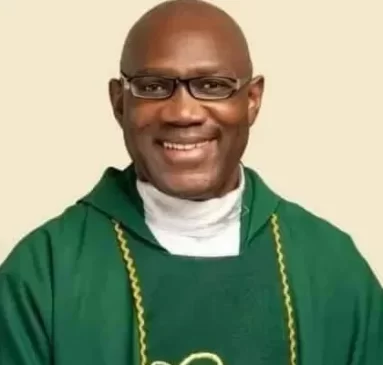
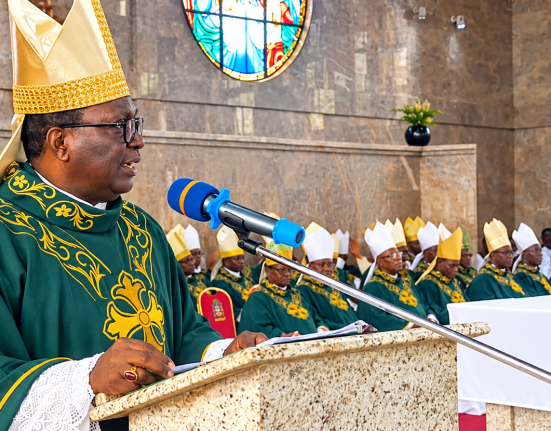
Delivering the welcome remarks on the occasion of the 2026 World Communications Day at the Catholic Secretariat in Abuja, the Secretary-General of the CSN, Fr. Michael Ayanleke Banjo, linked the ethics of human communication directly to the survival of Nigeria’s democratic and social fabric.
Anchoring his speech on the deep anxieties surrounding national elections, Fr. Banjo insisted that the integrity of the electoral process rests on absolute transparency. He elevated the debate surrounding the electronic transmission of results from a legalistic point of view to a weighty test of national character.
”Electronic transmission of election results, especially polling-unit results, must not be treated as a mere technical detail; it is a test of whether the people’s voice will truly be heard,” Fr. Banjo declared.
Warning against institutional loopholes that have typically undermined public trust, he sent a direct message to the Independent National Electoral Commission (INEC) and judicial arbiters regarding the manipulation of data at collation centres:
”The power of the Returning Officer to review declarations must not become a loophole for altering the people’s will, and any fallback to manual collation must be strictly defined, independently verified and transparently documented. In the coming elections, every voter must count, every vote must count, and every result must reflect the true voice of the people.”
Fr. Banjo lamented the dehumanising nature of modern political campaigns, where citizens are often weaponised and stripped of their individuality. Relating his remarks to the theme for the 2026 World Communication Day, he insisted on a shift in perspective, calling on Nigerians to view the ballot box through an ethical lens rather than a combative one.
”As Nigeria looks towards the coming elections, the call to preserve human voices and faces becomes even more urgent,” he noted. “Elections are not merely about parties, candidates and results; they are about ordinary Nigerians, their hopes, fears and future. When citizens are reduced to voting blocs, opponents to enemies, and communities to political tools, democracy loses its human face.”
To combat these prevailing abuses, the Secretary-General placed a heavy burden of responsibility on the electorate, challenging them to resist the pervasive vices of political desperation:
”Nigerians must therefore treat the election as a moral responsibility, not a battlefield. Let no one trade truth for propaganda, conscience for money, or national peace for partisan victory. Citizens must reject fake results, fake videos, hate speech, vote-buying and intimidation, and vote with a conscience formed by the common good.”
Turning his attention to the political class, he added a sharp reminder on the true purpose of governance: “Those seeking power must remember that leadership is service, not conquest.”
A significant portion of the address was dedicated to the media, whom Fr. Banjo praised while simultaneously charging them with a “sacred civic duty.” In an era dominated by citizen journalism and digital noise, he argued that professional gatekeepers are more vital than ever.
”In an age where everyone with a phone can publish, the professional journalist must become more necessary, not less necessary,” he observed. “The answer to misinformation is responsible journalism; the answer to propaganda is truth; and the answer to communication without faces is communication that restores the human person to the centre of national life.”
During an election season, he emphasised, this responsibility transitions from a professional standard to a patriotic service:
”In an election season, responsible journalism is not merely a profession; it is a service to democracy and to the human face of the nation… [The media must] verify claims before publication, expose falsehood without becoming partisan combatants, resist sensationalism, avoid language that inflames ethnic or religious tension, explain the electoral process clearly, and give citizens the information they need to vote wisely and peacefully.”
Fr. Banjo did not shy away from evaluating the government’s current performance, striking a deliberate balance between commendation and rigorous critique. He argued that a healthy communication culture must be “honest enough to confront failure and fair enough to acknowledge progress.”
While commending recent military breakthroughs against insurgency, including operations in the Lake Chad Basin, he insisted that media announcements do not equal safety of the people.
”Every genuine blow against terrorism is welcome. However, the true measure of security success is not only the fall of a terrorist commander; it is the restoration of safety to villages, farms, schools, churches, mosques, roads and homes. A nation is not secure because terrorists are defeated in the headlines; a nation is secure when citizens can live, work, worship, travel and sleep without fear.”
Similarly, while praising visible infrastructural milestones in some areas, such as the new airport projects in Ogun and Ekiti States as evidence that “where there is vision, planning, continuity and execution, progress is possible”, he cautioned that concrete structures must not overshadow human misery.
”Infrastructure must go hand in hand with urgent action to alleviate the sufferings of the people. Government must confront the high cost of living, hunger, unemployment, insecurity and the daily hardship that many families now face. Progress must not be measured only by projects completed, but by lives improved, communities secured and hope restored.”
True development, he concluded, is found when the state looks into the eyes of the vulnerable and responds to “the face of the hungry child, the voice of the unemployed youth, the anxiety of struggling families, and the hope of communities waiting for security, dignity and relief.”
The event concluded on a note of gratitude and celebration. Fr. Banjo expressed deep appreciation for the enduring partnership between the press and the Catholic Secretariat, noting that through this collaboration, “the voice of the Church is amplified, moral clarity is brought to public issues, and messages of faith, justice, peace and human dignity reach wider society.”
In a joyful twist of coincidence, the Secretary-General also acknowledged and celebrated the birthday of the CSN’s National Director of Social Communications, which fell on the exact same day. He remarked on the beauty of celebrating World Communications Day alongside “one who serves the Church through the ministry of communication,” offering prayers for his continued wisdom, strength, and renewed zeal in serving both God and humanity.