HOMILY AT THE FUNERAL OF MSGR. JOSEPH OLADEJO FANIRAN
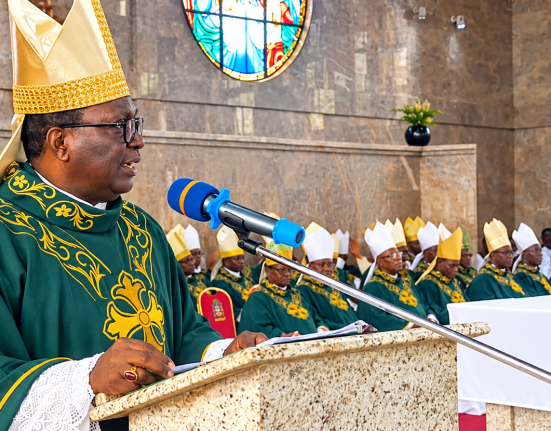
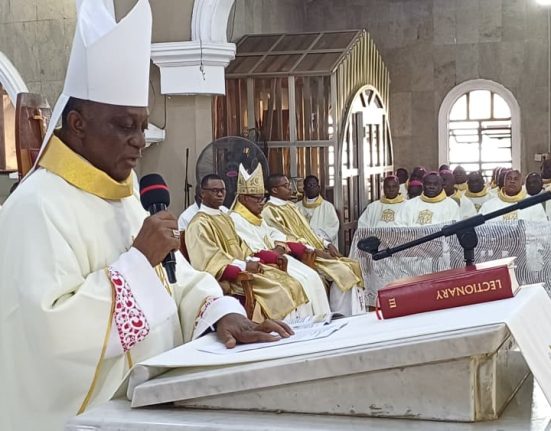
At St. Benedict Catholic Cathedral, Osogbo. 30 March 2023
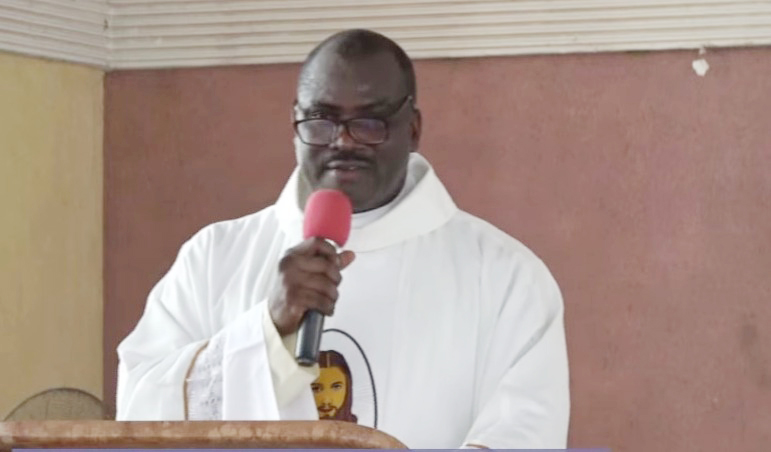
By Rev. Fr. Michael Nsikak Umoh
- Your Excellencies, dear Rt & Very Rev. Msgr. & Frs. Deacons, Sisters, Catechists, Seminarians, dignitaries of Church and State, traditional rulers, the Faniran family members and relatives, dear people of God; I greet you all in the name of our Lord Jesus Christ. Glory to Jesus! Honour to Mary and Joseph.
- In the second book of Maccabees chapter 12 verse 39-46 we read of one noble Judas who with his men gathered the bodies of fallen soldiers and buried them; and then took up collections to offer sacrifices of expiation for their sins. That passage went on to say: In doing this, he acted in a suitable and honorable way, guided by his belief in the resurrection.44 For if he had not expected those who had fallen to rise again, it would have been superfluous and foolish to pray for the dead. (2 Maccabees 12. 44-45)
- Burying and praying for the dead are therefore part of our Catholic heritage and a responsibility; it is a corporal work of mercy.
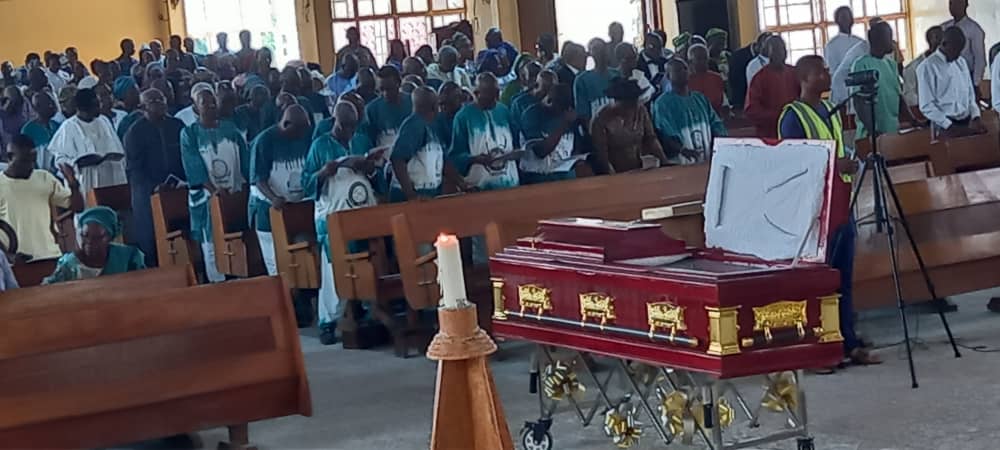
- In keeping with this wholesome spiritual culture, we gather this morning to offer the eucharistic sacrifice for the repose of the soul of our priest and brother, our colleague and friend, our lecturer and a media icon, Rt. Rev. Msgr. Prof. Joseph Oladejo Amiola Faniran, because that is what our faith encourages us to do in a moment like this.
- Someone once said, live your life in such a manner that the preacher will not need to tell lies at your funeral.
- It is especially on that note that I expressly thank our dear Bishop, Most Rev. John Akinkunmi Oyejola for giving me this rare privilege of preaching at Msgr. Faniran’s funeral (though there are far more qualified and capable clergies here); I am grateful because I know that I will not need to be diplomatic or struggle to put up a nice show in touching on the life of this great and simple priest.
- It is not possible to speak of death except in relation to birth and life.That is why on obituaries we summarise a person’s life by writing under the name for instance, 1952 dash 2023. This means that between birth and death, there is a dash moment. We are not aware when we were born; also, we are not often aware of when we will die; even when we seem to have an idea, we hardly can do anything about it. The most essential part of the entire life narrative of a person is therefore the dash moment of the whole process. As the good man Job exclaimed, at birth, God gives us a gift of life, at death, God takes back the gift (cf. Job 1.21), whether sooner or later, we all must stand someday to give account for what we did with this gift during our life time.
- But then, we ask, what is man’s purpose on earth? What should the dash moment be filled with?

- King Solomon described life as futile when it is lived only for this world and for the self. He said: “Here is the conclusion of the matter: Fear God and keep his commandments, for this is the whole duty of man. For God will bring every deed into judgment, including every hidden thing, whether it is good or evil” (Ecclesiastes 12. 13-14). King David said: “And I, in righteousness I will see your face; when I awake, I will be satisfied with seeing your likeness” (Psalm 17.15).
- Our penny catechism beautifully summarised the essence of life thus: God made me to know him, love him, serve him so as to be happy with him in this world, and forever in the next.
- For us Christians, the essence of life lies in expending it for the sake of the kingdom. Jesus told His disciples, “If anyone wants to come after Me, he must deny himself and take up his cross and follow Me. Forwhoever wants to save his life will lose it, but whoever loses his life for My sake will find What will it profit a man if he gains the whole world, yet forfeits his soul? Or what can a man give in exchange for his soul? (Matt. 16.24-26).
- Similarly, the import of the parable of the talents in Matt. 25.14-30 is that God has given each person a wide variety of gifts, and he expects us to employ those gifts in his service. The gifts we receive from God include our skills, abilities, family connections, social positions, education, experiences, and more, and how we use them account for the dash moment of our life. Through the parable, Jesus encourages his followers to use whatever they have been given by God for God’s purposes because the master cares about the results.
- My task here is neither to tell the history of Msgr. Faniran (I am not fit to do so, even if I try, nor I’m I here to eulogise him (the liturgical rules does not permit that, even if I desire to). Permit me however highlight few aspects of his life for our edification as a body of Christ since the reality of death is for the dead, but the lessons of death are for the living.
- I am confident to state that Msgr. Faniran’s dash moments has a lot to teach us, especially we priests, about how best to use God’s gifts for God’s work, as he was undoubtedly one who was very conscious of his Christian calling and highly appreciative of the gift of the priesthood.
- In the Catholic Church in Nigeria, Msgr. Faniran distinguished himself so powerfully in the field of social communications, such that his name was synonymous with pastoral communications. He was a patriarch of pastoral communications in Nigeria. After serving as the Press Secretary and then as the acting Secretary General to the Symposium of Episcopal Conferences of Africa and Madagascar (SECAM) in Accra, Ghana, he later became the first Director and a Professor at the Center for Study of African Culture and Communications (CESACC) of the Catholic Institute of West Africa (CIWA), Port Harcourt. He also held many positions in CIWA where he retired from last year after 19 years of meritorious and selfless service. In all of these remarkable strides, Msgr. Faniran gave his all, talent, time and treasures in love and in full obedience to the Church, because he firmly believed that the purpose of all knowledge and further studies for a priest is not for self aggrandisement, but to enhance his effectiveness as a priest.
- We recall how Pope Francis once admonished some French student priests in Romethus: “The studies you undertake in the various Roman universities prepare you for your future tasks as pastors and enable you to better appreciate the reality in which you are called to proclaim the Gospel of joy”. Yes, as we know too well, the greatest degree, the greatest honor, one can ever receive from God is the gift of the priesthood; being called altus Christus. Every other thing comes as secondary and are only relevant as long as they help us in our mission as priests. It is not out of place to say that any study for self or outside the directive and approval of our bishop falls under vain glory and truly diminishes us.
- From the life of Msgr. Faniran, we learn that every academic accomplishment of a priest amount to vanity if they do not make him a humbler and more obedient priest.
- I believe I represent the sentiments of the CIWA community, the CESACC family and members of the various media bodies in Nigeria, in further stating that Msgr. Faniran used his talent as an erudite scholar, totally and selflessly for the development of the pastoral communications apostolate in Nigeria. He was a very passionate, committed and effective teacher; a teacher of teachers. He was a gentleman, always punctual to lectures and fully available to his students. As a grammarian of distinction, his students refer to him as a man with a fish eye (360 degrees).
- Professors are not only persons of high academic ranking, we know people buy that position today, they must also be Masters who train their disciples by their words and examples of their lives to be persons of value, character and honour. Unlike some of our INEC returning officers who were not noble when the nation called on them, that was what Msgr. Faniran was. He was not like fake Professors who take advantage of their students, who stood for lies and falsehood. He was among the noble Professors we have in Nigeria.
- Furthermore, it is worthy of note, especially for us priests, that Msgr. Faniran never allowed his venture into the seeming secular field of communications to becloud his primary calling as a priest. Even in the academic world, he remained a committed ecclesiastic all the 47 years he lived as a priest. Msgr. was well-disposed for his service and guarded his vocation jealously, desirous to live in God’s house all the days of his life as a chosen vessel of God. Not even the tough condition of living in Obehie, the hectic demands of preparing for lectures and the daunting tasks of marking boring students’ scripts stopped him from praying the office regularly and offering the Holy Mass.
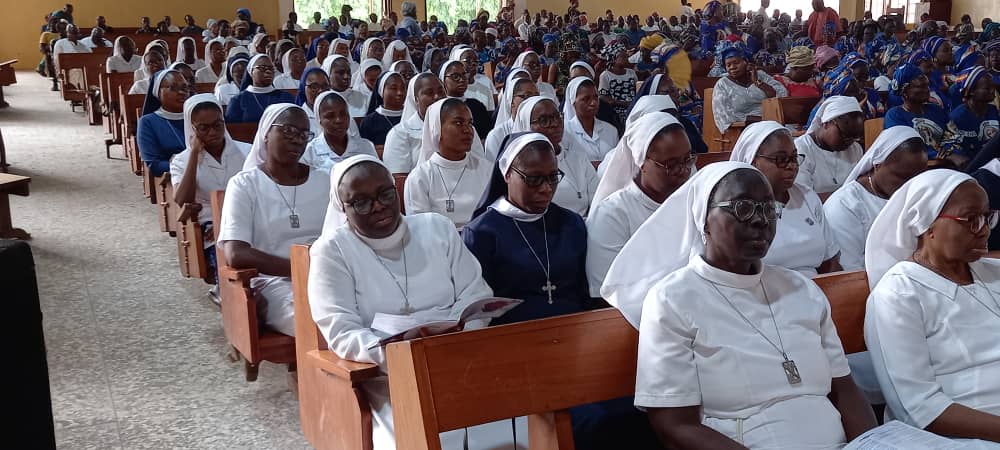
- Faniran brought his communications talent to bear on his duty as a priest by adopting the example of Jesus, the perfect communicator. He effectively preached the Word of God, telling stories, singing, dramatising, employing poetry, proverbs, idioms and wise sayings to deliver inspiring, educative and never boring homilies.
- It is very instructive to note that in spite of the academic height Msgr. attained, he remained an obedient priest and loyal son of the Church who respected authority even when it was not easy or pleasing. According to one of his colleagues in CIWA, he would never argue with one in authority, no matter how young both in age or priesthood the person is. He loved the Church.

- On loving the Church, Pope Francis in his public audience on 16 February last year decried the growing habit among people today, unfortunately even within the lay faithful and the clergy, who do not seem to love the Church. In our Church today, the Holy Father observed that it is not uncommon to find people seeking faults and criticising the Church on every grounds. He noted that rather than love and work with our bishops, rather than work to contribute to the growth of the people we shepherd, rather than love our priests, some of us busy complaining or criticizing our bishops, our priests, our leaders and our Church. What a disastrous sight it is, where the sheep celebrate and rejoice when the shepherd is attacked and wounded by wolves of the world. It is never for the good of the Church.
- Faniran lived and died as an obedient and loving priest who, like his patron Saint Joseph, the guardian of the holy family and mentor of the Son of God, loved and protected the Church and those placed under his care.
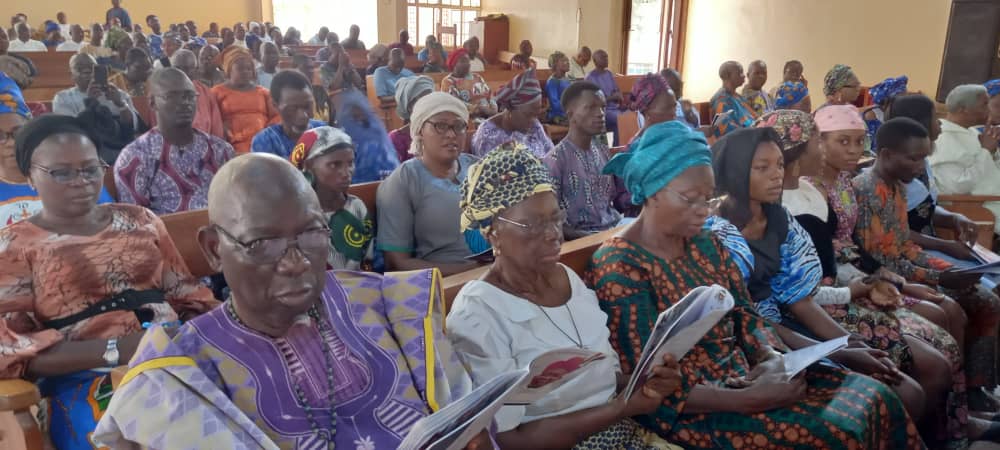
- He had an eye to discover talents and a knack for harnessing them and building them up. He was a very contented priest; born simple, lived simple, he died simple. Indeed, the joy of a priest comes from being faithful to who Jesus called him to be; as a dispenser of the gifts and counsels of Jesus.
- In all of these, would one say that Msgr. Faniran had no faults? Certainly not. Like every human being, Msgr. had his shortcomings, especially those known to him and his creator. Even that is a lesson. Is that not why Msgr. used to find time to pray and offer Masses while alive? Is that not why we are offering this most holy sacrifice of the Mass for the repose of his soul? Pope Francis says that “Our frailties are theological places of encounter with the Lord”, because a “fragile priest”, who knows his weaknesses and talks about them with the Lord, will do well.

- Faniran was definitely conscious of his frailty. That is why he spent the dash moments of his life consciously struggling to follow He who is the way, the truth and the life; He who promised that He would prepare a place for him. He believed in Jesus. May he now find mercy with God and eternal reward of being with him forever, where according to the promise in our first reading today, every tear are wiped away, no more death, no more mourning no crying and no more pain.
- In the Gospel reading we heard the assuring words of Jesus: “Do not let your hearts be troubled. You believe in God[a]; believe also in me.” On behalf of the Catholic Bishops of Nigeria, I humbly pray that our dear Bishop, Most Rev. John Oyejola, the clergy and people of God in Osogbo diocese, the members of Faniran family all of us here present find comfort in these words of life.

- Eternal rest grant unto him O Lord, and let perpetual light shine upon him. May he rest in peace. May the soul of Msgr. Prof. Joseph Faniran and the souls of all the faithful departed through the mercy of God rest in peace. Amen.
- Ipin temi dara ju, Jesu wa lokan mi, ……
(Very Rev. Fr. Dr. Mike Nsikak Umoh is the National Director of Social Communications of the Catholic Secretariat of Nigeria, Abuja and a priest of the Archdiocese of Lagos)