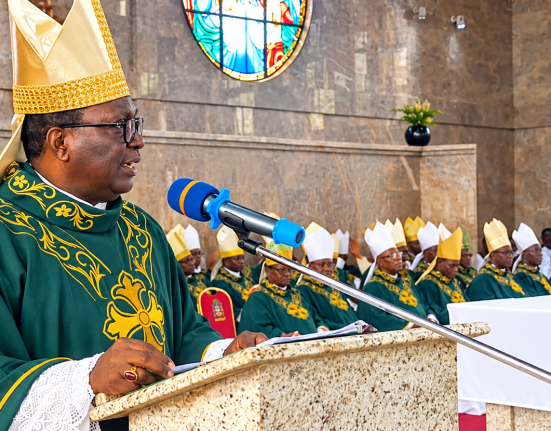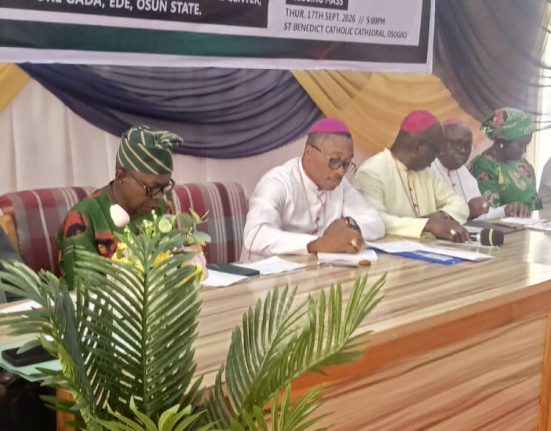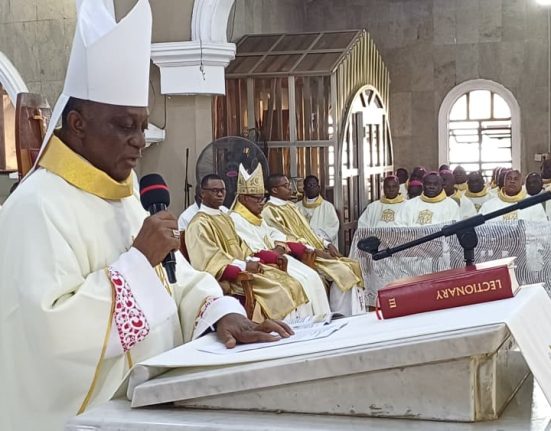
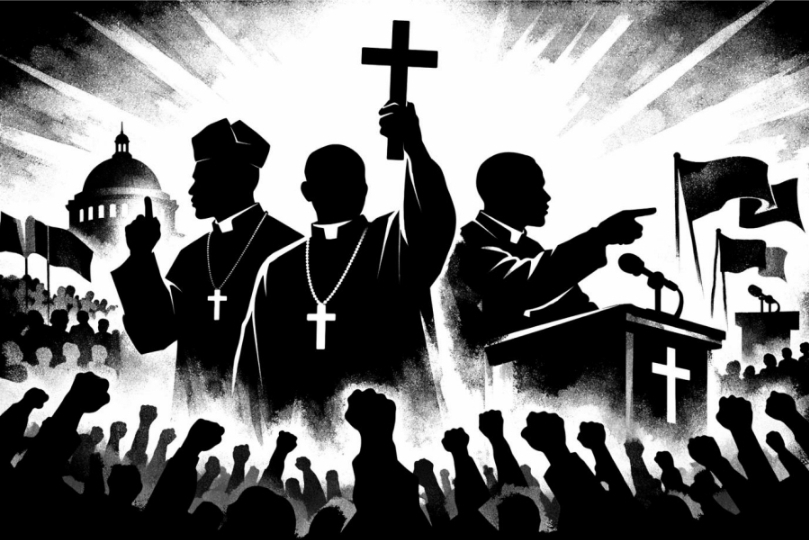
(What must Catholic priests working in Nigeria do towards the coming 2027 Election?)A Paper presented at the Annual Gathering of the Alumni Association of Ss. Peter & Paul Major Seminary, Bodija, Ibadan, in the Seminary Auditorium June 24, 2026
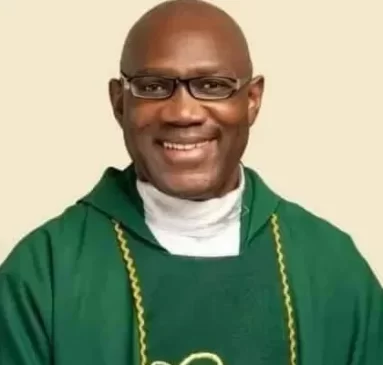
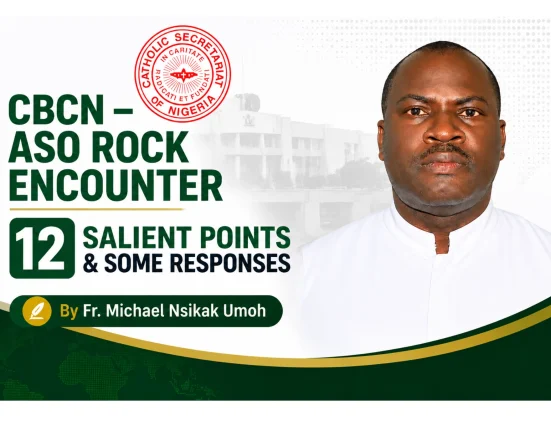
By Rev. Fr. Dr. Michael Nsikak Umoh
- Preamble
Your Excellencies, Monsignori, Very and dear Fathers, deacons, distinguished alumni of our great Ss. Peter and Paul Major Seminary, Bodija, and eminent guests here present: I greet you all in the name of our Lord Jesus Christ. Great Bodija…. Great!!!
I thank the indefatigable executives of our Bodija Alumni Association, ably led by our esteemed mentor and former Rector, Rt. Rev. Msgr. Ben Etafo, for considering me for this special task of giving the Paper to this august assembly. It is indeed heartwarming to return to Bodija and once again feel the serene and welcoming ambience of this sacred academic environment. Please permit me salute our past Rectors and our current Rector, Very Rev. Fr. Anthony Igbekele for constantly improving upon the tradition of this great institution. May God bless you all. Amen.
- Introduction: The Occasion and Prophetic Mandate
For decades, this great seminary has stood as a beacon of light, guiding us with the Gospel through the complex and often turbulent history of our nation. Today, while we gather with the joy of seeing old friends again, we stand at a critical historical crossroads to reflect on the implications and challenges of the 2027 General Election for us as priests working in Nigeria. This upcoming political milestone comes at a time when our dear country is facing severe existential trouble, marked by deep systemic failures, crushing economic hardships, and a widespread loss of hope among our people. As Catholic priests, we do not live behind walls that alienate us off from reality. Irrespective of our political interests and affiliations, it is a fact that the cries of the poor, the displaced, the hungry, and the terrorised pour directly into our rectories and stare us in the face every day. The Second Vatican Council reminds us in Gaudium et Spes, that “the joys, hopes, griefs, and anxieties of the people of this age, especially those who are poor or suffering, are the joys, hopes, griefs, and anxieties of the followers of Christ” (Gaudium et Spes, n. 1). This gathering is a providential moment for us to critically and sincerely discuss our role as priests in the current socio-political dispensation with deep spiritual honesty: What is the Spirit saying to the priest working in Nigeria at this critical period?
This question must be answered against the background that a Catholic priest, by virtue of his sacred ordination and the clear rules of the Church, is strictly barred from taking an active part in partisan politics. As specified in Canon 287 §2 of the Code of Canon Law, “a priest must not run for public office, carry a political party card, or ever turn the sacred sanctuary into a political campaign ground (Can. 287 §2). Yet, when we remember our prophetic mission to bring good news to the poor and bind up the broken-hearted (cf. Is 61:1), this canonical boundary is not to be understood as an excuse for pastoral cowardice, social indifference, or political neutrality when faced with structural injustice. The pulpit is not an ivory tower cut off from the harsh realities of human life; instead, it is a prophetic space meant for building a strong conscience, fiercely defending human dignity, and systematically educating the laity. While the priest must remain strictly non-partisan, he has an absolute moral, prophetic, and pastoral duty to use his teaching office to break down political apathy, expose systemic deceit, and inspire the Catholic laity to actively reclaim their civic space. The Catholic Bishops’ Conference of Nigeria (CBCN) repeatedly reminds us that even though the Church does not support any political party, she can never be indifferent to the political process itself (CBCN Plenary Communiqué, 2024). The priest is not a secular politician; he is the architect of the moral conscience that must guide politics.
3. The Contemporary Nigerian Reality: A Complex and Volatile Landscape
To speak of Nigeria as we fast approach the 2027 General Election is to diagnose a nation highly fragmented, deeply hurting, and bleeding. We cannot stand at the pulpit and preach an abstract, watered-down gospel that ignores the raw, grinding pain of our people. As pastors, we must realise that if our theology does not speak directly to the pains and physical starvation of our flock, it ceases to be the true, liberating Gospel of Jesus Christ (cf. Is 61:1).
The economic reality in our country has become a devastating structural wound. While official economic data sometimes claims a technical drop in inflation (National Bureau of Statistics, 2026), the reality in our parish markets tells a completely different story. Food inflation continues to vastly outpace what most Nigerians earn, leaving an estimated 140 million citizens, that is nearly 62% of our population, trapped below the poverty line (World Bank, 2025). This economic hardship is tied directly to a systemic collapse of national security (Amnesty International, 2025), as banditry, terrorism, and kidnapping for ransom have turned into a highly organised, lucrative, interstate industry in our country.
Recent terrifying kidnappings of school children in Oyo State show a dark truth: no one is safe, and nowhere is safe. From the systematic massacres in the Middle Belt to the daily horrors along our highways, our people are being displaced, and our farmers are being driven off their ancestral lands at gunpoint (Famine Early Warning Systems Network, 2026). This severe decay harms our democracy directly because a hungry population is not a free population, and an insecure community is easily manipulated. When voters are entirely consumed by basic survival, it opens the door for fear-driven choices, rampant vote-buying, and deep voter apathy.
Beyond the broken economy and widespread bloodshed lies an even deeper sickness: the total collapse of our national moral fabric. The approaching 2027 election has fuelled a culture of desperation among the political class, who, lacking political ideology, hop from one party to another, revealing a desperation to grab power devoid of the sacred duty of service. Deceit has been systematically institutionalised as an acceptable tool of governance. State-sponsored disinformation campaigns, deliberate media manipulation, and deepfakes are employed to alter public perception and manufacture consent (Centre for Democracy and Development, 2025). Furthermore, the stark lack of accountability among the ruling elite has created a deep, toxic cynicism within our youth. The widespread Japa syndrome, the desperate mass migration of our youngest and brightest minds, is a profound moral protest against a compromised system (Kukah, 2011).
This grim scenario is the exact reality that the Catholic Bishops’ Conference of Nigeria has consistently laid bare. For years, the official communiqués of our Bishops have served as the true gauge of the collective agony of the Nigerian people. During the Second Plenary Meeting in Ikot Ekpene, in a communiqué titled Hope Does Not Disappoint, the Bishops stated with prophetic finality that our nation faces imminent collapse if things continue this way (CBCN, 2025). They warned that corruption, understood in its truest sense as moral rottenness, has spread unhindered like a deadly cancer into every vital organ of our national life. A year earlier, at the Plenary in Abuja, the Bishops lamented that insecurity had reached an unprecedented scale, subjecting citizens to a life of constant hunger and untold hardship (CBCN, 2024). Consequently, the CBCN directly challenged the moral ideology of the state, calling for a radical change of heart away from a political framework that uses power for self-enrichment, toward a politics of authentic service and solidarity with the people.
We must seize this opportunity to address a recurrent, troubling issue within our own presbyterium. At times, when a courageous CBCN communiqué or a press statement is released, some of our brother priests make dismissive comments on social media or in private circles, saying, “It’s just talk, talk, talk… what else can they do?” It is as if these priests expect the Bishops to physically carry weapons or lead an army into battle. It is imperative to firmly correct this fundamental misunderstanding of church power among men under sacred obedience (cf. Catechism of the Catholic Church, n. 896). The primary weapon of the Church has always been the prophetic word; the word that cuts sharper than a two-edged sword directly into the heart of the human conscience (cf. Heb 4:12). Through their pronouncements, the CBCN constantly gives us the theological, moral, and socio-political vocabulary we need to confront this turbulent moment. Our task is not to protest or complain about their words, but to amplify, internalise, and deliver this official, courageous witness directly to the grassroots.
4. Electoral Vulnerabilities: Institutional Integrity and the Reform Framework
As the 2027 Election season approaches, the lack of structural integrity in the Independent National Electoral Commission (INEC) remains a critical weakness in our democracy. This is because, a credible election relies entirely on an unwritten, sacred social contract: the firm belief of citizens that the electoral umpire is neutral, competent, and honest. In Nigeria, that vital trust has been severely broken (European Union Election Observation Mission, 2023). Public perception of INEC has largely shifted from an impartial referee to an institutional arm of the ruling elite.
In a situation where the transmission of results from polling units to the INEC Result Viewing (IReV) portal becomes compromised, delayed, or selectively unavailable, public trust is instantly destroyed (Yiaga Africa, 2025). Furthermore, long-standing warnings from civil society regarding the vulnerability of our electronic infrastructure have been validated by recent events. The danger of administrative interference by high-level actors became undeniable following media investigations into unauthorised access to sensitive voter registration data by a top government aide (News Central Africa, 2026). This breach exposed critical insider vulnerabilities, proving that tech-driven transparency remains exposed to compromised access.
For the ordinary citizen, this institutional failure breeds a destructive sense of hopelessness, convincing them that their votes do not count because the final results are written in dark rooms. This psychological alienation leads directly to a massive drop in voter turnout. When our flock believes the democratic process is merely an elaborate piece of political drama, they abandon the ballot box completely, leaving the nation’s fate to be determined by bought crowds and political thugs.
To understand the depth of this crisis, we can look at established ideas in political science. In Why Nations Fail, Daron Acemoglu and James A. Robinson distinguish between “inclusive institutions,” which share political power widely and ensure total transparency, and “extractive institutions,” which are intentionally structured by a ruling elite to monopolize power, shield themselves from accountability, and strip choices away from the majority (Acemoglu & Robinson, 2012). In its current state, INEC represents classic features of an extractive tool. When an umpire lacks financial and administrative independence, and when its leadership appointments are heavily influenced by participating politicians, the institution naturally bends toward protecting the status quo.
This aligns with Rational Choice Theory: when our electoral system is set up such that the penalty for fraud is practically non-existent or delayed, while the reward is total control of the state, politicians will naturally choose desperation and rigging. The massive benefit of manipulation completely outweighs the tiny cost of running a clean campaign.
Consequently, deep structural electoral reform is an existential emergency for Nigeria. Civil society has long established three non-negotiable pillars for true reform. First, drawing from the historic Uwais Committee Report, we must shift the appointment process for INEC leadership entirely away from executive control to independent, non-partisan judicial and civic bodies to eliminate political patronage (Uwais Electoral Reform Committee, 2008). Second, there must be an uncompromising, legally binding rule for the electronic transmission of results, making the real-time upload of polling unit scores to the IReV portal the absolute legal baseline for counting votes (National Assembly Joint Committee on Electoral Matters, 2025). Third, the nation needs an independent Electoral Offences Tribunal to rapidly prosecute and jail ballot thieves, compromised umpires, and the wealthy sponsors of political violence.
We must also remember the powerful logic argued by John Cardinal Onaiyekan, who noted that it makes no sense to swear in elected officials while their victories are still being aggressively challenged in court. All legal battles must be resolved before anyone takes the oath of office. Without these structural overhauls, some people are of the opinion that any election conducted in 2027 may turn out to be a multi-billion Naira exercise in futility. As pastors of souls, we must be intellectually equipped to explain these systemic realities to our people.
5. The Church’s Prophetic Actions: Symbolism and the 2026 Mandate
When the secular state fractures under its own internal failures, the Church cannot take refuge in the quiet comfort of its rectories. Beyond verbal declarations, we must permanently keep in our pastoral memories the historic witness of March 2020. In that unforgettable moment, the Catholic Bishops of Nigeria, leading thousands of the lay faithful, defied a torrential downpour to stage a massive, solemn prayer procession through the streets of Abuja dressed in black cassocks. This was not a political rally, but a radical public liturgy of grief and righteous anger. The black cassocks made a vivid theological statement: the Church was actively bleeding and mourning alongside thousands of innocent citizens slaughtered by terrorist cartels and violent herdsmen.
Speaking prophetically on this event, the then-CBCN President, Archbishop Augustine Akubeze, maintained that protest is an integral part of our religious duty to speak out against whatever violates God’s commandments (Statement by Archbishop Augustine Akubeze, 2020). He boldly added that the Church had grown entirely tired of official reports claiming terrorists had been “defeated” while those same actors continued to butcher citizens with impunity. This historic march serves as our modern pastoral baseline. It proved that when the state becomes numb to mass burials, the shepherd must step out of the sanctuary to visibly march, weep, and bleed alongside the flock.
This tradition of strong institutional witness continues into our current electoral dispensation. During their First Plenary Meeting of 2026, held under the urgent theme Leadership for the Common Good, the Bishops issued a definitive guide addressing four critical fronts (CBCN, 2026).
- First, it condemns totalitarian politics, warning the ruling class against “winning at all costs” and manipulating state structures, including security agencies, a pressured judiciary, and INEC, to subvert the authentic will of the voters.
- Second, it exposes the mechanics of malpractice, explicitly listing voter register manipulation, vote-buying, artificial material scarcity, thuggery, and result falsification.
- Third, it confronts voter apathy, noting the historic low 23% turnout in 2023 and an abysmal 7% in recent local territory polls, while demanding that the National Assembly legally mandate real-time result transmission from BVAS machines directly to the IReV portal.
- Finally, it rejects exploitative economic strategies, criticising the government’s superficial reliance on massive food importation which destroys local production. Instead, the CBCN demanded that the state aggressively secure agricultural regions and grant direct subsidies to local Nigerian farmers to stem the tide of national famine.
As we prepare for 2027, our Sunday preaching on justice, accountability, and civic responsibility must be explicitly anchored in these ongoing teachings. It is our absolute duty to ensure that the structural truths spoken through the Catholic Secretariat of Nigeria resonate in every parish, village, and polling unit across the nation.
6. The Dilemma of the Nigerian Pastor: Challenges in the Trenches
While our Bishops speak with moral authority at the national level, priests in the parishes must absorb and translate these systemic crises at the grassroots. Today, our rectories are routinely transformed into primary social welfare centres, clinics, and employment bureaus. Day after day, we are confronted by parents unable to pay school fees, families facing starvation, and parishioners begging for medical assistance.
As the 2027 election approaches, this widespread existential desperation turns into a severe democratic vulnerability because a starved citizenry is uniquely exposed to vote-buying. It is a heartbreaking pastoral challenge to preach the long-term virtue of civic responsibility to a mother whose child is crying from hunger. Shepherds face the agonising task of convincing their flock that trading their votes for a temporary ten-thousand Naira handout or a pan of rice is a form of generational self-sabotage.
Beyond economic strain, the toxic weaponisation of ethnicity poses an immediate threat to the internal unity of the Church. Parishes are complex reflections of the wider state, containing deep-seated regional grievances and voting patterns. During election cycles, political actors intentionally exploit these tribal fault lines to maximise their fortunes. Tragically, this polarisation filters into our communities and even into our own clerical discussions, such as the heated, unedifying debates occasionally witnessed on our Nigeria Catholic Diocesan Priests’ Association (NCDPA) platform. This challenge demands that we rise above regional arguments to remind our flock of their primary baptismal identity: that in Christ, there is neither Jew nor Greek (cf. Gal 3:28). The shepherd must firmly rebuke ethnic bigotry within Church structures, ensuring that the sanctuary remains an uncorrupted space of universal truth.
Living under these constant pressures, the priest is highly vulnerable to severe psychological and spiritual exhaustion. Contemporary empirical data confirms that Catholic clergy face significant risks of burnout, emotional exhaustion, and depersonalisation due to professional isolation and relentless pastoral demands (Picornell-Gallar & González-Fraile, 2024). Pope Francis has similarly warned that shepherding amidst structural decay can induce a crippling sense of helplessness and secondary traumatic stress (Evangelii Gaudium, nn. 78-86).
This feeling of exhaustion leads directly to two possible pastoral temptations:
- The Temptation of Cynicism: Overwhelmed by institutional corruption and systemic stagnation, a priest may conclude that nothing will ever change. This breeds pastoral withdrawal, where the minister stops teaching civic education, abandons parish Justice, Development and Peace Commission (JDPC) structures, and reduces homilies to otherworldly topics that fail to challenge injustice.
- The Temptation of Partisan Anger: Fuelled by righteous fury over the suffering of his people, a priest may mistakenly pick up a partisan mantle, dropping thinly veiled endorsements or letting personal political alignments compromise his universal pastoral identity.
As alumni of Bodija, we must recognise that both passive withdrawal and partisan entanglement represent a failure in our priestly calling. Rather than slide into becoming escapists or partisans, contemporary Nigerian priests must carry the tension of the peripheries, anchoring our souls in a deep prayer life that allows us to remain prophetically vocal, fiercely compassionate, and strictly non-partisan.
7. Canonical and Theological Boundaries: Managing the Political Landscape
Sailing through these turbulent waters requires us to stay firmly anchored in the Church’s clear canonical boundaries. The restriction against clerical involvement in partisan politics is a protective safeguard rooted in the very nature of our vocation. As already noted, Canon 285 §3 explicitly forbids clerics from assuming public offices involving civil power, while Canon 287 §2 commands that priests take no active part in political parties or labour unions unless the Bishop deems it necessary to protect ecclesial rights or promote the common good (Code of Canon Law, can. 285, 287). This binding rule protects the priest’s role as a visible instrument of unity. The moment a priest aligns with a political faction, he ceases to be a father to all his parishioners. We must recognise that the direct transformation of the socio-political order belongs properly to the vocation of the laity, who are called to shape secular realities as a leaven from within (Apostolicam Actuositatem, n. 7).
However, this necessary restriction from partisan politics must never be confused with an endorsement of social neutrality. The same Church that forbids the priest from holding political office strictly mandates him to use his teaching office (munus docendi) to illuminate the social order with the light of the Gospel (Can. 747, §2). To refuse to preach on social justice, human rights, or civic responsibility under the guise of avoiding politics is a severe failure of pastoral duty. Our prophetic mission to denounce structural sin and announce God’s design for human society is not partisan; it is scriptural and doctrinal. When a priest denounces corruption, he is defending the Seventh Commandment (cf. CCC, n. 2401). When he condemns political violence, he is defending the Fifth Commandment (cf. CCC, n. 2258). The teaching office must remain completely free from political alignment precisely so it can judge all political platforms with absolute, objective truth.
Towards this end, we need to master and teach the vital distinction between “partisan politics” and “political charity,” as beautifully explained in the Compendium of the Social Doctrine of the Church. Partisan politics represents the direct struggle for state power and individual endorsements; an arena unique to the laity and strictly forbidden to the clergy (n. 513). Conversely, political charity and justice represent the persistent pursuit of the common good, the defense of human rights, and the execution of voter education. This field is strictly mandated for the priest, knowing that silence in the face of oppression is a pastoral sin (n. 506).
As Pope Benedict XVI clearly wrote, the Church cannot and must not replace the State in the political battle for a just society, yet she cannot remain on the sidelines in the fight for justice (Deus Caritas Est, n. 28). She plays her part through rational argument and by reawakening the spiritual energy without which justice cannot prosper. These words directly answer those who mistakenly think our Bishops are not doing enough beyond issuing statements. The priest’s true identity in the political equation is to be an educator of conscience. When we teach our people to reject vote-buying, we are practicing political charity. When we demand that INEC protects the integrity of the ballot, we are standing on the platform of structural justice. Priests do not need a party card to change Nigeria; rather, we need an uncompromised Gospel, a well-formed laity, and an unyielding commitment to the common good.
8. The Positive Role of the Priest: Galvanising the Lay Faithful
The canonical prohibition against partisan politics is not to be taken as a convenient shield for pastoral laziness or social indifference. While barred from political campaigning, the priest is fully commissioned as an agent for deep social transformation, primarily through the potent instrument of the pulpit.
First, this requires us to deliberately use our homilies to build a mature, critically reflective Christian conscience among the faithful. We must relentlessly dismantle democratic fallacies by attacking the moral rot of vote-buying, presenting it to our congregations not merely as a secular illegality, but as a grave structural sin against the common good. We must show our people that taking a temporary financial handout or a bag of provisions in exchange for a vote is a form of generational self-sabotage, a trap where they trade away the ultimate security and future of their children for a single meal. Second, our preaching must find its prophetic anchor in the heavy responsibility which positions the priest as a watchman over the house of Israel (cf. Ezekiel 33:7–9). If the watchman sees the political sword coming and refuses to blow the warning trumpet, God will hold that silent shepherd strictly accountable for the blood of the flock (cf. Amos 5:24).
To achieve this structural deployment, we must stop treating the Justice, Development, and Peace Commission (JDPC) as an optional parish organ or a low-priority group reserved for retired civil servants. This organ must be consciously elevated to the absolute forefront of parish life, especially during this critical pre-election season. Parish priests must empower the JDPC to lead mass civic literacy drives, organising seminars on how to evaluate political platforms using Catholic Social Teaching criteria and the critical importance of monitoring legislative promises. This can be seamlessly supplemented by creating a few targeted messages for civic awareness announcements toward the end of Sunday Masses. Furthermore, this empowerment must extend to direct voter mobilisation. Parishes can organise special Civic Sundays, systematically encouraging eligible Catholics to register and collect their Permanent Voter Cards (PVCs). On special occasions like weddings and funerals, a well-packaged, short script read toward the end of Mass can effectively remind worshippers of their civic duties to vote wisely for the common good.
The parish network must also serve as an independent watchdog during the entire electoral process. By collaborating closely with diocesan Directorates of JDPC and Social Communications, priests should actively encourage qualified, high-integrity lay parishioners to volunteer as accredited election observers. Their physical presence at polling units may be a critical moral deterrent against ballot-box snatching, voter intimidation, and result manipulation.
Finally, we need to build a collaborative, synodal network across the country. The synodal spirit reminds us that no local parish priest should work in an isolated vacuum; his grassroots efforts must align directly with diocesan directives connected to the national plan at the Catholic Secretariat of Nigeria (Lumen Gentium, n. 28). By using unified communication channels, the Church can rapidly document and broadcast real-time structural challenges on election day, holding the umpire accountable before the international community. Through the formation of minds at the altar and the mobilisation of bodies through the JDPC, the priest fulfills his authentic mandate. He does not tell his people who to vote for; rather, he forms them so deeply that they simply cannot bring themselves to vote for tyrants, people of questionable character, or structural exploiters.
9. Prudence in Ministry: What the Priest Must Avoid
Because the pulpit is a sacred sanctuary for forming consciences, it can easily be desecrated if pastoral prudence is lacking. The desperation of the political class ahead of the 2027 elections means that actors are actively seeking religious validation to co-opt the social capital and massive audiences sitting in our pews.
The priest must maintain an absolute boundary between the sacred liturgy and political actors. First, this demands a strict ban on partisan endorsements. Under no circumstance may a cleric announce, suggest, or drop thinly veiled hints endorsing a specific party or candidate from the altar. Using language that mimics party symbols or declaring a particular candidate as a secular saviour is entirely inappropriate; it instantly splits the parish, turning the family of God into an arena of political warfare.
Second, there should be an unyielding prohibition against campaigning within the liturgy. Politicians should never be given a microphone to greet the congregation or speak during Mass. Experience shows that once given the floor, they immediately pivot to campaign speeches. The CBCN regulation remains explicit: if a political figure attends Mass, they are to be welcomed and acknowledged merely as a child of God, seated among the faithful, and subjected to the same spiritual docility expected of every worshipper. Furthermore, we must ensure the complete rejection of exploitative prophecies, keeping the Catholic priesthood entirely distant from the transactional, sensationalist predictions regarding election outcomes that plague the wider religious space.
One of the craftiest ways the political class silences the prophetic voice of the Church is through financial co-option and strategic patronage. In an environment of grinding economic hardship where parish projects are stalled and rectories are under financial strain, the temptation to accept massive financial gifts is incredibly high. Yet, we need to take counsel in the old adages: “he who pays the piper calls the tune,” and “you don’t bite the finger that feeds you.”
This describes the trap of the “Greek gift.” A politician approaches a parish with sudden, overwhelming generosity, offering to build a grotto, purchase a large generator, or make a mouth-watering donation at a harvest and bazaar. These are rarely acts of pure piety; they could be structural investments designed to buy the priest’s silence. Once a pastor accepts these funds, his moral authority is instantly diminished, and his tongue becomes tied by the silver pieces he accepted. As Bodija alumni, we must be weary and watchful in order to remain independent of political influence. Instead of relying on wealthy donors with conflicting interests, it is advisable to focus on cultivating the authentic, everyday stewardship of the laity to support our mission.
Additionally, the priest must actively guard his own speech and digital footprint, ensuring he never becomes a conduit for divisive, inflammatory, or regional rhetoric. He must never allow his personal ethnic background to colour his preaching or administrative decisions. To imply that a candidate from another region is inherently malicious based on tribe is an offense against the universal nature of the Church.
Furthermore, priests must carefully manage their social media presence. In our hyper-connected digital era, a cleric’s personal accounts are public extensions of his priesthood. He should avoid sharing unverified political reports, partisan memes, or participating in toxic online political warfare. A single imprudent post can go viral, bringing immense embarrassment to his diocese and the entire institutional weight of the Church. By avoiding partisan alignment, financial compromise, and divisive rhetoric, the priest keeps his prophetic armour clean.
10. Conclusion: A Clarion Call to Pastoral Resiliency
Esteemed alumni of Ss. Peter and Paul, Bodija, from the foregoing discourse, it is obvious that we cannot afford to be passive bystanders as Nigeria approaches the 2027 General Election. We have diagnosed a nation bleeding from severe socio-political fractures, hyperinflation, and deep structural insecurity. We have exposed a political class driven by a culture of desperation and institutionalised deceit, and we have highlighted the vulnerabilities of an electoral umpire that has severely fractured public trust.
Yet, the Church remains an uncompromised beacon of hope. When the state explicitly validates the CBCN as a critical stabilising anchor and moral voice, it recognises that our moral capital cannot be bought, intimidated, or suppressed. This recognition was clearly demonstrated when political leadership formally commended the Bishops’ bold and critical interventions, noting that their social consciousness serves to caution, admonish, and ultimately steady the nation (Osinbajo, 2015).
The boundaries given to us by Canon Law are clear: we are strictly barred from partisan offices and party alignments, but this is never a mandate for silence. Our true political identity is rooted in political charity and structural justice. Our task is to use the pulpit to form the consciences of our people so deeply that they reject vote-buying, dismantle tribal polarisation, and nurture a new era of responsible leadership.
When we look at the vast expanse of Church history, we find that the most potent transformations occurred when priests refused to let the flame of truth be extinguished by secular tyrannies. The courageous witness of the Church in Poland during the dark decades of Soviet oppression should inspire us. As historians have noted, it was the Catholic priesthood, heavily inspired by the social teachings of the Church, that provided the “moral oxygen” and safe organisational spaces for the Solidarity movement (Perrone, 2013; Sochaczewski, 2015). This deeply rooted partnership between the clergy and the labour movement ultimately helped sustain the public’s resistance against the regime (Siła-Nowicki, 1989). It is very instructive to note that priests did not run for parliament; instead, they formed the consciences of the populace. Similarly, in this regard, we must also remember Archbishop Oscar Romero of El Salvador, who refused to abandon his flock in the face of brutal state violence, famously proclaiming that if the secular authorities silenced the radio of the Church, the local pastors and laypeople would have to become the microphones of God (Colón-Emeric, 2018; Romero, 1980).
We are the modern descendants of this prophetic lineage. Back in our respective parishes across the length and breadth of Nigeria, let us carry the unyielding charge issued by our spiritual fathers in their Plenary Communiqué, which declared that a better Nigeria is still possible, calling for a change of attitude across the board and a selfless disposition to serve the common good (CBCN, 2024). They urged us to collectively work for social transformation and ensure that those who occupy positions of leadership are people with track records of probity, competence, and commitment.
Brothers, the 2027 election is a profound moral test for our nation and a pastoral crucible for the Catholic priesthood. We cannot succumb to the paralysis of cynicism. Do not let the grinding poverty of our people tempt us into accepting the compromised financial gifts of desperate politicians. We must decisively stand tall in our white cassocks, not just as ministers of the sanctuary, but as unyielding watchmen over the destiny of our people. May the words of Paul to Timothy echo in our hearts: preach the word; be prepared in season and out of season; correct, rebuke and encourage, with great patience and careful instruction; endure hardship, and discharge all the duties of your ministry (cf. 2 Tim 4:2–5).
Let us therefore go forth from Great Bodija as heralds of hope. Let us together dismantle the empire of deceit in our dear nation with the weapon of truth; educate the consciences of our flock, guard the sanctuary from partisan defilement, and let us collectively steer this great nation through the impending storm toward the dawn of a just, secure, and truly accountable Nigeria. We can, with the help of God!
God bless the Federal Republic of Nigeria! God bless the Catholic Church in Nigeria!! God Bless Great Bodija and All her Alumni!!!
Thank you for your kind attention
References
Acemoglu, Daron & Robinson, James A. (2012). Why Nations Fail: The Origins of Power, Prosperity, and Poverty. New York: Crown Business.
Amnesty International. (2025). Nigeria: Fearless Justice Report. London: Amnesty International Publications.
Catholic Bishops’ Conference of Nigeria (CBCN). (2024a). Communiqué at the First Plenary Meeting: Reclaiming National Integrity. Abuja: Catholic Secretariat of Nigeria.
Catholic Bishops’ Conference of Nigeria (CBCN). (2024b). Plenary Communiqué: Addressing the Cry of the Poor. Auchi: Catholic Secretariat of Nigeria.
Catholic Bishops’ Conference of Nigeria (CBCN). (2025). Communiqué at the Second Plenary Meeting: “Hope Does Not Disappoint: Working Together for a Just Nation.” Ikot Ekpene: Catholic Secretariat of Nigeria.
Catholic Bishops’ Conference of Nigeria (CBCN). (2026). Plenary Communiqué: “Leadership and the Common Good in Nigeria.” Durumi, Abuja: Catholic Secretariat of Nigeria.
Catechism of the Catholic Church. (1994). Washington, DC: United States Catholic Conference.
Centre for Democracy and Development (CDD). (2025). Digital Threats to Democracy Report. Abuja: CDD West Africa.
Code of Canon Law: Latin-English Edition. (1983). Washington, DC: Canon Law Society of America.
European Union Election Observation Mission (EU EOM). (2023). Final Report on the General Elections in the Federal Republic of Nigeria. Brussels: European External Action Service.
Famine Early Warning Systems Network (FEWS NET). (2026). Nigeria Food Security Outlook. Washington, DC: USAID.
Kukah, Matthew Hassan. (2011). Witness to Justice: An Insider’s Account of Nigeria’s Truth Commission. Ibadan: Bookcraft.
National Assembly Joint Committee on Electoral Matters. (2025). Report on Legislative Frameworks for Electoral Offenses. Abuja: National Assembly Press.
National Bureau of Statistics (NBS). (2026). Food Price Watch Report. Abuja: Federal Government of Nigeria.
Picornell-Gallar, M. & González-Fraile, E. (2024). Clergy Burnout, Isolation, and Mental Health Challenges in Contemporary Pastoral Ministry. Journal of Empirical Theology, 36(2), 145–168.
Policy and Legal Advocacy Centre (PLAC). (2024). Legislative Analysis on the Electoral Act and Technology Deployments. Abuja: PLAC Publications.
Pontifical Council for Justice and Peace. (2004). Compendium of the Social Doctrine of the Church. Vatican City: Libreria Editrice Vaticana.
Pope Benedict XVI. (2005). Encyclical Letter Deus Caritas Est. Vatican City: Libreria Editrice Vaticana.
Pope Francis. (2024). Papal Address on the Spiritual Health and Resiliency of Clergy. Vatican City: Dicastery for the Clergy.
Second Vatican Council. (1965). Pastoral Constitution on the Church in the Modern World Gaudium et Spes. Vatican City: Libreria Editrice Vaticana.
Statement by Archbishop Augustine Akubeze. (2020). Address at the Abuja National Peace Procession. Abuja: Catholic Secretariat of Nigeria.
Uwais Electoral Reform Committee. (2008). Report of the Presidential Committee on Electoral Reform. Abuja: Federal Government of Nigeria.
World Bank. (2025). Nigeria Development Update: Navigating the Economic Crossroads. Washington, DC: World Bank Group.
Yiaga Africa. (2025). Election Technology Audit Brief: Assessing BVAS and IReV Interventions. Abuja: Yiaga Africa Publications.
Rev. Fr. Michael Nsikak Umoh is a priest of Lagos Archdiocese, and currently the National Director of Social Communications at the Catholic Secretariat of Nigeria.
[email protected] +2348023062860